


Bathroom Remodel Cost in New Jersey: 2026 Guide
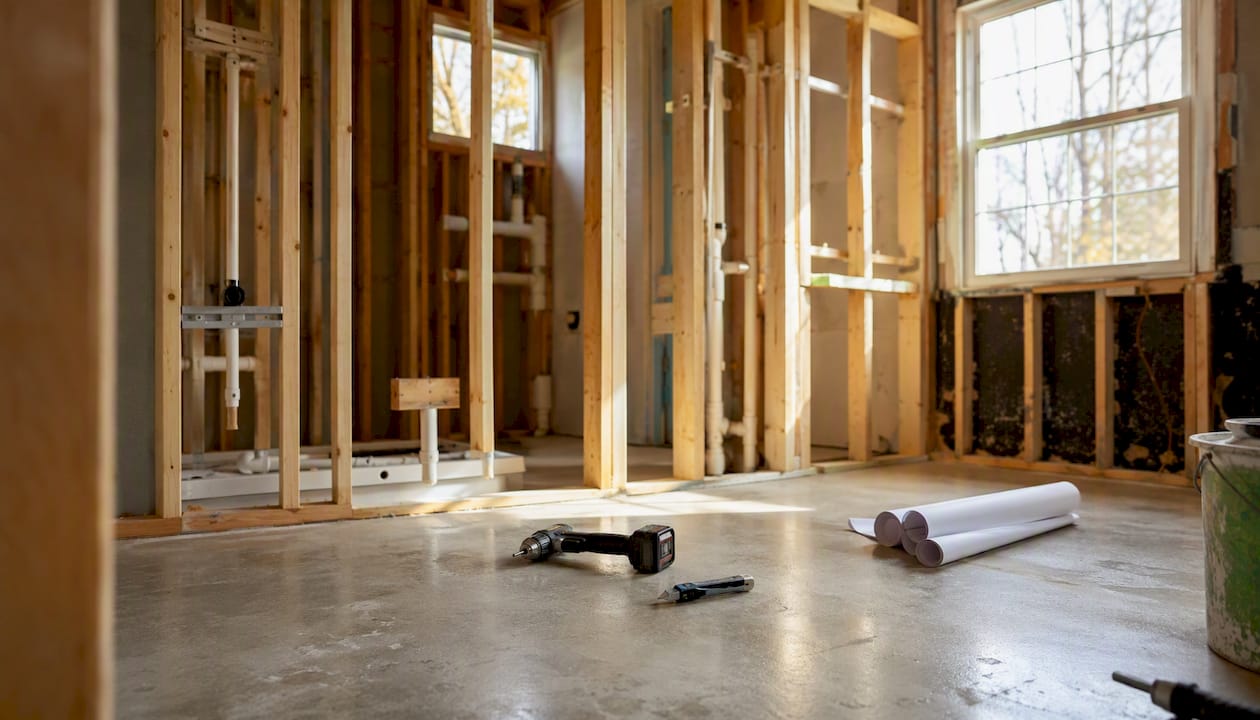
A bathroom remodel in New Jersey typically costs between approximately $6,900 and $19,500, with a state average near $13,800 according to Fixr’s 2026 New Jersey data. The full spectrum runs from a few thousand dollars for a basic cosmetic refresh to over sixty thousand dollars for a luxury master bath gut remodel. What separates a $7,000 project from a $40,000 one usually comes down to three things: scope, layout changes, and the county where you live.
Low end: a few thousand dollars (cosmetic refresh, powder room, or small half bath)
Typical mid-range: around ten thousand to twenty thousand dollars (full bath rip-and-replace, standard finishes)
High end / luxury: tens of thousands of dollars (master bath gut remodel, premium tile, custom cabinetry)
For a local estimate specific to your municipality and scope, contact DJ Custom Contracting LLC to request a written quote.
Key Takeaways
A bathroom remodel in New Jersey costs an average of $13,776, with most projects landing between $6,888 and $19,516 depending on scope, bathroom type, and county.
Point | Details |
State average cost | NJ bathroom remodels average $13,776; the full range runs $2,870–$63,140. |
Per-square-foot benchmark | Fixr reports approximately $344/sq ft as the NJ average; budget projects run $150–$200/sq ft. |
Contingency reserve | Set aside 10%–20% of your total budget before work begins to cover hidden damage and scope changes. |
Regional price variance | Bergen, Hudson, and Essex counties run 15%–25% above the state average; southern NJ counties run 10%–15% below. |
Djcustomcontracting | A licensed NJ general contractor managing permits, trades, and inspections for bathroom remodels statewide. |
Table of Contents
What does a bathroom remodel cost in New Jersey by bathroom type?
Where does the money go? A line-item cost breakdown for NJ remodels
How to estimate your NJ bathroom remodel using $/square foot
How do bathroom remodel costs vary across New Jersey counties?
What ROI can you expect from a bathroom remodel in New Jersey?
Djcustomcontracting handles your NJ bathroom remodel from permit to punch list
What does a bathroom remodel cost in New Jersey by bathroom type?
Not every bathroom carries the same price tag, and the type of space you are remodeling sets the floor and ceiling for your budget before a single tile is chosen.
Powder room / half bath (toilet and sink only, typically 15–25 sq ft): A cosmetic refresh runs $2,870–$5,000. A full replacement of fixtures, vanity, and flooring lands between $5,000 and $9,000. Layout changes or moving plumbing push costs toward $12,000.
Three-piece bath (shower only, no tub, 35–50 sq ft): Mid-range projects with a prefabricated shower surround, new vanity, and updated flooring typically cost $8,000–$15,000. A custom tile shower with a frameless glass door adds $4,000–$8,000 to that figure. If you are considering a tub to shower conversion, budget an additional $1,500–$5,000 for the conversion work itself.
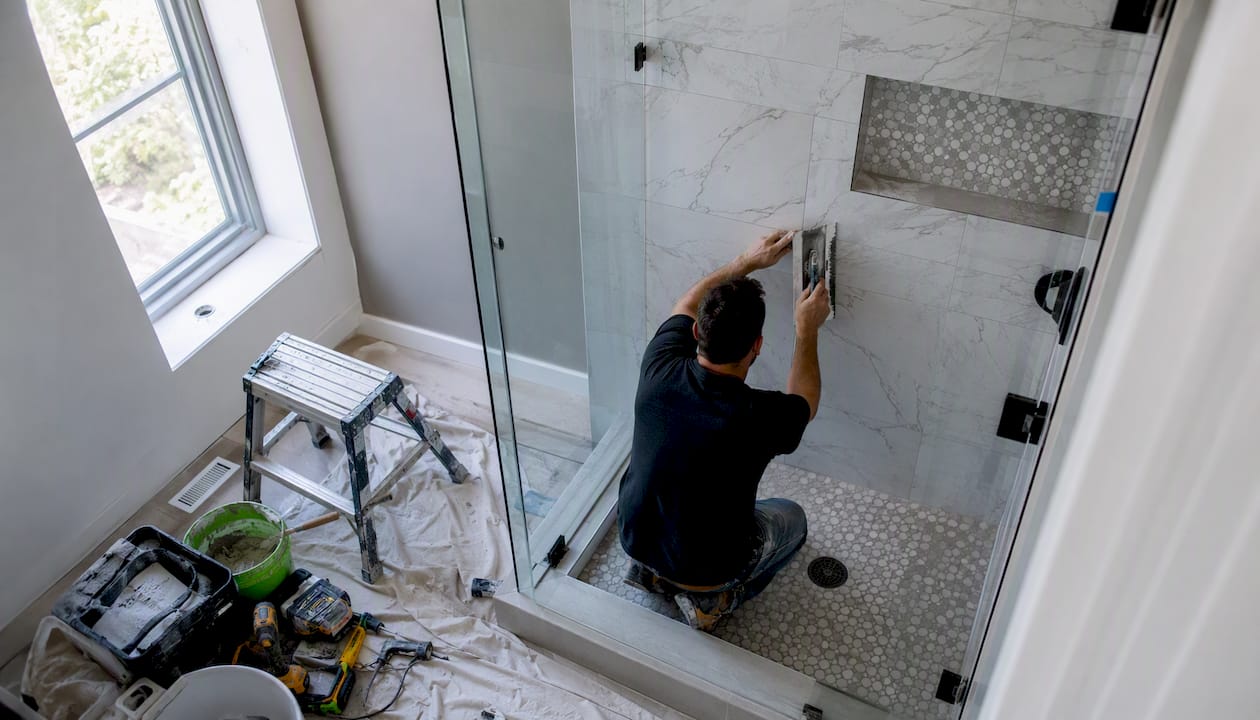
Full bath (tub/shower combo, 40–60 sq ft): This is the most common remodel in New Jersey homes. A rip-and-replace with mid-grade fixtures, ceramic tile, and a new vanity typically runs $12,000–$22,000. FathersOnBuild reports a mid-range full bath example around $19,500, which aligns with the upper end of the Fixr typical range.
Primary / master bath (60–100+ sq ft, often double vanity, soaking tub, separate shower): Expect $20,000–$40,000 for a quality mid-range remodel. A luxury buildout with heated floors, custom cabinetry, and a freestanding tub can reach $54,750 or higher. These projects almost always involve permit work and multiple trade inspections.
The scope categories that apply across all bathroom types are:
Refresh: Paint, fixtures, hardware, light swap. No demo, no permit usually required.
Rip-and-replace: New tile, vanity, tub/shower unit, toilet. Permit typically required.
Full gut remodel: Walls opened, plumbing repositioned, electrical updated. Always permitted.
Luxury buildout: Custom everything, structural changes possible, extended timeline.
Where does the money go? A line-item cost breakdown for NJ remodels
Understanding where each dollar lands helps you read a contractor estimate critically and spot line items that are missing or inflated.
Typical NJ cost ranges by trade and item
Demolition and disposal: $500–$2,500 depending on scope and whether hazardous materials are present
Plumbing (rough-in and finish): $1,500–$6,000; moving supply or drain lines adds $1,000–$3,000 per line
Electrical (GFCI, exhaust fan, lighting): $500–$2,500; panel upgrades or heated floor wiring add cost
Tile and shower surround: $1,500–$8,000 installed; large-format or natural stone tile sits at the high end
Tub or shower unit: $400–$5,000 for the fixture; installation adds $500–$1,500
Vanity and countertop: $600–$4,500 installed; custom cabinetry can exceed $8,000
Toilet: $200–$800 for the fixture plus $150–$400 installation
Flooring (tile, LVP, or stone): $800–$3,500 installed for a standard bath
Fixtures and finishes (faucets, hardware, mirrors, towel bars): $300–$2,000
Painting and drywall: $400–$1,500
Permits: $150–$800 in most NJ municipalities; complex projects or towns with higher fee schedules can reach $1,200
On a $15,000 project, that means $6,000–$9,000 goes to tradespeople before a single fixture is purchased. Understanding where remodel dollars go is one of the most practical steps you can take before requesting bids.
Hidden costs that catch NJ homeowners off guard
Mold remediation: Bathrooms are high-moisture environments. The EPA’s guidance on mold and moisture confirms that mold discovered during demo can require professional remediation, adding $500–$5,000 or more depending on the extent of growth behind walls or under flooring.
Asbestos and lead abatement: Homes built before 1980 may contain asbestos in floor tile adhesive or lead in paint. Testing runs $200–$500; abatement adds $1,000–$4,000.
Structural repairs: Subfloor rot from long-term moisture is common in NJ bathrooms, especially in older housing stock. Subfloor replacement adds $500–$2,000.
Moving plumbing: Repositioning a toilet or shower drain requires opening the floor and rerouting drain lines, typically adding $1,500–$4,000 to the project.
Pro Tip: Before demo begins, ask your contractor to do a moisture meter reading and a visual inspection of the subfloor and wall cavities. Catching rot or mold before the scope is locked saves you from mid-project change orders at premium rates.
On contract type: a fixed-price contract protects you when scope is clearly defined. A time-and-materials contract is generally appropriate for exploratory work with many unknowns. Never sign a time-and-materials agreement for a full gut remodel without a not-to-exceed cap.
How to estimate your NJ bathroom remodel using $/square foot
Per-square-foot pricing gives you a fast sanity check on contractor quotes, though it works best for standard layouts with no plumbing relocation.
Fixr reports an average cost per square foot for New Jersey bathroom remodels. That figure reflects mid-to-upper-mid finishes. Budget projects run closer to $150–$200/sq ft; luxury remodels can exceed $500/sq ft when custom tile, heated floors, and premium fixtures are involved.
Quick calculation examples
Powder room (20 sq ft):
Budget: 20 × $150 = $3,000
Mid-range: 20 × $300 = $6,000
Premium: 20 × $450 = $9,000
Standard full bath (50 sq ft):
Budget: 50 × $150 = $7,500
Mid-range: 50 × $300 = $15,000
Premium: 50 × $450 = $22,500
Master bath (80 sq ft):
Budget: 80 × $150 = $12,000
Mid-range: 80 × $300 = $24,000
Premium: 80 × $500 = $40,000
These numbers align with the Fixr state average and the FathersOnBuild mid-range examples cited earlier.
When per-square-foot estimates break down
Per-square-foot math assumes a standard layout with plumbing staying in place. Three situations reliably distort the estimate:
Layout changes: Moving a toilet, shower, or vanity to a new wall adds flat-rate plumbing costs that have nothing to do with room size.
Utility relocation: Upgrading electrical service or rerouting exhaust ventilation adds fixed costs regardless of square footage.
High-end finishes: A $50/sq ft natural stone floor in a 40 sq ft bath adds $2,000 to a room where the per-sq-ft average predicted $600 in flooring.
Use the per-sq-ft figure to screen bids, not to set your final budget. A quote that comes in at $80/sq ft for a full gut remodel in Bergen County is almost certainly missing line items.
How do bathroom remodel costs vary across New Jersey counties?
New Jersey is one of the most expensive construction markets in the country, but costs are not uniform across the state.
CostFlowAI’s regional data applies a 1.30x regional multiplier to national baseline estimates for New Jersey and cites skilled labor averaging around $70 per hour statewide. That multiplier reflects the state’s union prevalence, high cost of living, and dense permitting infrastructure.
County-level pricing patterns
Higher-cost counties (Bergen, Hudson, Essex, Union, Morris, Somerset): These counties sit in the New York metro labor market. Contractors here often carry higher overhead, union labor is more common, and permit offices in towns like Hoboken, Montclair, or Summit tend to have more complex review processes.
Mid-range counties (Middlesex, Monmouth, Mercer, Passaic): Pricing tracks close to the state average of $13,776. Labor markets are competitive, and permit timelines are generally predictable. These counties represent the most common price band for NJ homeowners.
Lower-cost counties (Burlington, Ocean, Cumberland, Cape May): Labor costs are lower, and permit fees in smaller municipalities tend to be more straightforward. That said, material freight costs can offset some savings if specialty tile or fixtures need to ship from northern distribution centers.
The practical advice: get at least three written bids from contractors licensed in your specific municipality, not just your county. Permit fees, inspection schedules, and local code interpretations vary town by town. Ask each bidder whether prevailing wage requirements apply to your project, which can be relevant for certain publicly assisted or subsidized properties.
How long does a bathroom remodel take in New Jersey?
Timeline expectations matter as much as budget. A bathroom out of service for eight weeks affects daily life significantly, and NJ-specific factors like permit lead times and inspection scheduling add days that out-of-state guides routinely underestimate.
Project timeline by scope
Quick refresh (paint, fixtures, hardware, no demo): 1–4 days. No permit required in most NJ municipalities. Work can begin immediately after materials arrive.
Rip-and-replace (new tile, vanity, tub/shower, toilet, no layout changes): 1–2 weeks of active work. Add 1–3 weeks for permit approval before work begins. Total elapsed time: 3–5 weeks from contract signing to completion.
Full gut remodel (walls opened, plumbing and electrical updated, layout changes possible): 4–8 weeks of active construction. Permit approval in NJ can take 2–6 weeks depending on the municipality. Inspections at rough-in and final stages add scheduling dependencies. Total elapsed time: 8–14 weeks from contract to final inspection.
Luxury buildout (custom cabinetry, specialty tile, heated floors, structural changes): 10–16 weeks or longer. Custom cabinetry alone carries a 4–8 week lead time from most fabricators.
What drives schedule delays in NJ
Permit turnaround: Some NJ towns process permits in 5 business days; others take 4–6 weeks. Your contractor should know the local timeline before you sign.
Tile and wet work drying time: Mortar beds require 24–72 hours before grouting. Grout needs 48–72 hours before sealing. Rushing these stages causes failures.
Inspection scheduling: NJ requires rough-in inspections before walls close and a final inspection before the bathroom is occupied. Inspectors in busy municipalities may have 5–10 business day lead times.
Material lead times: Special-order tile, custom vanities, and freestanding tubs can take 4–12 weeks to arrive.
The interior remodeling workflow guide for NY and NJ outlines the typical permit sequence and inspection checkpoints that apply to NJ bathroom projects.
Pro Tip: Scheduling your remodel for January through March often yields faster contractor availability and sometimes better pricing. Demand for bathroom remodels peaks in spring and early summer, which means longer wait times and less scheduling flexibility from the best contractors.
How to budget for your NJ bathroom remodel and finance it
A realistic budget has two parts: the project cost itself and the financial cushion that covers what you did not plan for.
Contingency and payment structure
Set aside a contingency reserve as a portion of your total project budget before you start. For example, a remodel with a mid-range budget should have a measured contingency held in reserve. Archie Remodels’ NJ project cost guide recommends a minimum 10%–15% contingency for projects in older NJ housing stock, where hidden moisture damage and outdated wiring are common findings.
A sound payment schedule for a licensed NJ contractor looks like this:
Deposit at contract signing: 10%–25% of total contract value. Never pay more than 33% upfront to any contractor.
Progress payment at rough-in completion: 25%–35% of total, paid after plumbing and electrical rough-in pass inspection.
Progress payment at tile and fixture installation: 25%–30% of total.
Final retainage: 10%–15% held until punch list is complete and final inspection passes.
Financing options for NJ homeowners
Home equity line of credit (HELOC): Often the lowest-rate option for homeowners with equity. Interest may be tax-deductible; consult a tax professional.
Home equity loan: Fixed rate, lump sum. Predictable payments make budgeting straightforward.
Personal loan: No equity required. Rates are higher than home equity products but approval is faster.
Contractor financing: Some licensed NJ contractors offer financing through third-party lenders. Confirm the APR and terms before signing.
FHA 203(k) rehabilitation loan: Available for eligible properties where the remodel is part of a purchase or refinance. Requires an FHA-approved lender and a HUD consultant for larger projects.
For a broader look at NJ renovation financing options, including program eligibility and application steps, review the linked resource before approaching lenders.
Why hire a licensed NJ contractor and what to look for
New Jersey requires contractors performing structural, plumbing, and electrical work to hold appropriate state licenses and carry general liability and workers’ compensation insurance. The NJ Department of Community Affairs publishes the Uniform Construction Code that governs permits, inspections, and contractor licensing requirements statewide. Working with an unlicensed contractor voids your homeowner’s insurance coverage for that work and creates personal liability if a subcontractor is injured on your property.
Contractor hiring checklist
Proof of NJ Home Improvement Contractor (HIC) registration
General liability insurance certificate (minimum $1M per occurrence)
Workers’ compensation certificate covering all employees and subcontractors
Written references from at least two completed NJ bathroom projects
Written contract with scope, schedule, payment terms, and change-order process
Lien waiver practice: confirm the contractor provides conditional lien waivers at each payment milestone
Questions to ask on the first call
Are you registered as a Home Improvement Contractor with the NJ DCA?
Who pulls the permits, and how long does your municipality typically take to approve?
Do you use subcontractors for plumbing and electrical, and are they licensed?
What is your change-order process, and how are unforeseen conditions handled?
Can you provide a written schedule with inspection milestones?
Red flags in bids
No written contract or a contract that lacks a scope description
Demand for cash payment only
No mention of permits in the proposal
A quote dramatically lower than all other bids (often signals missing scope or unlicensed labor)
Pressure to sign immediately without time to review
Djcustomcontracting has operated as a licensed general contractor since 2018, handling permit coordination, licensed trade subcontractors, and code-compliant inspections for NJ bathroom remodels from start to finish.
Pro Tip: Ask your contractor to name the specific NJ municipality permit office they will file with and confirm they have pulled permits there before. A contractor unfamiliar with your town’s building department can add weeks to your timeline.
Practical ways NJ homeowners can lower remodel costs
Cutting cost does not have to mean cutting quality. The most effective savings come from decisions made before demo begins, not from negotiating a contractor’s labor rate after the fact.
What to keep and what to replace
Keep the layout: Moving plumbing is the single most expensive decision in a bathroom remodel. Keeping the toilet, shower, and vanity in their existing locations can save $2,000–$6,000.
Refinish instead of replace: A professional tub reglazing costs $300–$600 and extends tub life by 10–15 years. Replacing the tub costs $1,500–$4,000 installed.
Choose prefabricated surrounds: A prefabricated acrylic or fiberglass shower surround costs $400–$1,500 installed. A custom tile shower starts at $3,000 and can reach $10,000.
Reuse existing plumbing rough-in locations: Even if you replace every fixture, keeping them in the same footprint avoids opening the floor and walls.
Shop off-season for fixtures: Big-box retailers like Home Depot and Lowe’s run significant fixture sales in January and February. Purchasing vanities, toilets, and faucets during these windows can reduce material costs by 15%–30%.
NJ-specific savings opportunities
PSEG rebates: PSEG Home Energy rebates cover eligible water-saving fixtures and energy-efficient ventilation fans for NJ customers. Check eligibility before purchasing fixtures, as rebates can offset $50–$200 per qualifying item.
Schedule during contractor off-peak months: January through March is the slowest period for most NJ bathroom contractors. Scheduling during this window often yields faster start dates and, in some cases, more competitive pricing.
Match materials to local availability: Specialty tile that requires freight from out-of-state distributors adds shipping costs and lead time. NJ has strong regional tile and stone suppliers. Working with a local fabricator like Stone Tech Fabrication in Trenton can reduce both cost and lead time for custom stone or tile work.
Pro Tip: Prioritize cosmetic upgrades that deliver visual impact: new tile, updated vanity, and modern fixtures transform a bathroom’s appearance without touching the plumbing or structure. Save structural changes for when they are functionally necessary, not just aesthetically preferred.
What ROI can you expect from a bathroom remodel in New Jersey?
Bathroom remodels consistently rank among the higher-return home improvement projects in the Northeast, though the return varies significantly by scope and local market conditions.
Mid-range bathroom remodels in the Northeast region have historically returned a meaningful portion of their cost at resale, with the precise figure shifting year to year based on market conditions. The general principle holds: a well-executed mid-range remodel in a competitive NJ market tends to recover more of its cost than an over-personalized luxury buildout in a neighborhood where comparable homes have standard finishes.
Upgrades that support resale value in NJ
Updated fixtures in brushed nickel or matte black (neutral finishes that appeal broadly)
Large-format porcelain or ceramic tile in neutral tones
Frameless glass shower enclosures in full baths
Double vanities in primary baths of homes with multiple bedrooms
Efficient layouts that maximize usable floor space
What tends to over-personalize
Highly custom tile patterns or colors tied to a specific design trend
Freestanding soaking tubs in homes where the primary bath is the only full bath (removes functional bathing for families)
Heated floors in a market where comparable homes do not offer them (adds cost without proportional value lift)
The most reliable ROI strategy for NJ homeowners planning to sell within five years: complete a mid-range rip-and-replace that brings the bathroom to current market standards without exceeding the neighborhood’s price ceiling. For homeowners planning to stay long-term, prioritize durability and personal comfort over resale calculations.
What NJ contractors actually see on the job
Most bathroom remodel budgets go wrong in the same predictable ways. Homeowners underestimate permit lead times, assume the subfloor is solid without checking, and choose fixtures before confirming they fit the existing rough-in dimensions.
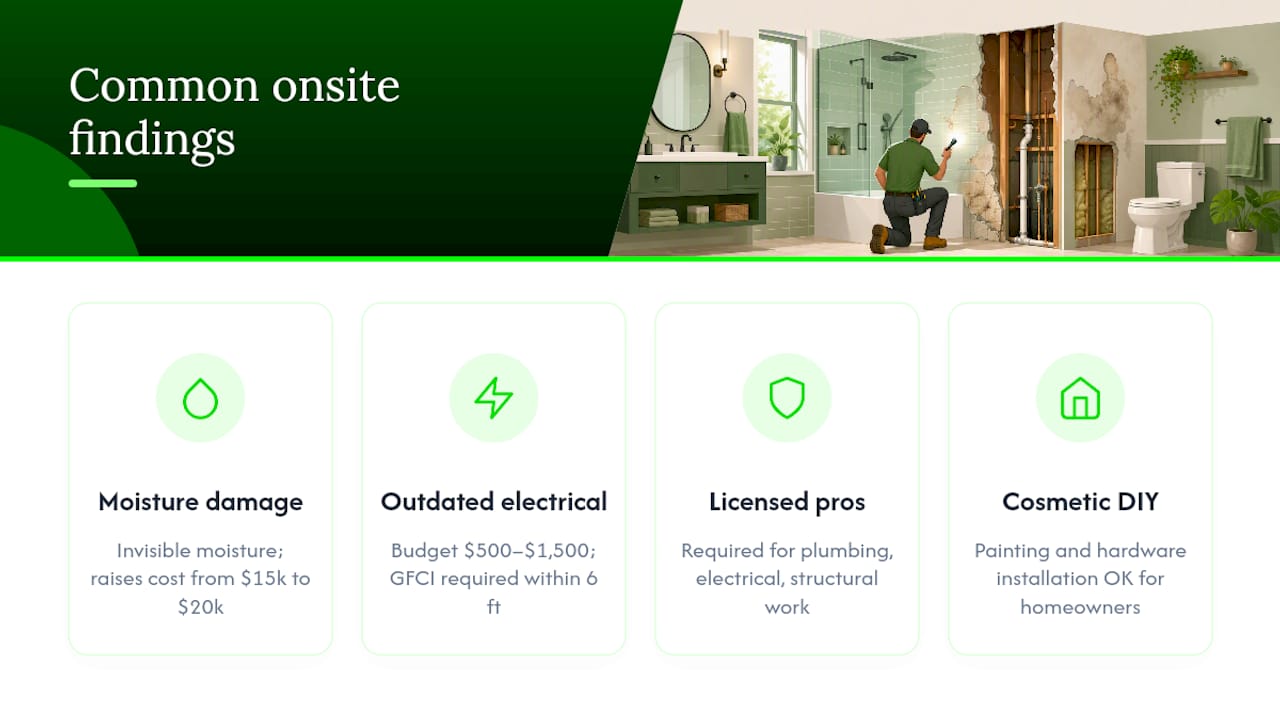
The most common onsite finding in NJ bathroom remodels is moisture damage that was invisible before demo. Water migrates behind tile for years before it shows on the surface. By the time a homeowner notices a soft spot in the floor or a stained ceiling below, the subfloor and sometimes the joists have been compromised. That discovery mid-project, without a contingency budget, turns a $15,000 remodel into a $20,000 one.
The second most common issue is outdated electrical. NJ code requires GFCI protection within six feet of any water source, and many older homes lack it. An inspector will flag it, and the work must be done before the final inspection passes. Budget $500–$1,500 for electrical updates in any bathroom remodel in a home built before 1990.
The practical priority: hire licensed professionals for plumbing, electrical, and structural work. These are the trades where unlicensed work creates the most risk, both physically and financially. Cosmetic work like painting and hardware installation is where a capable homeowner can reasonably contribute labor to reduce cost.
Djcustomcontracting handles your NJ bathroom remodel from permit to punch list
Djcustomcontracting is the licensed general contractor NJ homeowners call when they want a bathroom remodel done correctly the first time, without the coordination headaches that come from managing multiple trades independently. As a full-service GC operating since 2018, the firm handles every stage of your project: design coordination, permit filing with your local NJ building department, licensed plumbing and electrical subcontractors, tile and finish installation, and final inspection sign-off.
Services for bathroom remodels include:
Full scope management from demo through final inspection
Permit handling with your NJ municipality
Licensed plumbing, electrical, and tile trades
Transparent written contracts with fixed-price options
Financing assistance for qualified projects
Whether you are planning a powder room refresh or a full master bath gut remodel, Djcustomcontracting brings the licensed expertise and local code knowledge your project requires. Visit the interior renovation service page to request a written estimate for your NJ bathroom remodel.
Sources
Before finalizing your budget or signing a contract, verify the specifics for your town and project type using these authoritative resources.
One step that many homeowners skip: call your local building department directly and ask for the current permit fee schedule before your contractor submits an application. Fees vary significantly by town, and knowing the actual cost prevents surprises in your final budget.
Recommended


Comments