


Brownstone Stoop Restoration in NYC: Cost and Hiring Guide

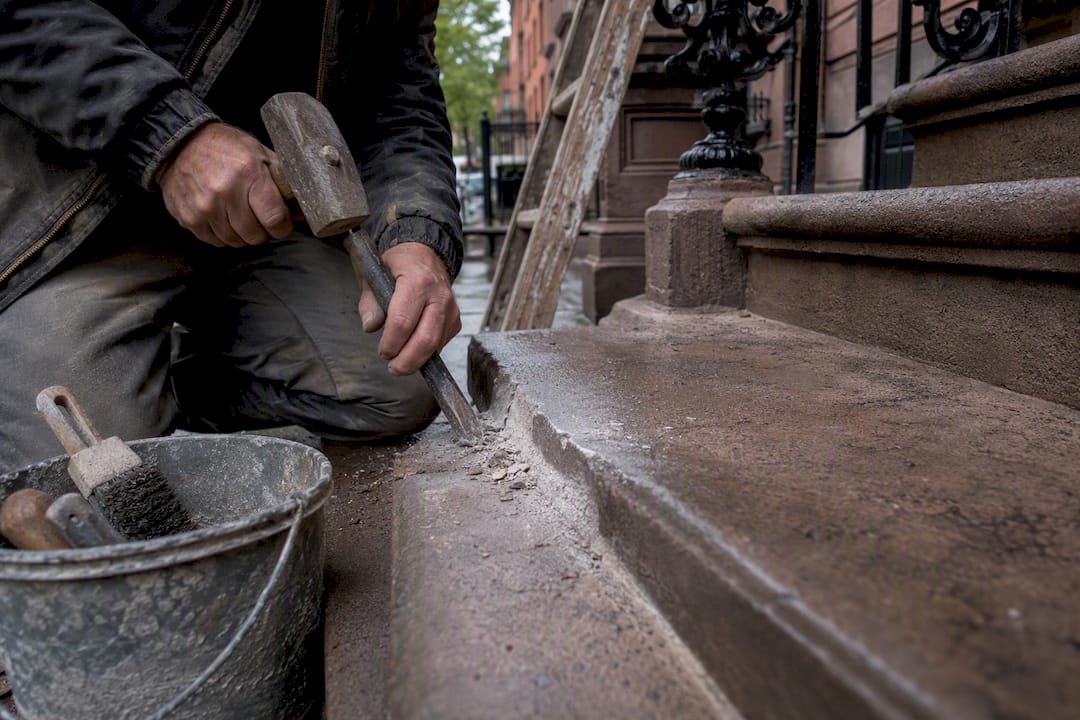
Hire a contractor with a documented history of NYC Department of Buildings filings before you sign anything for brownstone stoop restoration. A partial repair on a single flight of steps commonly costs several thousand dollars, while a full rebuild with new stone, structural correction, and railwork generally involves a significantly higher expense, varying with stone sourcing and access. Your next move should be a condition assessment, not a quote off a phone call.
Confirm whether the contractor files DOB paperwork directly or subcontracts it out.
Ask for a written scope that separates cosmetic repair from structural work.
Request the permit number once filed, and keep a copy for your records.
Pro Tip: Get two condition assessments before you commit. Spalling brownstone often hides deeper voids that only show up once a mason probes the mortar joints.
Key Takeaways
Brownstone stoop restoration succeeds when owners hire a DOB-experienced contractor, budget for NYC’s labor and permit premium, and secure warranty terms before work begins.
Point | Details |
Diagnose before you quote | Get a probe-level condition assessment, not just a visual estimate, before comparing bids. |
Match materials to method | Confirm lime mortar and stone sourcing choices match the building’s original construction. |
Budget for NYC premiums | Expect labor, permit, and access costs to push prices above national averages. |
Verify permits in writing | Ask who files DOB paperwork and get a copy of the permit before work starts. |
DJ Custom Contracting fits this job | The firm’s DOB violation removal and exterior renovation experience covers the permit and masonry work stoop projects need. |
Table of Contents
What Does Brownstone Stoop Restoration Actually Involve?
A qualified brownstone stoop restoration contractor typically handles six categories of work: repointing, unit replacement, capstone and tread repair, rail and balustrade fixes, waterproofing, and structural stabilization. Which ones your project needs depends on how far the deterioration has progressed, not just how the stoop looks from the sidewalk.
Repointing (tuckpointing): replacing failed mortar joints, usually the first fix for hairline cracking or water infiltration.
Dutchman and unit replacement: cutting out a deteriorated section of stone and setting in a matched replacement piece, or swapping an entire tread or cheek wall unit.
Capstone and tread replacement: addressing worn or cracked walking surfaces, often the most visibly urgent repair.
Rail and balustrade repair: re-anchoring loose ironwork or replacing corroded posts.
Waterproofing and drainage: correcting the water paths that caused the damage in the first place.
Structural stabilization: shoring up voids or settlement beneath the stoop’s base.
Mortar choice matters more than most owners realize. Lime mortar flexes with the stone and lets moisture escape; hard cement mortar traps water and accelerates spalling, a mistake seen constantly in poorly matched prior repairs. For stone, natural sandstone matches historic fabric but costs more and takes longer to source than cast stone, which works for less visible or less landmark-sensitive sections. Unit replacement and dutchman repairs are widely considered the most durable and visually successful fix once brownstone reaches advanced spalling, rather than a patch that will fail again in a few winters.
How Much Does Brownstone Stoop Repair Cost in NYC?
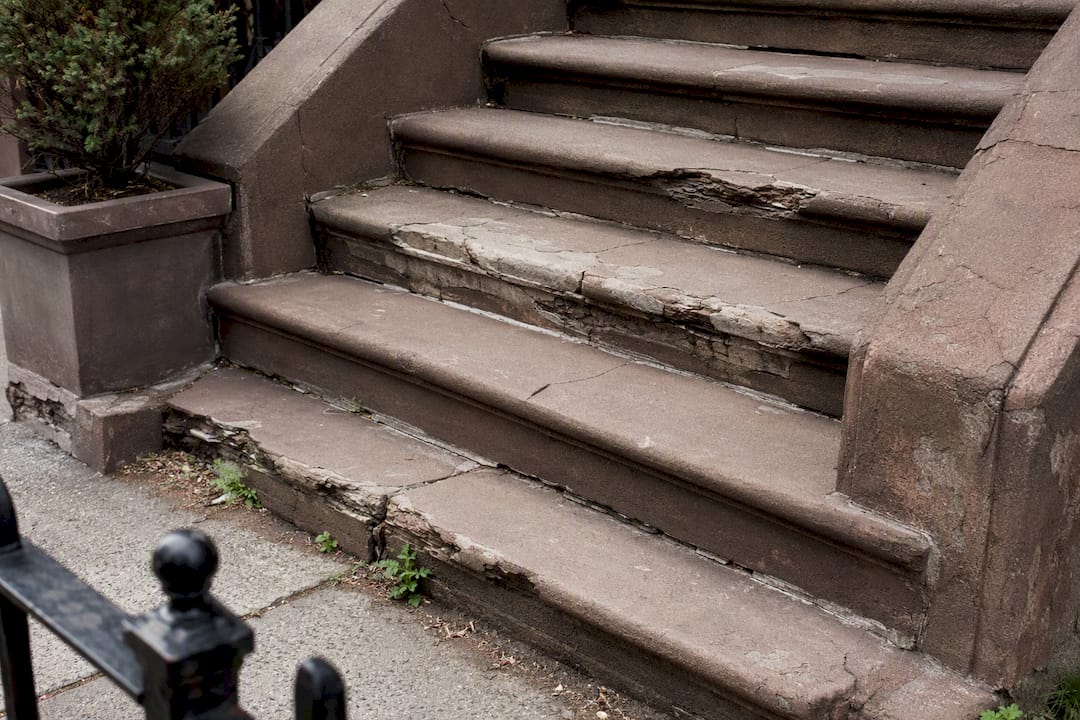
NYC brownstone stoop repair cost varies widely by scope, but owners should expect per-stair repairs to run in the low thousands while a full stoop rebuild reaches well into five figures, depending on stone type, structural condition, and access. Partial repointing or single-tread replacement sits at the low end. A full rebuild with new stone units, structural correction, and ironwork sits at the high end, and NYC pricing tends to run above national averages cited by regional contractor guides because of labor rates, permit requirements, and tight row house access.
Several factors drive the final number more than owners expect going in:
Stone type and sourcing. Matched natural sandstone costs more and takes longer to secure than cast stone alternatives.
Labor rates. NYC masonry crews charge more than national averages, and skilled brownstone specialists charge more still.
Scaffolding and access. Row house stoops on narrow streets often need sidewalk shed permits and staged material delivery, adding cost before any stone gets touched.
Hidden structural repairs. A probe that reveals voids beneath the treads can double the original scope mid-project.
Permits and disposal. DOB filing fees and debris removal add a line item most rough estimates skip.
Railwork. Custom ironwork fabrication for landmark-district stoops runs higher than off-the-shelf railing.
Budget wisely by phasing repairs across seasons, requesting line-item estimates from at least three bidders, and asking each contractor to flag where cast stone could substitute for natural sandstone without violating landmark rules. Owners who budget a premium above national averages up front avoid the sticker shock that derails half-finished projects.
What Happens During a Stoop Restoration Project?
Most projects move through a predictable sequence, though the pace depends heavily on what the crew finds once they open up the stone.
Inspection and diagnosis. A visual survey followed by probing of mortar joints and, for suspected structural issues, an engineered assessment of the stoop’s foundation.
Scope and permitting. The contractor drafts a written scope, files any required DOB paperwork, and schedules around inspection windows.
Demolition. Removal of failed stone units, loose mortar, and compromised structural elements.
Masonry replacement and structural fixes. New units, dutchman repairs, or anchor work to correct settlement or voids.
Finishing. Repointing, waterproofing application, and rail reinstallation.
Cleanup and final walkthrough.
A single-step repair can wrap in a few days. Partial stoop work often takes two to four weeks. A full rebuild with structural correction can stretch past six weeks once DOB inspection scheduling and stone lead times factor in.
Pro Tip: Ask your contractor for a realistic timeline range up front, not a best-case number. Weather delays and DOB inspection backlogs are the two most common reasons projects run long.
Do You Need a Permit for Stoop Restoration in NYC?
Most structural stoop work, and any project that alters the footprint or affects the public sidewalk, requires a DOB permit filing. Sidewalk-adjacent work sometimes triggers a separate DOT filing. If the building sits in a historic district, the Landmarks Preservation Commission may need to approve materials and design before DOB will issue a permit, which can add weeks to the schedule.
Filing requirements affect both cost and timeline. Permit fees, required sign-offs from a licensed professional, and DOB inspection scheduling all extend the calendar beyond the actual construction time. Property owner guidance from DOB outlines what owners are responsible for versus what a contractor typically handles.
Ask directly who files the permit, the contractor or a hired expediter.
Request a copy of the filed permit before work starts.
Confirm whether your block sits in a historic district before finalizing material choices.
Point | Details |
Permit trigger | Structural or sidewalk-adjacent stoop work generally requires a DOB filing. |
Historic district review | LPC approval may be needed for materials and design before DOB issues a permit. |
Owner responsibility | Confirm in writing who files paperwork and keep copies of all permits. |
How Do You Vet a Brownstone Stoop Contractor?
Comparing bids on price alone is how owners end up with mismatched stone and a second repair bill within five years. Compare scope first.
Check DOB filing history under the contractor’s license to confirm active, completed work in NYC.
Confirm current insurance coverage and ask for a certificate naming you or your building.
Request references specifically for brownstone or stoop work, not general renovation.
Ask to see photos of at least two completed stoop projects with similar stone.
During the interview, ask what mortar spec they use and why, how they source matched replacement stone, whether subcontractors handle the masonry, what contingency they build in for hidden structural issues, and what warranty period covers the finished work.
Red flag: a bid with no line-item breakdown, just a flat number.
Red flag: no mention of permits at all.
Red flag: reluctance to put a warranty period in writing.
Get everything in a signed contract, including how change orders get priced if the crew finds hidden damage once demolition starts.
Why DJ Custom Contracting’s NYC Experience Matters
DJ Custom Contracting LLC has operated in New York City since 2018, handling exterior renovation, DOB violation removal, and DOT violation removal alongside general contracting work across residential and commercial properties. That mix matters for stoop work specifically, because stoop projects frequently intersect with open DOB violations, sidewalk compliance, and filing requirements that a generalist unfamiliar with city processes can miss.
A contractor who already navigates DOB filings for violation removal brings that same fluency to a stoop permit, rather than treating it as unfamiliar paperwork.
The team’s experience spans:
Structural stoop repair paired with active DOB violation resolution.
Exterior renovation scopes that include masonry, waterproofing, and railwork.
Coordination on permit filings for row house and brownstone properties.
If your stoop shows spalling, loose treads, or a rail that has worked loose from its post, a condition assessment through DJ Custom Contracting’s exterior renovation services is the practical first step before any bid comparison begins.
How Do You Pay for Stoop Restoration Work?
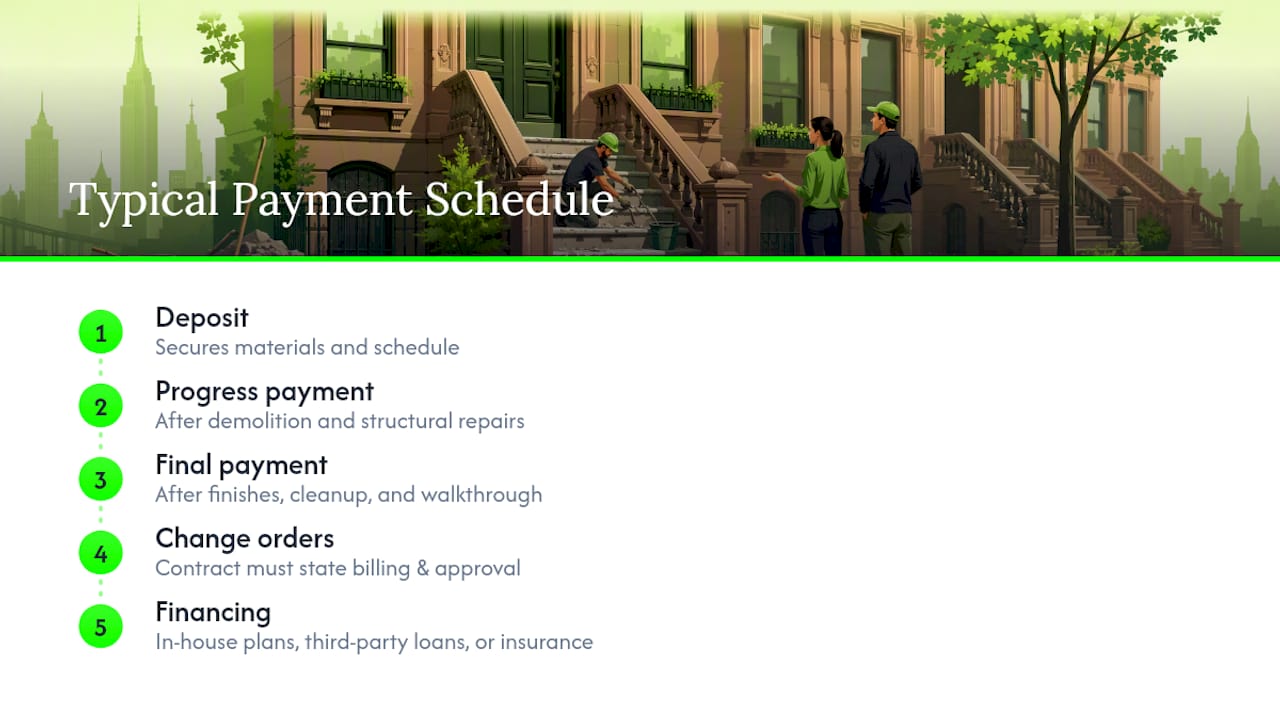
Most NYC contractors structure payment around project milestones rather than a single upfront sum, and you should treat any request for full payment before work begins as a warning sign. A typical schedule breaks into a deposit to secure materials and scheduling, a progress payment once demolition and structural repairs are complete, and a final payment after finishes and cleanup pass your walkthrough.
Ask specifically how change orders get billed. Hidden structural damage found mid-demolition is common enough on brownstone stoops that your contract should already spell out how added scope gets priced and approved, rather than negotiating it under pressure once the stone is already opened up.
Financing varies by contractor and project size. Some NYC contracting firms offer in-house payment plans for larger rebuilds, while others point owners toward third-party home improvement financing or point out that stoop repair may qualify for homeowner insurance coverage if the damage stems from a covered event like storm impact. Ask directly during your initial consultation what payment structures a contractor supports, and get the full schedule, including percentages tied to each milestone, written into the contract before signing. A vague verbal promise about “flexible payment” is not a substitute for numbers on paper.
What Maintenance and Warranty Coverage Should You Expect?
A completed stoop restoration is not the end of the relationship with a properly run project. Reputable contractors offer a workmanship warranty on new masonry and structural repairs, typically covering issues like premature mortar failure or improperly seated stone units for a defined period after completion. Ask for that period in writing before you sign, and confirm what specifically it covers versus what falls under normal wear.
Post-restoration maintenance matters more for brownstone than most exterior materials, because the same water infiltration that caused the original damage will start again without upkeep. Reapplying breathable sealant on a multi-year cycle, checking mortar joints annually for early hairline cracking, and clearing drainage paths after major storms all extend the life of new repair work substantially.
Ask whether the contractor offers a follow-up inspection at the one-year mark.
Confirm whether the warranty covers labor only or labor and materials.
Keep photos and the permit record on file in case you sell the property or need proof of code-compliant work later.
Owners who skip maintenance after a rebuild often see the same spalling reappear within a decade. A brownstone stoop that gets checked annually and resealed on schedule can outlast one that gets ignored until it fails again.
The Real Problem With How Owners Shop for Stoop Repair
Most owners shop for brownstone stoop restoration the way they’d shop for a paint job: get three prices, pick the middle one, move on. That approach misses what actually determines whether a stoop lasts another fifty years or fails again in eight. The variable that matters most isn’t price. It’s whether the contractor understands why the stone failed in the first place, and whether they’re equipped to file the permits that come with fixing it correctly.
Conventional advice tells owners to focus on matching stone color and getting a fair number. Both matter, but neither prevents the most common failure I see in this niche: cement mortar patched over a lime-mortar structure, which traps water and guarantees a repeat failure within a few years. That’s not a pricing problem. It’s a specification problem, and it’s one most bid comparisons never surface because owners are comparing totals instead of methods.
Prioritize the DOB filing history and the mortar spec conversation before you look at the bottom line. A contractor who can’t answer either clearly isn’t ready for a brownstone stoop, no matter how competitive their number looks on paper.
— DJ
Ready to Get Your Brownstone Stoop Assessed?
DJ Custom Contracting is the direct route to a properly filed, correctly specified stoop repair in New York City, rather than a patchwork fix that reopens the same problem in a few years. As a full-service general contractor handling exterior renovation, masonry restoration, and DOB violation removal since 2018, the team brings the permit fluency that a purely cosmetic repair job often lacks.

Request a condition assessment and you can expect a straightforward process: an on-site inspection of the stone and structure, a check for any open DOB violations tied to the property, and a phased quote that separates urgent repairs from work that can wait a season. Start with the exterior renovation contractor page to schedule your assessment, or reach out through the general contractor service page to discuss scope before committing to a bid.
Where to Verify Permit Rules and Repair Standards
NYC Department of Buildings for permit filings and DOB inspection requirements.
DOB property or business owner guidance for owner responsibilities during a filed project.
Sandstone Society’s brownstone maintenance guide for technical repair methods.
Heritage Masonry and Brick’s repointing guide for tuckpointing technique detail.
Sources


Comments