


Stop Work Order NYC: What Owners and Contractors Must Do

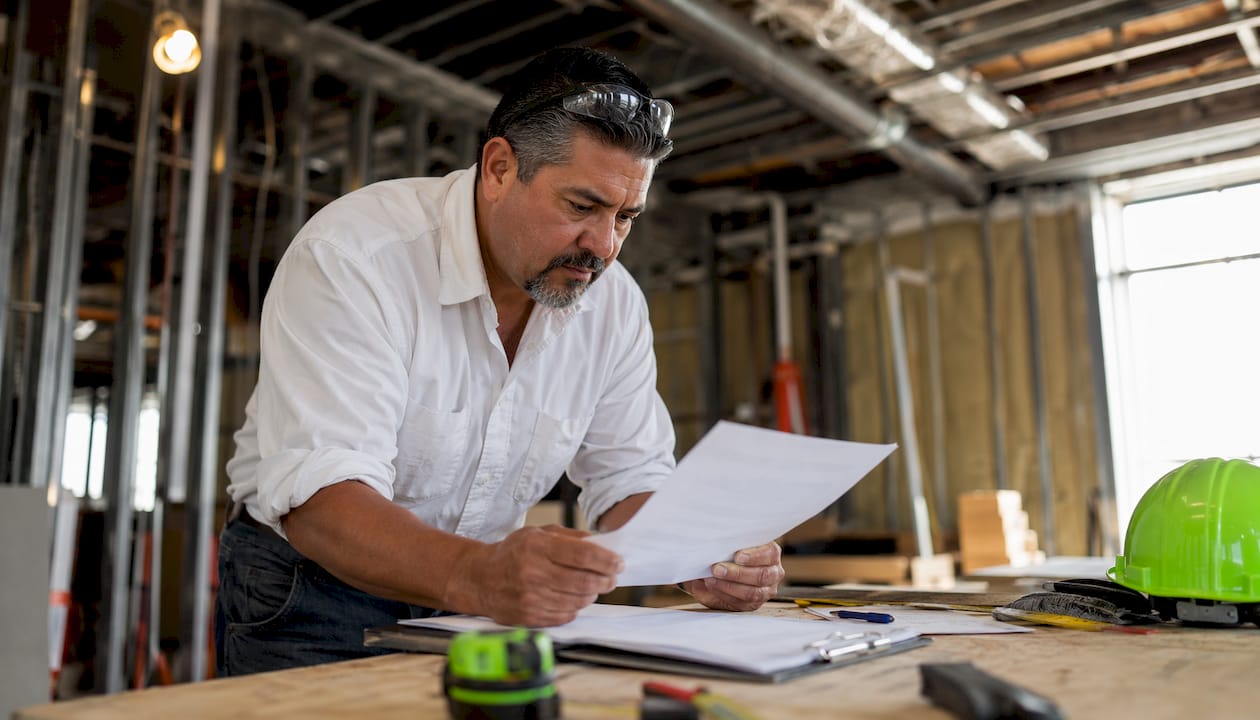
A Stop Work Order (SWO) in NYC immediately halts all cited construction activity. To get it lifted, you must correct every cited condition, submit required filings such as a Certificate of Correction or permit documentation, pay outstanding civil penalties, and request reinspection from the issuing New York City Department of Buildings (DOB) unit. The DOB will not rescind the order until each of those steps is complete.
Immediate first steps to begin lifting an SWO:
Stop all prohibited work on the site right now, without exception
Preserve the posted SWO notice — removing or defacing it is unlawful and triggers additional penalties
Photograph all site conditions and start a daily log
Identify every violation cited on the order and begin assembling corrective plans
File a Certificate of Correction (for major buildings with ECB violations) or permit documentation as required
Pay all outstanding civil penalties before requesting rescission
Request reinspection from the issuing DOB unit using the correct form and channel
Pro Tip: Contact the SWO Coordinator as soon as the order is posted. Assemble engineering reports and photo documentation before the inspector’s follow-up visit. Arriving at reinspection with complete, organized documentation is the single most effective way to shorten DOB review time.
Djcustomcontracting has handled DOB violation removal and compliance remediation since 2018. The steps below reflect both official DOB requirements and the practical workflow an experienced contractor follows on the ground.
Table of Contents
What is a stop work order in NYC, and what are the two types?
Common triggers: why does the DOB issue a stop construction notice?
How to lift a stop work order in NYC: the step-by-step process
Certificates of Correction: when you need one and how to file it
Special rules when an SWO is issued for work without a permit
Reinspection process: which DOB unit to contact and what to expect
Tenant notification rules and how complaints drive enforcement
Contesting or appealing an SWO: when it makes sense and how to proceed
How Djcustomcontracting resolves an SWO: a contractor’s checklist
What is a stop work order in NYC, and what are the two types?
The DOB defines a Stop Work Order as a formal enforcement directive that legally prohibits construction activity at a site until the cited conditions are corrected and the order is formally rescinded. It is not a warning. Once posted, it carries the full force of the NYC Administrative Code, specifically Section 28-207.2.
Full Stop Work Order: All work on the site must cease immediately, except for authorized remedial work the DOB specifically permits to address the hazard.
Partial Stop Work Order: Only specific activities, trades, or areas are restricted. Other permitted work may continue, and remedial work in the affected area may be authorized.
A Partial SWO can escalate to a Full SWO if the owner or contractor fails to notify DOB of structural incidents, submits incomplete repair-plan changes, or continues prohibited work. The SWO Coordinator communicates the required next steps after issuance and is the primary point of contact throughout the resolution process.
Knowing which type you have determines your immediate obligations and the scope of corrective work required.
Common triggers: why does the DOB issue a stop construction notice?
Understanding what caused the order helps you prioritize fixes and prepare the right documentation before reinspection.
Unsafe site conditions: Structural movement, unsecured loads, unstable scaffolding, or conditions that pose an immediate hazard to workers or the public.
Work without a permit: Construction performed without an approved permit, with an expired permit, or beyond the approved scope of an existing permit.
Denied inspector access: When a DOB inspector is refused entry to a site, a Full SWO may be issued under AC 28-116.1.
Tenant and public complaints: Reported hazards filed through Buildings-311 or the DOB’s Office of the Tenant Advocate can trigger inspections that result in SWOs.
Failure to notify DOB after incidents: Projects that do not report structural cracks, adjacent property damage, or injuries risk escalation from a Partial to a Full SWO.
Real-world escalation happens quickly. Recent NYC enforcement cases show that office-to-residential conversion projects have received Full SWOs after failing to update repair plans or disclose structural incidents to the DOB. Proactive disclosure consistently produces shorter shutdowns than delayed reporting.

What are the real consequences of an NYC construction halt?
An active SWO does more than pause your project. The financial and legal exposure compounds quickly if the order is not addressed promptly.
Escalating civil penalties: The DOB applies first-offense and subsequent-offense penalty amounts for work performed against an active SWO. DOB patrol inspectors run surprise Stop Work Order Patrols; any work found in violation during a patrol generates additional escalated penalties on top of the original.
OATH hearings and ECB violations: Unresolved violations proceed to the Office of Administrative Trials and Hearings (OATH) and the Environmental Control Board (ECB). Unpaid penalties block rescission entirely.
Escalation from Partial to Full SWO: Continued non-compliance or failure to document corrective progress can prompt the DOB to upgrade a Partial order to a Full one, halting all site activity.
Project delays and reinspection cycles: Each failed reinspection resets the clock. Incomplete documentation or the wrong reinspection form means another wait cycle.
Legal exposure for defacing the order: Removing, covering, or damaging the posted SWO notice is a separate offense under the Administrative Code.
An SWO functions as a legal anchor on the property. Work done against an active order can trigger additional escalated civil penalties that compound the original violation, even if a permit is later issued.
How to lift a stop work order in NYC: the step-by-step process
Rescission follows a defined sequence. Skipping or reordering steps is the most common cause of repeated reinspection failures.
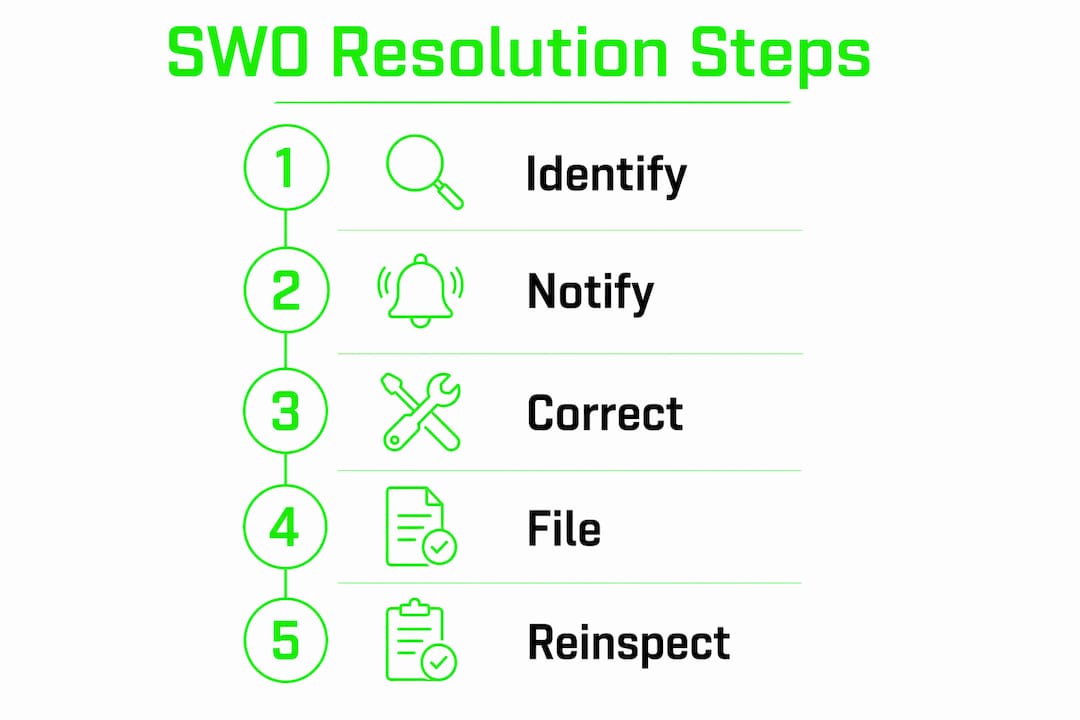
Stop all prohibited work and secure the site. Post safety barriers, secure materials, and preserve the SWO notice exactly as posted. Do not remove or cover it.
Identify every cited violation. Read the SWO carefully. List each cited condition and the corresponding code section. This list drives your corrective plan.
Perform corrective work with documentation. Execute repairs, stabilization, or permit-scope corrections. Photograph every stage and maintain daily logs. For structural issues, engage a licensed engineer to prepare stamped repair drawings.
File the required paperwork. Submit a Certificate of Correction for major buildings with outstanding ECB violations. For work-without-permit SWOs, file the required permit application through DOB NOW. Use the correct unit-specific reinspection appointment request form.
Pay all outstanding civil penalties. Resolve OATH/ECB summonses and confirm payment is recorded in the DOB system before requesting rescission.
Request reinspection from the issuing DOB unit. Use the Construction Safety Enforcement Appointment Request Form for safety-related orders (submitted to CSEappointments@buildings.nyc.gov) or the Borough Enforcement channel for building-code orders. Follow up with the SWO Coordinator until the order is formally rescinded.
Approximate timeline by step:
Step | Typical Duration |
Triage and corrective plan | a few days |
Corrective work (minor) | several days to a couple of weeks |
Corrective work (structural) | multiple weeks depending on complexity |
Filing and penalty payment | a few days |
Reinspection scheduling | a few days to a couple of weeks |
Rescission confirmation | a few days after passing inspection |
Pro Tip: Confirm which DOB unit issued the SWO before submitting any reinspection request. Using the wrong form is one of the most common administrative delays in the rescission process — it restarts the queue.
Certificates of Correction: when you need one and how to file it
For major buildings, a Certificate of Correction is often a required step before the DOB will rescind an SWO. Major buildings must submit a Certificate of Correction to the DOB’s Administrative Enforcement Unit to certify that outstanding ECB violations have been corrected.
Who files it: The property owner or their authorized representative, typically with support from a licensed engineer or architect.
Documentation typically required:
Engineer’s or architect’s certification confirming the condition is corrected
Dated photographs showing before and after conditions
Signed statements from the responsible party
Supporting permits or approved plans where applicable
Common filing mistakes to avoid:
Submitting without all required supporting documents (causes rejection and delays)
Filing before corrective work is fully complete and documented
Using outdated forms rather than current DOB NOW versions
Pro Tip: Begin preparing the Certificate of Correction package while corrective work is still in progress. The moment work is complete, you can file immediately rather than waiting days to compile documentation.
Special rules when an SWO is issued for work without a permit
A work-without-permit SWO carries extra requirements beyond standard rescission. The DOB will not rescind this type of order until a permit has been issued and all associated civil penalties, including those for continuing work against the SWO, have been paid.
Key rules:
An after-the-fact permit can satisfy the rescission requirement in many cases, but additional penalties for the unpermitted work still apply.
Resuming any work before rescission, even to “finish” the unpermitted scope, generates escalated penalties and resets the enforcement clock.
The permit application must accurately reflect the work already performed, which may require as-built drawings prepared by a licensed professional.
Workflow for work-without-permit SWOs:
Stop all work immediately and secure the site.
Engage a licensed architect or engineer to prepare permit-ready drawings reflecting the actual work.
Submit the permit application through DOB NOW.
Pay all civil penalties, including any assessed for the SWO violation itself.
Once the permit is issued and penalties are cleared, request reinspection from the issuing DOB unit.
Do not resume work until the SWO is formally rescinded.
Understanding alteration permit requirements before starting work is the most direct way to avoid this scenario entirely.
Reinspection process: which DOB unit to contact and what to expect
The reinspection pathway depends on which unit issued the SWO. Submitting to the wrong unit adds weeks to the process.
Construction Safety Enforcement (CSE): Handles safety-related SWOs, including those involving structural hazards, scaffolding failures, and unsafe site conditions.
Form: Construction Safety Enforcement Appointment Request Form
Submission: CSEappointments@buildings.nyc.gov
Bring: Stamped engineering reports, corrective work photos, daily logs, and proof of penalty payment
Borough Enforcement: Handles building-code violations, permit issues, and non-safety-related orders.
Form: Borough Enforcement Appointment Request (available through the DOB or Buildings-311)
Submission: Through the relevant borough office or DOB NOW
Typical reinspection timeline:
Submit the correct appointment request with complete documentation.
Receive a scheduled inspection date (typically 3–14 days after submission).
Inspector visits the site and verifies corrections.
If corrections pass, the DOB processes rescission (1–3 business days).
Confirm rescission in the DOB’s BIS or DOB NOW system before resuming work.
Causes of delay include incomplete documentation, unpaid penalties, and using the wrong form. Accurate, immediate compliance and direct communication with the SWO Coordinator materially shorten DOB review time.
Tenant notification rules and how complaints drive enforcement
Tenant complaints are one of the most consistent triggers for DOB inspections that result in SWOs. Owners and contractors who manage tenant communication proactively reduce their enforcement risk significantly.
Tenant Protection Plan (TPP): Required for covered construction in occupied buildings. Owners must distribute a TPP Notice to Occupants, post it in the lobby and on each floor near the elevator or main stairwell, and provide a paper copy on request. DOB requires notification 72 hours before beginning work in a building with a TPP.
Safe Construction Bill of Rights: Tenants in buildings undergoing renovation have defined rights to safe conditions. Failing to meet these standards invites complaints to the DOB’s Office of the Tenant Advocate (OTA) at (212) 393-2949 or TenantAdvocate@buildings.nyc.gov.
Communication logs matter: Keeping dated records of every tenant notice, posting, and communication creates a defensible paper trail if a complaint-driven inspection occurs.
On-site signage: Posting required notices visibly and on time is a simple step that reduces the likelihood of tenant complaints escalating to formal enforcement.
Good tenant communication is not just a legal obligation. It is a practical risk-management tool that keeps projects moving.
Contesting or appealing an SWO: when it makes sense and how to proceed
An appeal is worth pursuing when the SWO rests on a factual error, a procedural defect, or a condition that was corrected before the order was formally issued. Appeals without strong documentation rarely succeed.
Valid grounds for appeal:
The cited condition did not exist or was already corrected at the time of inspection
The SWO was issued based on a procedural error (wrong address, incorrect permit reference)
The cited work was within the approved permit scope and the inspector’s determination was factually incorrect
Required documentation:
Engineering reports or certifications contradicting the cited condition
Dated photographs taken before and at the time of inspection
Correction certifications or permit approvals showing compliance
Typical appeal process:
File a formal dispute or request an OATH hearing within the required timeframe (check the SWO notice for deadlines).
Submit all supporting documentation with the filing.
Attend the OATH hearing and present evidence.
Receive a determination (timelines vary; expect several weeks for a hearing date).
Common reasons appeals are denied: Insufficient documentation, no engineering certification, or a factual record that supports the inspector’s findings. If the appeal is denied, the fastest path forward is to remediate the condition and follow the standard rescission workflow. Attempting to re-litigate a well-documented violation rarely shortens the resolution timeline.
How Djcustomcontracting resolves an SWO: a contractor’s checklist
This is the practical sequence Djcustomcontracting follows when mobilizing on an active SWO. It reflects both DOB requirements and the realities of working under enforcement pressure.
Immediate site mobilization (Day 1): Secure the site, photograph all conditions, start a daily log, and notify the client and all relevant stakeholders. Contact the SWO Coordinator to confirm the issuing unit and required forms.
Technical assessment (Days 1–3): Engage a licensed engineer to review cited conditions. Prepare stamped repair drawings and, where required, temporary shoring or bracing to stabilize the structure.
Corrective work execution (Days 3–30+, depending on scope): Perform all required repairs with continuous photo documentation. For minor partial SWOs, resolution often falls within 1–2 weeks. Permit-related SWOs typically resolve in 2–4 weeks after permit issuance. Major structural issues may require 4–8 weeks or more.
Filing and administrative coordination: Prepare the Certificate of Correction package, file appointment requests with the correct DOB unit, and coordinate permit resubmissions if required. Confirm penalty payment is recorded in the DOB system.
Reinspection and rescission: Submit the reinspection request to the correct unit with complete documentation. Follow up with the SWO Coordinator. Confirm rescission in DOB NOW or BIS before authorizing any resumption of work.
Client communication throughout: Provide the owner with written status updates at each milestone. Transparency during the process reduces client stress and prevents unauthorized work resumptions that could escalate penalties.
Pro Tip: Keep a dedicated SWO resolution folder with every document, photo, form submission, and communication timestamped. DOB inspectors respond well to organized, complete packages. Incomplete submissions are the primary cause of repeat reinspection cycles.
Djcustomcontracting’s experience with building code violations and DOB compliance means the firm can move through this checklist efficiently, reducing the time a site sits idle.
Key Takeaways
Resolving a stop work order in NYC requires stopping prohibited work immediately, correcting every cited condition with documented evidence, filing the right forms with the right DOB unit, paying all penalties, and requesting reinspection before any work resumes.
Point | Details |
Stop work and preserve the posting | All prohibited work must cease; removing or defacing the SWO notice is a separate offense under the NYC Administrative Code. |
Use the correct reinspection form | CSE orders go to CSEappointments@buildings.nyc.gov; Borough Enforcement orders use a separate channel — the wrong form restarts the queue. |
Pay penalties before requesting rescission | Unpaid ECB or OATH penalties block rescission; confirm payment is recorded in the DOB system first. |
Work-without-permit SWOs need a permit first | DOB will not rescind a work-without-permit order until a permit is issued and all related penalties are cleared. |
Djcustomcontracting handles end-to-end SWO remediation | From engineering coordination and Certificates of Correction to reinspection requests, Djcustomcontracting manages the full resolution process. |
What contractors get wrong about SWO resolution
Most owners and contractors treat a Stop Work Order as a paperwork problem. It is not. It is a documentation problem, and that distinction changes how you approach resolution.
The projects that drag on for months are rarely the ones with the most serious violations. They are the ones where the contractor showed up to reinspection with incomplete photos, an engineer’s report that did not directly address the cited condition, or a penalty that was paid but not yet reflected in the DOB system. The inspector cannot rescind an order based on good intentions or verbal assurances. The file has to be airtight.
There is also a tendency to treat the SWO Coordinator as an obstacle rather than a resource. That is a mistake. The Coordinator knows exactly what the issuing inspector needs to see and can tell you whether your documentation package is complete before you submit it. A five-minute call can eliminate a two-week delay.
The other underestimated factor is tenant communication. Owners who keep tenants informed, post required notices on time, and maintain communication logs rarely face complaint-driven inspections on top of an active SWO. Owners who go silent during enforcement actions almost always do.
Djcustomcontracting’s compliance-first approach since 2018 is built on exactly this: treat every DOB interaction as a documentation exercise, communicate proactively with all parties, and never resume work until rescission is confirmed in writing.
Djcustomcontracting’s SWO remediation services
When an SWO shuts down your project, the cost of delay adds up fast. Djcustomcontracting offers a faster path to rescission because the firm handles every stage of the process in-house: emergency site stabilization, licensed engineering coordination, Certificate of Correction preparation, permit filings, and DOB reinspection scheduling. Owners and property managers get a single point of contact instead of managing multiple vendors while the clock runs.

Since 2018, Djcustomcontracting has resolved DOB violations and SWOs for residential and commercial clients across New York City, working in full compliance with local laws, licensing requirements, and building codes. Whether the order involves a structural hazard, unpermitted work, or a code violation, the team knows the exact forms, the right contacts, and the documentation standards that get orders rescinded without repeat inspection cycles.
Ready to move forward? Contact Djcustomcontracting for an on-site assessment or schedule a consultation through the commercial renovation services page. The sooner the process starts, the sooner the site reopens.
Authoritative DOB resources, forms, and references
Stop Work Order — NYC DOB: The primary DOB page covering rescission requirements, penalty policy, and SWO Patrol enforcement. Start here for official guidance.
Stop Work Order (SWO) Safety Page — NYC DOB: Defines Full and Partial SWOs and explains authorized remedial work provisions.
SWO Issuance Guidelines (PDF): The DOB’s official table of conditions that trigger Full vs. Partial SWOs, with the corresponding Administrative Code sections.
How do I lift a Stop Work Order? — Buildings-311: Step-by-step guidance including the CSE appointment request process and the CSEappointments@buildings.nyc.gov submission address.
TPP Posting Requirements — NYC DOB: Full requirements for Tenant Protection Plan notices, posting locations, and the 72-hour pre-work notification rule.
Safe Construction — Tenant Protections: Explains the Safe Construction Bill of Rights and how tenant complaints interact with DOB enforcement.
DOB NOW: The DOB’s online filing system for permit applications, Certificate of Correction submissions, and job status tracking.
BIS Web — NYC DOB: Property-level search tool to verify SWO status, open violations, and rescission confirmation.
Recommended


Comments