


Types of Luxury Bathroom Remodel Features to Know

Luxury bathroom remodel features are defined as the combination of architectural elements, premium fixtures, and advanced technology that transform a standard bathroom into a high-performance, design-forward space. The National Kitchen and Bath Association (NKBA) recognizes these features as direct indicators of both lifestyle quality and resale value. The best luxury bathroom upgrades integrate design, materials, and technology together rather than treating each as a separate decision. Homeowners who plan these elements early in the renovation process get better results at lower cost than those who retrofit features later.
1. Types of luxury bathroom remodel features: the architectural foundation
The most impactful luxury bathroom remodel features are structural, not cosmetic. They require decisions before framing begins, and changing them later is either impossible or expensive.
The three foundational architectural elements are:
Recessed niches and medicine cabinets: Recessed storage integrated into the wall cavity eliminates bulky protrusions and creates a clean, built-in aesthetic that signals high-end design immediately.
Wall-mounted plumbing: Wall-mounted fixtures require precise rough-in placement before drywall goes up. Relocating them afterward multiplies cost significantly.
Floating vanities: Anchoring vanities to hidden steel ledger plates creates the floating effect widely recognized as a contemporary luxury standard. The visual result is a lighter, more open space that is also easier to clean.
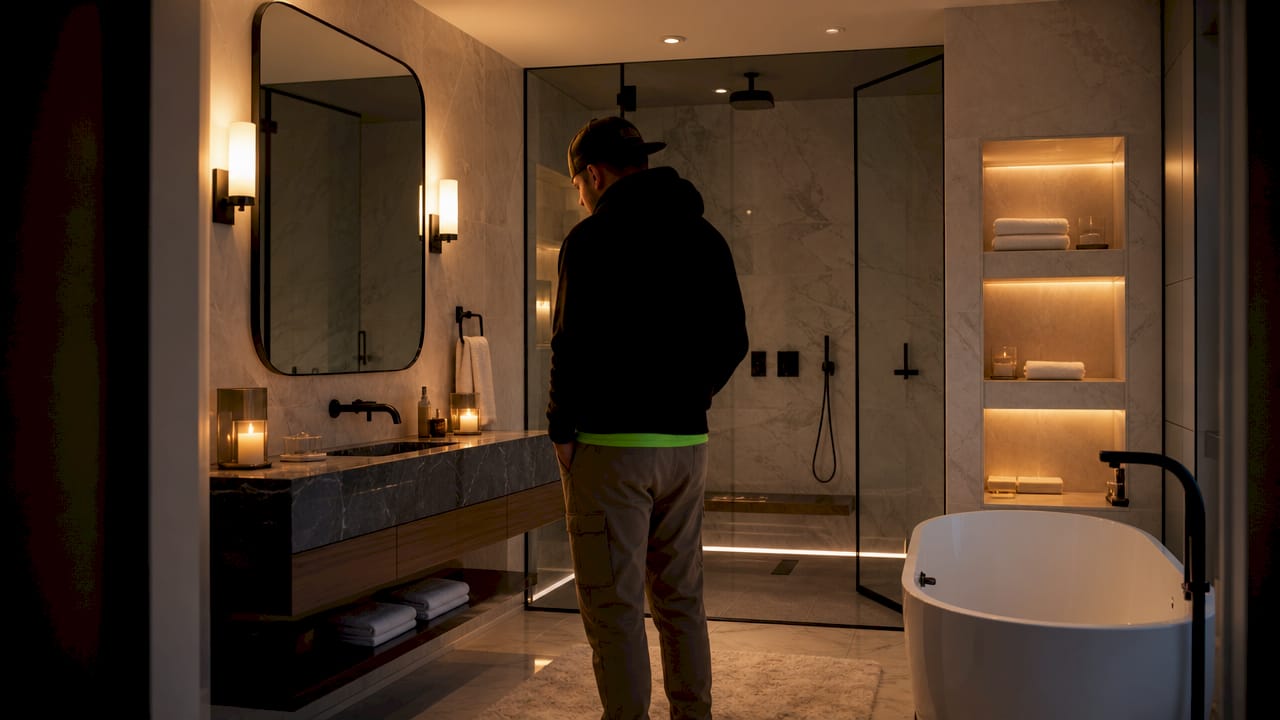
Layered lighting is the fourth architectural decision that most homeowners underestimate. Relying solely on overhead recessed cans lacks the depth required for upscale design. A proper luxury lighting plan uses face-level sconces, LED accent strips under vanities and inside niches, and dimmable ceiling fixtures on independent circuits. Each layer serves a different function: task, ambient, and accent.
Pro Tip: Finalize your recessed niche locations, plumbing rough-ins, and lighting circuits before the framing inspection. Changes after drywall installation can cost three to five times more than getting them right the first time.
2. High-end fixtures and finishes that define luxury bathrooms
Premium fixtures are the visual and tactile focal points of any upscale bathroom. They are where craftsmanship becomes most visible.
The current direction in luxury fixture design treats plumbing hardware as fine jewelry. Haute culture fixtures like Gessi’s Ludovica collection incorporate exquisite crystals, artistic surface patterns, and precious metals into faucets and showerheads. That approach transforms a functional object into a statement piece. The result is a bathroom that reads as artful rather than merely expensive.
Key high-end fixtures and finishes to consider:
Freestanding soaking tubs: According to NKBA, oval freestanding tubs dominate current trends. They serve as the room’s centerpiece and work best in bathrooms with at least 60 square feet of open floor space.
Large-format tiles: Slabs of natural stone or large-format porcelain (24x48 inches or larger) reduce grout lines and create a cleaner, more expensive look than standard tile patterns.
Integrated sinks and seamless surfaces: Vessel sinks carved from a single block of stone, or undermount sinks paired with continuous stone countertops, eliminate visual interruptions and are easier to maintain.
Brushed metals and specialty finishes: Unlacquered brass, matte black, and brushed nickel age distinctively and signal quality in a way that chrome does not.
The finish you choose for fixtures should carry through every metal surface in the room, including towel bars, cabinet hardware, and light fixtures. Mixing more than two metal tones in one bathroom reads as unplanned rather than layered.
3. Advanced technology and comfort features for upscale bathrooms
Technology is now a core component of luxury spa bathroom features, not an optional add-on. The best high-end bathroom accessories combine comfort, convenience, and sensory experience.
The most requested technology upgrades include:
Smart toilets: Features include automatic lid operation, heated seats, integrated bidet functions, and self-cleaning cycles. These are standard in luxury bathrooms across Japan and increasingly common in American high-end remodels.
Digital shower systems: Modern high-end showers blend multiple shower heads, body jets, chromotherapy lighting, and integrated waterproof audio and video into a single immersive system. Digital controls allow you to save personal presets for water temperature, pressure, and lighting mood.
Heated floors and towel warmers: Heated towel racks and radiant floor systems deliver an instantly perceivable luxury experience. Warm brass towel racks by designers like Joseph Giles combine heating function with visual elegance.
Ambient lighting controls: Programmable LED systems allow you to shift color temperature from bright white for morning routines to warm amber for evening relaxation without changing a single bulb.
Steam showers: A steam generator built into the shower enclosure converts the space into a home spa. Proper waterproofing and ventilation are non-negotiable for this feature to function safely long-term.
Pro Tip: If a full digital shower system exceeds your budget, start with a thermostatic valve and a single body jet panel. Both are compatible with future expansion, so you can add heads and controls without replacing the core plumbing.
4. How to select the best combination of luxury bathroom remodel features
Not every luxury feature belongs in every bathroom. The right combination depends on your space, how you use the room, and where you want to concentrate your investment.
The table below compares the four main feature categories by cost impact, installation complexity, and the type of value each delivers.
Feature category | Cost level | Installation complexity | Primary value delivered |
Architectural elements | Medium to high | High (pre-framing) | Long-term structural elegance |
Premium fixtures and finishes | Medium to very high | Medium | Visual and tactile impact |
Technology and comfort | Medium to high | Medium to high | Daily comfort and convenience |
Lighting systems | Low to medium | Low to medium | Ambiance and functional flexibility |
Architectural features deliver the most lasting value because they cannot be easily replicated with surface upgrades. A floating vanity with recessed niches and layered lighting reads as luxury even with mid-range tile. By contrast, expensive tile on a poorly lit, cluttered wall still looks ordinary.
For smaller bathrooms under 60 square feet, concentrate investment on one statement fixture, such as a freestanding tub or a designer faucet, and let the architectural details carry the rest. For larger primary bathrooms, a full technology package including a digital shower, heated floors, and smart lighting controls justifies the investment through daily use.
Coordinating finishes and lighting across all feature categories is the single most effective way to achieve a cohesive luxury aesthetic without overspending. Choose one dominant metal finish, one primary stone or tile material, and one lighting color temperature. Build every other decision around those three anchors.
Pro Tip: Before finalizing your fixture selections, create a physical sample board with your tile, countertop, metal finish, and paint color together. What looks cohesive on a screen often reads differently in natural light.
Key takeaways
The most effective luxury bathroom remodel combines early architectural planning, premium fixtures, and integrated technology to deliver lasting design quality and daily comfort.
Point | Details |
Plan architecture first | Recessed niches, wall-mounted plumbing, and floating vanities must be decided before framing. |
Fixtures are focal points | Freestanding tubs and bespoke faucets deliver the highest visual impact per dollar invested. |
Technology adds daily value | Digital showers, heated floors, and smart lighting convert routine use into a spa experience. |
Cohesion beats quantity | One metal finish, one stone material, and one lighting temperature unify all feature categories. |
Early decisions save money | Precision in rough-in locations makes luxury features achievable and avoids costly retrofits. |
What I have learned from planning luxury bathroom remodels
The most common mistake I see homeowners make is treating luxury as a finish-stage decision. They spend months selecting tile and fixtures, then discover the wall framing does not support a floating vanity or the plumbing rough-in is in the wrong location for a wall-mounted faucet. At that point, the options are expensive demolition or a compromised design.
The “quiet luxury” trend gets this right. It prioritizes structural and architectural decisions over surface ornamentation. A bathroom with perfectly placed recessed niches, layered lighting, and a floating vanity reads as genuinely luxurious even with restrained finishes. A bathroom with expensive tile and a poorly planned layout does not.
The second lesson is about bespoke fixtures. Luxury fixture design has moved toward treating hardware as artful, bespoke pieces that blend fine craftsmanship with functional design. That shift matters because it changes how you budget. A single exceptional faucet or showerhead can anchor an entire room’s design direction. You do not need to spend at the top of every category. You need one or two pieces that set the tone, and then let the architecture support them.
My honest advice: view your luxury bathroom remodel as a long-term lifestyle investment, not a renovation project. The homeowners who get the most satisfaction are those who spent time on the planning phase, not just the shopping phase. Get your remodeling costs mapped out early, align your architectural decisions with your fixture choices, and resist the temptation to add technology features as afterthoughts. The result will be a space that feels genuinely luxurious every single day.
— DJ
Djcustomcontracting’s approach to luxury bathroom remodels
Djcustomcontracting has managed residential and commercial interior renovations since 2018, with direct experience coordinating the early-stage architectural decisions that make luxury bathroom features achievable and cost-effective.

From framing-phase plumbing coordination to final fixture installation, Djcustomcontracting handles every stage of a high-end bathroom remodel. The team understands how floating vanities, recessed niches, digital shower systems, and layered lighting work together as a system, not as separate line items. For homeowners ready to move from inspiration to execution, Djcustomcontracting’s commercial and interior renovation services cover projects of every scale, with competitive rates and full compliance with local building codes and licensing requirements.
FAQ
What are the most important luxury bathroom remodel features to plan first?
Architectural elements like recessed niches, wall-mounted plumbing, and floating vanities must be finalized before framing begins. Retrofitting these features after drywall installation is significantly more expensive and often structurally limited.
How does layered lighting improve a luxury bathroom?
Layered lighting combines face-level sconces, LED accent strips, and dimmable ceiling fixtures to create both functional task lighting and adjustable ambient mood. Overhead recessed lighting alone cannot replicate this effect.
Are freestanding soaking tubs still a top luxury bathroom trend?
Yes. According to NKBA, oval freestanding tubs remain among the most requested luxury bathroom features and work best as a room centerpiece in bathrooms with sufficient open floor space.
What technology features define a luxury spa bathroom?
Digital shower systems with multiple heads, body jets, and chromotherapy lighting, combined with heated floors, smart toilets, and programmable ambient lighting, define the current standard for luxury spa bathroom features.
How do I keep a luxury bathroom design cohesive?
Choose one dominant metal finish, one primary stone or tile material, and one lighting color temperature, then apply those three anchors consistently across every fixture and finish selection in the room.
Recommended


Comments