


Expert Tips for Successful Business Renovations in 2026


Business owners and property managers across New York and New Jersey face a renovation landscape in 2026 that looks nothing like it did even three years ago. Labor markets are tight, material costs remain elevated, building codes continue to evolve, and state-level incentives like RETROFIT NJ are reshaping how large commercial retrofits get funded. Getting your renovation right this year requires more than a budget and a contractor. It demands a clear strategy, regional awareness, and the flexibility to adapt when conditions shift.
Table of Contents
Key Takeaways
Point | Details |
Clarify your goals | Define results and priorities before launching renovations to guide scope and spending. |
Track real market trends | Monitor NY/NJ construction and labor outlooks to time your project right and avoid supply crunches. |
Maximize funding opportunities | Programs like RETROFIT NJ can be invaluable, but require planning and documentation. |
Choose phased upgrades | Break projects into stages so you can adapt as new information and challenges arise. |
Work with local experts | Partnering with regionally experienced contractors boosts compliance and completion in 2026. |
Set your 2026 renovation goals and strategy
Before a single permit gets pulled or a contractor walks your space, you need to define exactly what success looks like for your renovation project. That sounds straightforward, but it is where many business owners lose time and money. Without clear goals, renovations drift in scope, over-deliver in some areas, and completely miss the mark in others.
Start by asking what the renovation needs to accomplish. Are you trying to attract and retain quality tenants? Reduce energy operating costs? Bring your facility into compliance with updated fire, electrical, or accessibility codes? Increase your property’s market value ahead of a refinance or sale? Each of these goals points toward different renovation priorities, timelines, and budgets.
Once your goals are defined, evaluate both short and long-term business priorities. A business planning to expand its footprint in 18 months has very different renovation needs than one securing a 10-year lease renewal. Matching renovation scope to your actual business horizon prevents over-investment in the wrong areas.
Key objectives to clarify before renovation planning begins:
Operational efficiency: Lighting, HVAC, and insulation upgrades that reduce monthly overhead
Code compliance: Meeting current DOB (Department of Buildings) and local fire code requirements
Tenant or customer experience: Layout changes, finishes, and amenities that attract occupants
Sustainability targets: Retrofits that reduce carbon emissions and qualify for grant programs
Resale or refinancing value: Updates that increase appraisal outcomes
Expert commercial renovation planning calls for building agility into every stage. As Deloitte’s Commercial Real Estate Outlook notes, CRE leaders should build agility, flexibility, and selectivity into their capital planning for 2026. That means phasing upgrades rather than committing to a complete overhaul upfront, and maintaining the financial bandwidth to pivot if economic or regulatory conditions shift mid-project.
Think of phasing as a built-in risk management tool. Complete the highest-impact, fastest-payback improvements first. Then reassess before committing capital to Phase 2. This approach keeps you from overextending if interest rates shift, incentive programs fill up, or a key tenant situation changes.
Pro Tip: Document your renovation goals in a one-page brief before meeting any contractor. A clear scope document protects you from scope creep and gives contractors the context they need to provide accurate bids.
Thoughtful interior updates, planned with your specific business goals in mind, consistently deliver more value than reactive or piecemeal improvements.
Understand the NY/NJ regional renovation outlook for 2026
The construction market in New York and New Jersey carries unique dynamics in 2026 that directly affect your renovation timeline, costs, and contractor availability. Understanding these conditions is not optional background knowledge. It is practical intelligence that should shape every decision you make.
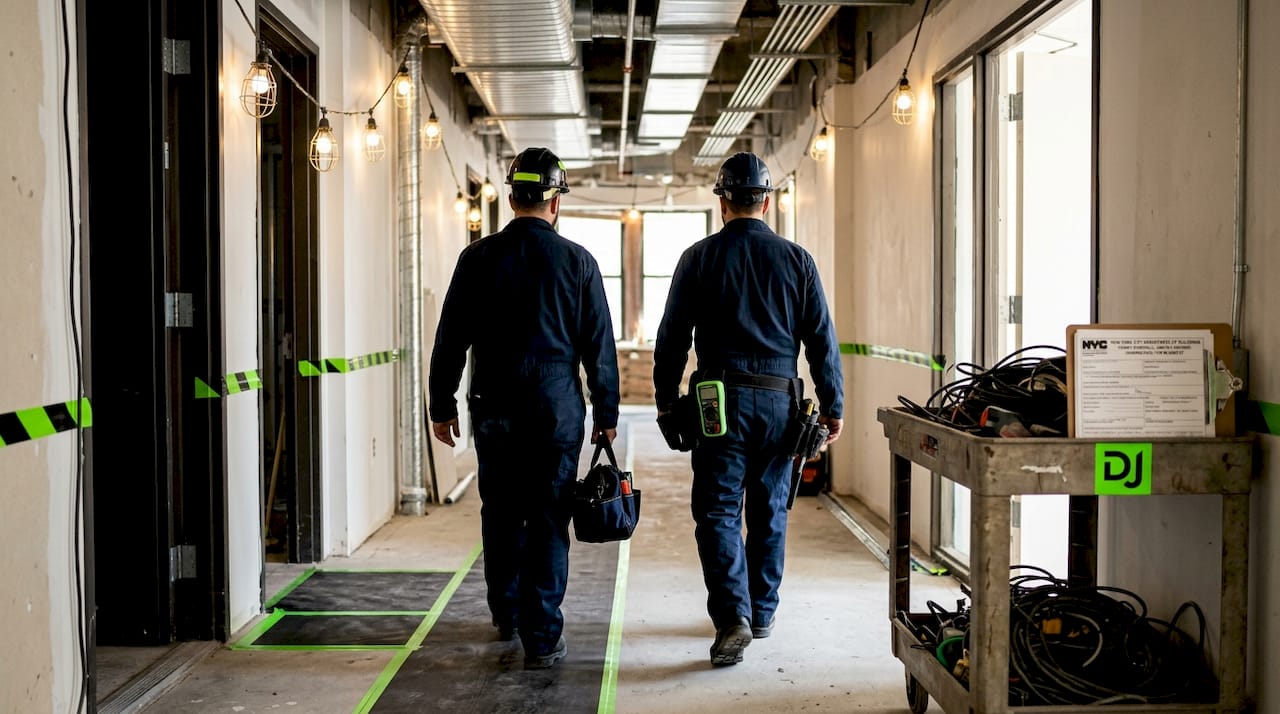
In New York City, renovation and alteration work is dominating the construction pipeline. NYC renovation activity is robust because the high cost of new builds has pushed developers and property owners toward improving what they already have rather than building from scratch. The 2025-2027 New York City Construction Outlook Report confirms that renovation and alteration projects represent a growing share of total construction activity in the city, with gross square footage in this category continuing to rise.
Factor | Impact on 2026 renovations |
High new construction costs | More owners choosing renovation over new builds |
Tight trade labor supply | Longer lead times for skilled contractors |
Elevated material costs | Need for earlier procurement and price locking |
Evolving NYC building codes | Compliance upgrades required before other work |
RETROFIT NJ program availability | Major incentive for NJ commercial owners |
This concentration of renovation activity has a predictable consequence: trade labor is in high demand. Electricians, plumbers, HVAC technicians, and structural specialists serving both NYC and NJ markets are booking months ahead. If you have not secured your contractor relationships, you are already behind the timeline for a smooth 2026 project start.
Material logistics are another pressure point. Supply chains have stabilized compared to the disruptions of 2021-2022, but lead times for specialty items like commercial HVAC units, custom glazing systems, and electrical switchgear remain longer than pre-pandemic norms. Waiting until construction documents are finalized to order critical materials is a strategy that invites delay.
For owners of older properties in New York, additional layers of planning apply. Working with buildings that have historic construction details requires contractors who understand both the structural characteristics of pre-war buildings and the specific DOB requirements that govern alterations to those structures.
“In 2026, the owners who start contractor conversations and material procurement early will complete projects on schedule. Those who wait until everything is finalized will spend months waiting for everything else.” This is the operating reality in the NYC and NJ construction market right now.
The takeaway here is simple: treat contractor selection and early procurement as strategic moves, not administrative tasks. They directly determine whether your project launches on time.
Leverage funding and incentives: The RETROFIT NJ advantage
For business and property owners in New Jersey, 2026 brings a significant opportunity through the RETROFIT NJ grant program administered by the New Jersey Economic Development Authority (NJEDA). This program is not widely understood, and that lack of awareness is costing eligible owners real money.
RETROFIT NJ is a $75 million pilot grant program designed to reimburse large-scale commercial retrofits that meaningfully reduce building emissions. Grant awards range from $2.5 million to $12.5 million per project. These are not small incentives. For qualifying properties, RETROFIT NJ can fundamentally change the financial calculus of a major renovation.
The program rewards projects that take a multi-pronged approach to energy reduction, meaning you cannot simply replace one HVAC unit and expect to qualify. Eligible projects typically address multiple building systems simultaneously, such as mechanical, electrical, envelope, and lighting upgrades together.
Here is how RETROFIT NJ compares to standard renovation financing:
Criteria | Standard bank financing | RETROFIT NJ grant |
Funding type | Loan (repayment required) | Grant (no repayment) |
Project scale | Any size | Large-scale retrofits only |
Approval basis | Creditworthiness | Emissions reduction outcomes |
Timing | Funds disbursed at or before construction | Reimbursement after verified completion |
Documentation burden | Standard | Extensive (engineering, verification) |
The reimbursement-based structure is the most important detail to understand. As CBIZ’s analysis of the NJEDA program explains, RETROFIT NJ requires owners to plan financing, engineering, verification, and procurement before breaking ground. You spend first. The grant reimburses after verified completion. This means you need bridge capital, a strong documentation system, and a contractor team capable of meeting the program’s verification requirements.
Steps to position your NJ property for RETROFIT NJ eligibility:
Conduct a preliminary energy audit to identify which building systems offer the greatest emissions reduction potential.
Engage a licensed engineer early to develop the documentation and modeling required for the application.
Arrange bridge financing sufficient to cover full project costs before reimbursement arrives.
Hire contractors experienced with grant-funded projects who understand the verification and reporting protocols.
Submit your application with complete supporting documents and allow adequate review time before your target construction start.
Pro Tip: Review the New Jersey retrofit tips available from experienced local contractors who have navigated grant programs in the state. Preparation quality at the application stage directly determines approval speed.
Even if your project does not meet the RETROFIT NJ minimum spend threshold, understanding the program’s criteria is useful. Many of the upgrades that qualify, such as high-efficiency HVAC, LED lighting conversions, and improved building envelopes, deliver immediate operational savings regardless of whether a grant is involved.
Manage your renovation for speed, flexibility, and quality
Having a solid plan and the right funding mechanism means nothing if the project execution fails. Construction management in 2026 requires a hands-on, adaptive approach that goes beyond handing your plans to a contractor and waiting for the keys.
The most effective renovation management approach in today’s NY/NJ market centers on three principles: phasing, communication, and contractor partnership.
Phased renovation is the most reliable way to control financial risk while still making meaningful progress. Start with improvements that address safety, compliance, and the highest-impact operational costs. Complete Phase 1, measure the outcomes, and use that data to refine the scope and budget for Phase 2. As Deloitte’s analysis confirms, staged renovation spending is prudent for 2026: start with priority improvements and monitor results before expanding. This staged methodology mirrors how experienced phased renovation strategies protect owners from overcommitting in uncertain market conditions.
Steps for effective renovation project management in 2026:
Assign a single point of contact on your team to own all contractor communication and decision-making.
Schedule weekly progress check-ins with your contractor to surface issues before they become delays.
Lock in material orders early for long-lead items, even before construction documents are fully finalized.
Build contingency into your budget: a 10-15% contingency is realistic given current market conditions.
Understand your permit timeline: NYC and NJ permit review timelines vary significantly by project type and borough.
Verify contractor licensing and insurance for every trade on your project, not just the general contractor.
For owners pursuing RETROFIT NJ, CBIZ’s review specifically highlights that owners and property managers should prepare for lead times in procurement and financing under the program. Underestimating these lead times is the most common mistake made by otherwise well-prepared applicants.
“The best-managed renovation projects we see are the ones where the owner is engaged but not reactive. They set the parameters early, trust the right team, and make decisions quickly when adjustments are needed.”
Contractors familiar with NY and NJ building codes, DOB processes, and regional supply networks bring measurable value to your project. They know which inspectors to expect, which material suppliers have reliable stock, and how to sequence work to avoid costly rework. That local knowledge is not a nice-to-have in 2026. It is a practical advantage that saves time and money.
Pro Tip: Ask every contractor candidate to walk you through a recent project where something went wrong and how they resolved it. Their answer tells you more about their project management capability than any portfolio photo.
Why 2026 business renovation strategies demand new thinking
Here is the honest reality that does not always appear in renovation planning guides: most of the risk in a 2026 commercial renovation is not the construction itself. It is the assumptions owners bring to the project before construction even starts.
The conventional wisdom in renovation planning has long been to set a budget, get three bids, pick the middle one, and start building. That approach worked in more stable market conditions. In 2026, it exposes you to significant risk. As Deloitte’s Commercial Real Estate Outlook makes clear, conventional optimism in renovation planning can expose businesses to greater risk in today’s market, and rigorous scenario testing and adaptive plans are the smarter alternative.
What does adaptive planning actually look like in practice? It means running multiple budget scenarios before committing, not just one. It means understanding which parts of your plan are fixed requirements and which are preferences that can flex if conditions change. It means having a clear decision framework for what triggers a scope reduction versus what triggers a timeline extension.
The owners who will navigate 2026 renovations most successfully are those who treat their project as a living plan rather than a fixed commitment. They review and update assumptions monthly. They maintain relationships with more than one contractor in case availability shifts. They track cost impact lessons from comparable projects in the region so they are never surprised by what they did not know to ask about.
Partnering with contractors who are genuinely embedded in the NY/NJ market, not just licensed to work here, is the single most reliable way to ensure your plan reflects actual market realities. Code alignment, incentive awareness, and regional supply knowledge are not skills you develop by reading a manual. They come from years of work in this specific environment.
The operators who will regret 2026 are those who assumed the market would cooperate with their original plan. The ones who will look back with satisfaction are those who planned for the market as it actually is, and built the flexibility to respond when it changed.
Plan your 2026 renovation with expert support
Turning a solid renovation strategy into a completed project requires more than good intentions. It requires a contractor team with the code knowledge, trade relationships, and project management discipline to execute in today’s NY/NJ market.

DJ Custom Contracting LLC has been delivering commercial and residential renovation solutions across New York and New Jersey since 2018. Whether you need business renovation support for a full commercial buildout, targeted interior renovation solutions to modernize your tenant spaces, or comprehensive exterior upgrades that improve curb appeal and building performance, the team brings hands-on knowledge of local codes, incentive programs, and regional market conditions to every project. No job is too large or too small. Reach out today to start planning your 2026 renovation with a team that knows this market.
Frequently asked questions
What’s the biggest risk for business renovations in 2026?
The biggest risk is underestimating funding complexities, labor shortages, and shifting code requirements, especially in NY and NJ. NYC renovation activity remains robust due to market conditions affecting new construction, which keeps both labor and contractor availability tight throughout the region.
How do I apply for RETROFIT NJ grants for my business property?
RETROFIT NJ applicants must prepare by confirming eligibility, planning documentation, and arranging bridge capital for up-front costs before reimbursement. The program is reimbursement-based, requiring owners to plan financing and documentation before construction begins.
Will trade labor be available for large-scale renovations in NYC in 2026?
Renovation-related labor demand is expected to remain strong in NYC in 2026, so early contractor selection is strongly recommended. Labor demand stays high because renovation and alteration work continues to make up a major share of total NYC construction activity.
Is phased renovation spending a good approach for my property?
Phased spending lets you prioritize critical upgrades and adjust plans if market or funding conditions evolve. Staged renovation spending is considered prudent for 2026 business owners who face uncertain economic and regulatory conditions throughout the year.
Recommended


Comments