


Restoration Process for Business Owners: A Practical Guide

The restoration process for business owners is a structured approach to recovering property and operations after damage, designed to minimize downtime and financial loss. Property damage from fire, water, or structural failure can shut down a commercial facility within hours. Without a clear business restoration plan, owners risk prolonged closures, insurance disputes, and permanent revenue loss. The good news is that a well-coordinated recovery, one that integrates safety assessment, contractor management, and continuity planning, puts you back in operation faster than most owners expect.
What are the first steps in the restoration process for business owners?
The first 24–48 hours after property damage define the entire recovery. Your actions in this window directly affect your insurance coverage, your liability, and how quickly repairs can begin.
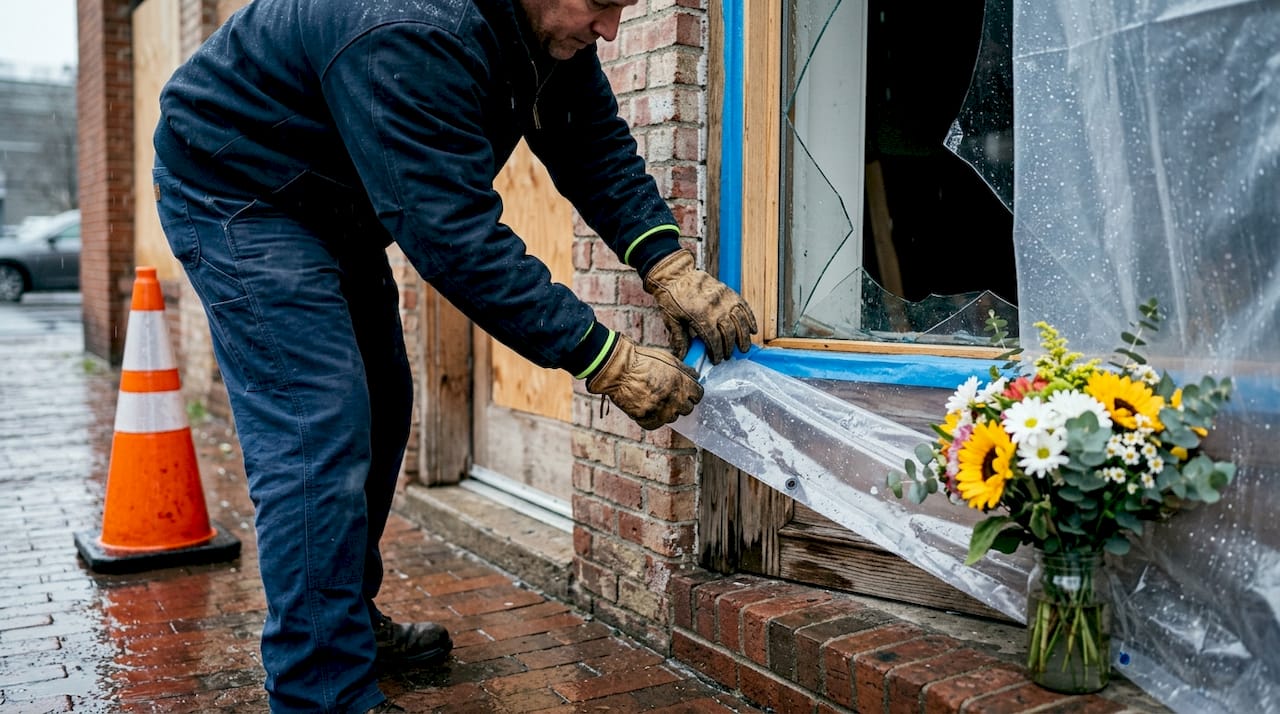
Business owners carry a contractual duty to mitigate further loss immediately after damage occurs. That means tarping exposed roofs, boarding broken windows, shutting off water supply lines, and securing the site against unauthorized entry. Failure to act on this duty can result in your insurance carrier excluding coverage for any damage that occurred after the initial event.
At the same time, you must protect the evidence. Leave the damaged area undisturbed until a cause-and-origin inspection is completed, with one exception: emergency water extraction. Standing water causes mold growth within 24–72 hours, so extraction and dehumidification must begin immediately. Every other area of damage should remain untouched until your adjuster and contractor have documented it.
Your immediate action checklist:
Secure the site physically (fencing, boarding, tarping)
Shut off utilities if there is a risk of gas leaks or electrical hazards
Begin water extraction and deploy dehumidifiers if water damage is present
Photograph and video every damaged area before any cleanup begins
Notify your insurance carrier in writing within the timeframe your policy requires
Contact a licensed commercial contractor to assess structural safety
Pro Tip: Open a dedicated bank account specifically for disaster-related expenses and reimbursements. Mixing recovery funds with your operating account creates accounting confusion that slows down both insurance claims and tax filings.
A pre-disaster photographic inventory and insurance appraisal also matters here. Pre-event documentation speeds up claims and prevents coinsurance penalties that arise when a property is found to be underinsured at the time of loss.
How to coordinate assessments and keep your business running during recovery
Once the site is secured and your insurer is notified, the focus shifts to assessment and continuity. These two tracks must run at the same time, not one after the other.
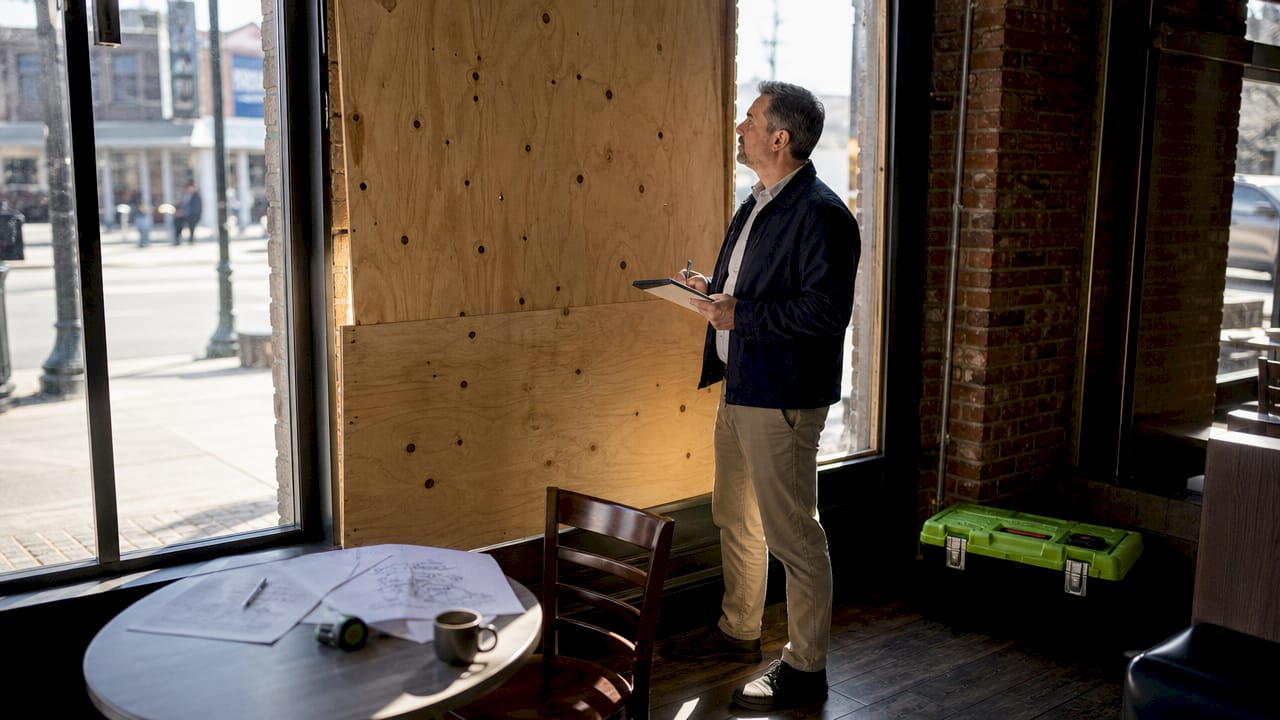
Start with a formal site safety verification. A licensed contractor or structural engineer confirms which areas are safe to occupy, which require restricted access, and which must be completely vacated. This determination shapes every decision that follows, from where your staff works to how quickly reconstruction can begin.
Map your critical business functions next. Ask yourself which operations generate the most revenue and which have the shortest tolerance for interruption. A manufacturer losing access to its production floor faces a different crisis than a law firm losing its conference rooms. Knowing your minimum viable operation level lets you allocate resources where they matter most.
A structured approach to continuity planning follows four steps:
Identify critical functions. List every business process and rank them by revenue impact and time sensitivity.
Assign temporary workspace. Temporary buildings and alternative spaces allow key functions to continue while permanent repairs proceed. Options include leased office space, modular facilities, or remote work arrangements.
Integrate your insurance adjuster and contractor. Both parties need access to the same damage documentation and timeline. Keeping them in separate communication loops creates delays and conflicting instructions.
Set a communication schedule. Brief your team, your clients, and your key vendors on the situation. Silence creates more disruption than the damage itself.
“The fastest recovery requires addressing multiple operational and physical restoration tasks in parallel instead of sequentially. Owners who wait for repairs to finish before planning their return to operations lose weeks they cannot recover.” — How to Restore Business Operations After Disaster Quickly
For guidance on managing the construction project stages that run alongside your continuity planning, a structured owner’s framework helps you track milestones without getting lost in contractor schedules.
What are the key phases of restoration implementation?
The implementation phase is where planning converts into physical progress. A well-run commercial restoration moves through four overlapping phases rather than four sequential ones.
Phase | Primary Focus | Key Actions |
Stabilization | Stop ongoing damage | Tarping, water extraction, structural shoring |
Assessment | Quantify full scope of loss | Contractor inspection, adjuster walkthrough, scope of work |
Solution alignment | Agree on repair plan and timeline | Contractor bid review, insurance approval, permit applications |
Implementation | Execute repairs and restart operations | Cleanup, reconstruction, systems testing, staff return |
The critical insight here is that phases overlap. While your contractor is completing demolition and cleanup in one section of the building, your team can be operating from a temporary space and your project manager can be finalizing material orders for the reconstruction phase. Coordinating these workstreams in parallel shortens total downtime significantly compared to a linear approach.
Clear roles and communication channels are what keep parallel execution from becoming chaos. Assign one point of contact on your side to interface with the contractor, one to manage insurance documentation, and one to oversee internal operations. When everyone knows their lane, decisions get made faster and fewer tasks fall through the gaps.
Pro Tip: Review the commercial damage restoration process in detail before your first contractor meeting. Owners who understand the scope of each phase ask better questions and avoid costly scope changes mid-project.
Permit applications deserve special attention. Commercial repairs in most jurisdictions require building permits, and delays in permit approval stall reconstruction. Submit applications as soon as your scope of work is finalized, not after demolition is complete.
How to manage finances and rebuild stronger after property damage
Financial discipline during recovery determines whether a business stabilizes or slides into a deeper crisis. The physical repairs are only part of the equation.
Apply the 3–5 priorities rule to your recovery plan. Identify the three to five highest-impact actions you can take over the next 30–90 days and focus your resources there. Owners who try to fix everything at once spread their attention too thin and make slower progress on what actually matters.
Financial and operational priorities to track:
Separate all recovery expenses. Every invoice, receipt, and payment related to the restoration goes through your dedicated disaster account. This separation simplifies your insurance claim, your tax deductions, and any future audit.
Evaluate your core revenue activities. Identify which products or services generate the most profit and protect those first. If you run a restaurant, getting your kitchen operational takes priority over restoring the dining room.
Establish a weekly operating rhythm. Hold a short weekly meeting with your recovery team to review progress, resolve blockers, and update timelines. Consistent accountability prevents small delays from compounding.
Bring in external advisors early. A public adjuster, a CPA familiar with disaster tax provisions, and a licensed general contractor each bring expertise that reduces your financial exposure. Waiting to engage them costs more than their fees.
Document every business interruption loss. Lost revenue, extra expenses, and payroll for idle staff are all potentially recoverable under a business interruption insurance policy. Track them from day one.
Rebuilding after damage is also an opportunity to address deferred maintenance and code compliance issues that existed before the event. Djcustomcontracting has managed commercial projects where owners used the restoration scope to upgrade electrical systems, improve accessibility, and bring facades into compliance with current building codes. Those upgrades would have cost more as standalone projects. Bundling them into the restoration scope saves money and reduces future disruption.
For a broader view of what commercial renovation involves during recovery, understanding the full scope helps you have more productive conversations with your contractor and your insurer.
Key Takeaways
A structured restoration process, executed in parallel workstreams with clear financial controls, is the fastest path to full business recovery after property damage.
Point | Details |
Mitigate loss immediately | Secure the site, extract water, and document damage within the first 24–48 hours. |
Separate recovery finances | Open a dedicated account for disaster expenses to simplify claims and tax filings. |
Run workstreams in parallel | Coordinate cleanup, repairs, and continuity planning simultaneously to cut downtime. |
Focus on 3–5 priorities | Concentrate resources on the highest-impact recovery actions over the next 30–90 days. |
Pre-event documentation matters | A photographic inventory and insurance appraisal prevent coverage gaps and speed up claims. |
What I’ve learned watching business owners navigate restoration
After years of working on commercial restoration and renovation projects, the pattern I see most often is this: owners who treat restoration as a construction problem recover slower than owners who treat it as a project management problem.
The physical repairs are the straightforward part. Licensed contractors know how to demo, rebuild, and restore. What trips owners up is the coordination layer. They wait for the adjuster before calling a contractor. They wait for the contractor’s report before talking to their insurer. They wait for insurance approval before setting up a temporary workspace. Each wait adds days, sometimes weeks, to a timeline that is already painful.
The owners who recover fastest make decisions with incomplete information and adjust as they go. They secure the site on day one, get a contractor on site for a preliminary assessment on day two, and open a temporary workspace by the end of the first week. They do not wait for perfect clarity before acting.
The other mistake I see regularly is underestimating documentation. Owners who photograph damage thoroughly, track every expense, and keep written records of every conversation with their insurer resolve claims faster and with fewer disputes. The ones who rely on memory and verbal agreements spend months arguing over scope and coverage.
Restoration is stressful. The goal is not to eliminate that stress but to channel it into the right actions at the right time. A clear plan, a reliable contractor, and disciplined financial tracking make the difference between a business that comes back stronger and one that never fully recovers.
— DJ
Djcustomcontracting: commercial restoration support for business owners
Property damage does not wait for a convenient time. Djcustomcontracting has been supporting commercial clients since 2018, managing damage restoration and renovation projects from initial site assessment through final inspection.

Djcustomcontracting handles interior and exterior repairs, structural reconstruction, DOB and DOT violation removal, and ongoing facility maintenance services that keep commercial properties compliant and operational. Every project follows applicable building codes, licensing requirements, and insurance regulations. Whether you are managing a small office repair or a full commercial rebuild, Djcustomcontracting brings the experience and trade knowledge to get your facility back in service. Contact Djcustomcontracting to discuss your recovery scope and timeline.
FAQ
What does the restoration process for business owners involve?
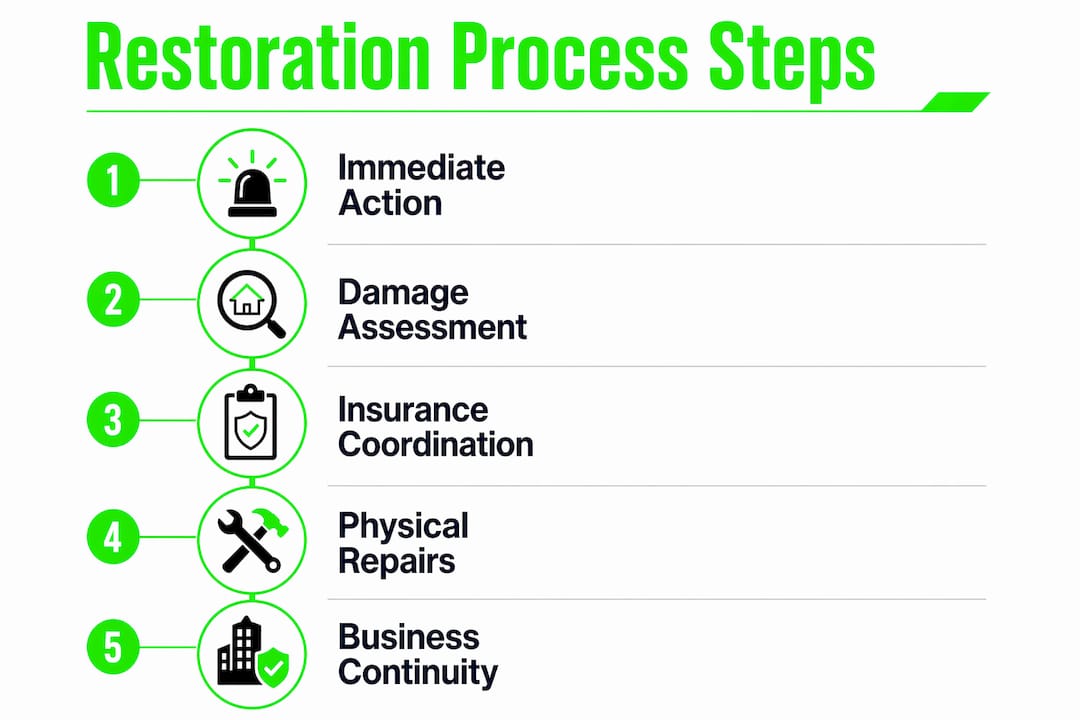
The restoration process covers site stabilization, damage assessment, insurance coordination, physical repairs, and operational continuity planning. These workstreams run in parallel to minimize downtime and financial loss.
How soon should a business owner contact their insurance carrier after damage?
Notify your insurance carrier in writing as soon as possible, ideally within 24–48 hours of the damage event. Prompt notification protects your coverage and starts the claims clock.
Can a business stay open during commercial restoration?
Many businesses maintain partial operations during restoration by using temporary workspace, remote work arrangements, or modular facilities. Mapping your critical functions early determines what is feasible.
Why is a separate bank account important during disaster recovery?
A dedicated disaster account keeps recovery expenses separate from operating funds, which simplifies insurance claims, tax deductions, and financial audits throughout the recovery period.
What is the biggest mistake business owners make during restoration?
The most common mistake is treating each recovery task as sequential rather than parallel. Owners who wait for one phase to finish before starting the next add unnecessary weeks to their recovery timeline.
Recommended


Comments