


The Role of Additions in Property Value: 2026 Guide

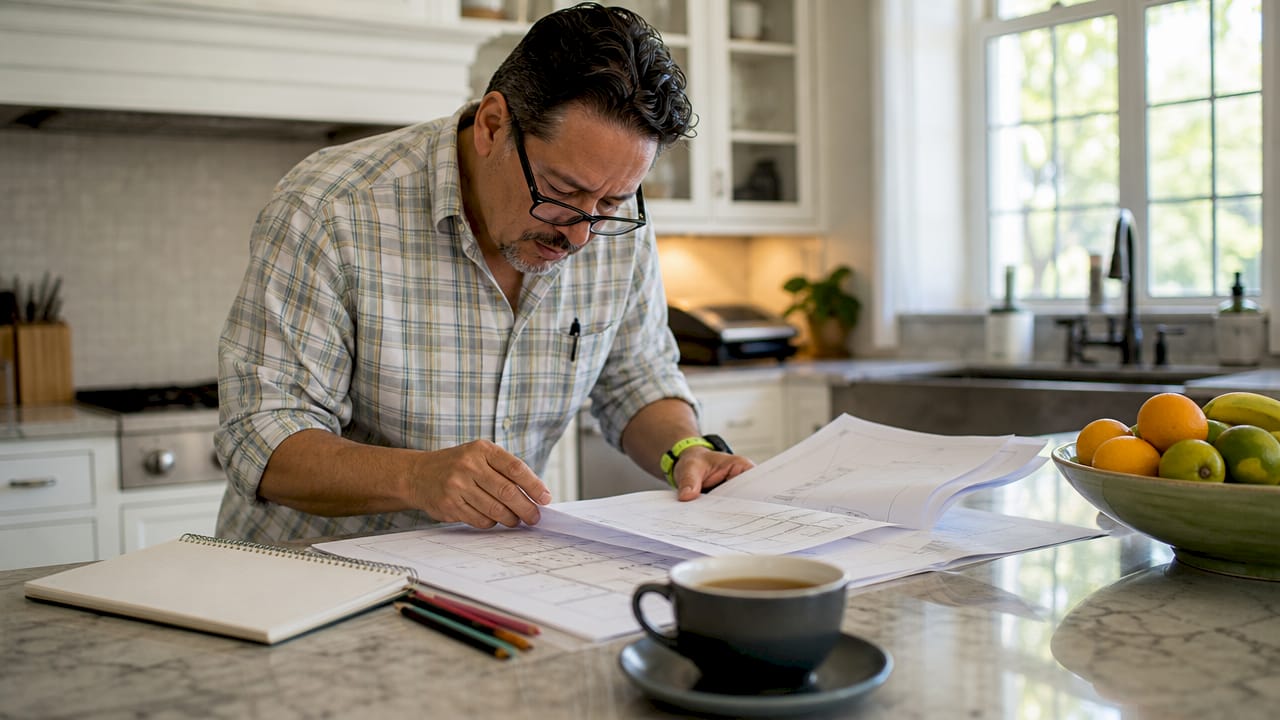
Home additions are defined as structural expansions that increase a property’s gross living area, and their role in property value is significant but rarely dollar-for-dollar with construction cost. Appraisers do not value additions based on what you spent. They value them based on what comparable homes in your market sell for per square foot. That distinction changes everything for homeowners and real estate investors planning a project. Understanding how appraisers, buyers, and local markets respond to additions is the foundation for making a sound investment decision in 2026.
How do appraisers calculate the value of home additions?
Appraisers determine the value of a home addition using Gross Living Area, commonly called GLA. GLA is defined as above-grade, finished, heated space that meets specific habitability standards. A sunroom without heat, a finished basement, or an unheated bonus room does not count toward GLA. That exclusion directly limits how much appraisal value those spaces can add.
Once GLA qualifies, appraisers look at comparable sales in your neighborhood to establish a per-square-foot adjustment. That figure typically ranges from $50 to $150 per square foot, depending on your local market. A 500-square-foot addition costing $150,000 to build may appraise for only $60,000 to $80,000 in a market where comparables support $120 to $160 per square foot. The gap between construction cost and appraised value is real, and it catches many homeowners off guard.
Permit status matters just as much as build quality. An unpermitted addition may be excluded from GLA entirely or flagged as a liability during the sale. Buyers and lenders treat unpermitted work as a risk, which can reduce offers or kill financing. Pulling permits before construction is not optional if you want the addition to count.
Pro Tip: Before breaking ground, ask a local appraiser for a pre-addition consultation. They can estimate the likely per-square-foot adjustment for your specific neighborhood, which gives you a realistic ceiling for your project budget.
Addition type | Typical GLA qualification | Estimated value per sq ft |
Above-grade room addition | Qualifies if finished and heated | $50–$150 depending on market |
Finished basement | Generally excluded from GLA | Lower adjustment, varies by region |
Sunroom without heat | Does not qualify as GLA | Minimal appraisal impact |
Permitted second story | Qualifies fully if finished | Full market rate per sq ft |
What types of additions deliver the best return on investment?
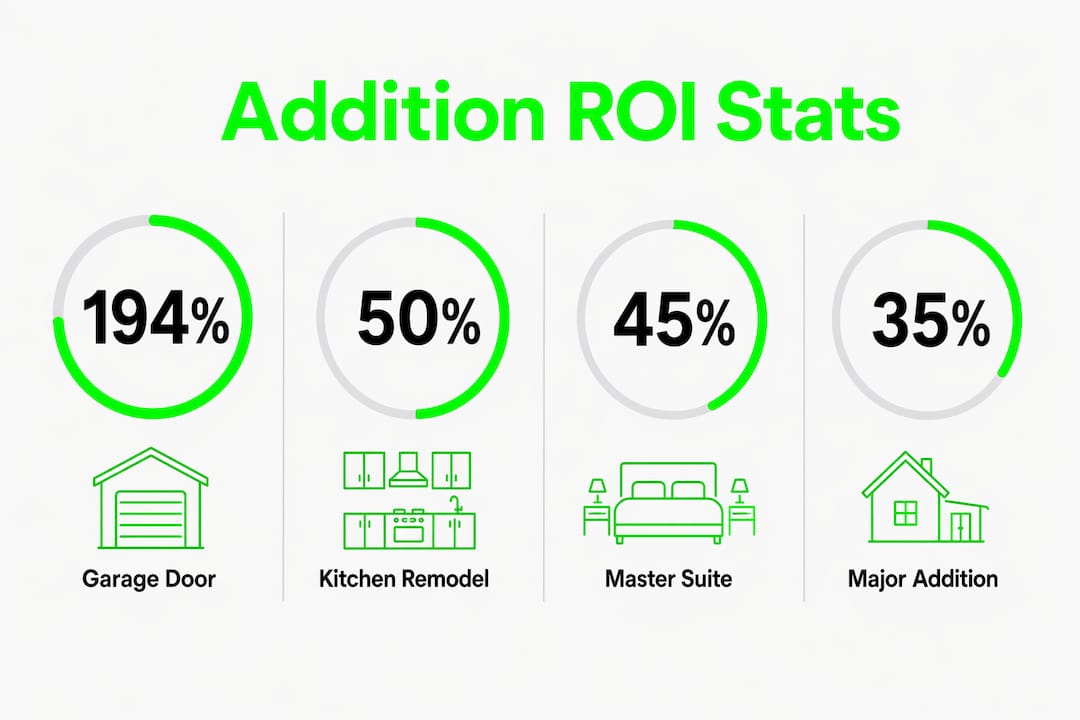
Not all additions recoup equally. The 2026 Cost vs. Value report shows that a major kitchen remodel costs around $158,000 and adds approximately $63,200 in value, producing roughly 40% ROI. A master suite addition costs around $320,000 and adds about $112,000 in value, yielding approximately 35% ROI. Those numbers are lower than most homeowners expect.

Smaller, targeted projects consistently outperform large-scale additions in recoupment rate. A garage door replacement leads all projects at 194% ROI, according to the same report. That result reflects a core principle: buyers respond to visible, functional improvements that require no imagination. Large additions require buyers to trust your taste, your contractor’s quality, and your permit history.
Typical resale recoupment on major additions ranges from 30% to 50% nationally. Kitchen remodels recoup 35–50%, master suite additions recoup 30–45%, and pools average 25–40%. These figures vary significantly by region, so local market data always takes priority over national averages.
Accessory Dwelling Units, known as ADUs, represent a growing exception to the low-ROI pattern. Flexible ADU layouts that support rental income or multigenerational living attract a wider buyer pool. In high-cost urban markets, a permitted ADU can add meaningful value because it generates income, not just square footage.
Pro Tip: If your primary goal is resale value, prioritize additions that solve a specific buyer problem: a missing bedroom, a single-bathroom bottleneck, or a lack of garage space. Functional gaps drive buyer demand more than size alone.
Addition type | Estimated cost | Estimated ROI |
Garage door replacement | Low | ~194% |
Kitchen remodel (major) | ~$158,000 | ~40% |
Master suite addition | ~$320,000 | ~35% |
ADU (market-dependent) | Varies | High in urban markets |
Pool | Varies | 25–40% nationally |
How do design and neighborhood factors affect added value?
Design integration is the single most overlooked factor in home addition planning. Buyers value how space functions more than square footage alone. An addition that disrupts the natural flow of a home, forces awkward traffic patterns, or blocks natural light can reduce buyer appeal despite increasing total size. Good design connects the new space to the existing structure without making the addition feel like an afterthought.
Placement affects perception and value. Rear additions are generally the least disruptive to curb appeal and neighborhood character. Second-story additions can add significant GLA but require structural reinforcement and tend to cost more per square foot. Front-facing additions alter the home’s street presence, which can help or hurt depending on the neighborhood’s aesthetic standards.
The neighborhood ceiling concept is one of the most practical limits investors need to understand. Pushing a home beyond the size and quality of comparable properties in the area caps appraisal gains. Appraisers cannot justify a value that no comparable sale supports. A 4,000-square-foot home in a neighborhood of 1,800-square-foot homes will not appraise at a proportional premium. The market sets the ceiling, not the construction budget.
Match the addition’s exterior materials, roofline, and window style to the existing structure.
Avoid reducing yard space below neighborhood norms, which affects outdoor appeal.
Check local zoning for setback requirements before finalizing placement.
Confirm that the addition does not push the home’s total size beyond the top 15% of comparable sales in the area.
Prioritize natural light and ceiling height in new spaces to maximize perceived value.
Regional preferences also shift what buyers reward. In the Northeast, finished basement space is common but rarely counts toward GLA. In the Sun Belt, outdoor living extensions and covered patios carry strong buyer appeal even when they add limited GLA. Knowing your local buyer profile is as important as knowing your construction budget.
What practical steps can homeowners and investors take to maximize value?
A clear plan before construction starts separates projects that build equity from those that drain it. Follow these steps to position your addition for the best possible return.
Research local comparables first. Pull recent sales of homes with similar square footage in your neighborhood. Identify the per-square-foot value the market supports. That number is your ceiling, not your contractor’s bid.
Confirm GLA qualification. Work with your contractor and a local appraiser to confirm that the planned addition will qualify as above-grade, finished, heated space. Spaces that miss this standard add cost without adding proportional value.
Budget for soft costs. Permits, design fees, and site work can add 25–35% on top of your base construction estimate. Skipping this buffer is the most common cause of cost overruns on addition projects.
Choose finishes that match the market, not your personal taste. Mid-grade finishes in a mid-range neighborhood recoup better than luxury finishes that buyers in that price range do not expect or pay for.
Plan for flexible use. A room labeled “office” during construction can function as a bedroom, guest room, or nursery for the next buyer. Flexibility broadens your buyer pool and protects resale value. Structural addition types that support multiple uses consistently perform better in resale scenarios.
Factor in your holding period. Homes appreciate roughly 4.5% annually on average, according to Zillow. If you plan to hold the property for five or more years, market appreciation compounds alongside the addition’s value contribution. Short-term flips face a harder math problem.
Hire contractors who understand local appraisal standards. A contractor familiar with your market’s permit process and GLA requirements reduces the risk of costly corrections. Review the planning process for additions in your region before finalizing your scope.
Pro Tip: Ask your contractor to confirm permit approval before any framing begins. Unpermitted work discovered during a sale can force costly retroactive permits or require demolition of the addition entirely.
Key takeaways
The role of additions in property value depends on GLA qualification, local market comparables, design integration, and project scale, not construction cost alone.
Point | Details |
GLA determines appraisal value | Only above-grade, finished, heated space qualifies for full appraisal credit. |
Cost rarely equals value | A $150,000 addition may appraise for $60,000–$80,000 based on local market rates. |
Smaller projects recoup more | Targeted improvements like garage doors outperform large-scale additions in ROI percentage. |
Neighborhood ceiling limits gains | Additions that push a home beyond local comparable size face diminishing appraisal returns. |
Soft costs add 25–35% | Budget for permits, design, and contingency to protect your projected ROI. |
What I’ve learned about additions and real value
Most homeowners assume that spending $200,000 on an addition means gaining $200,000 in value. That assumption is wrong, and it leads to real financial disappointment. Contractor cost estimates do not determine appraisal outcomes. The market does.
What I’ve seen consistently is that the additions delivering the strongest results are the ones that solve a real problem for the next buyer. A third bedroom in a two-bedroom home. A second bathroom in a single-bath house. A garage in a neighborhood where street parking is scarce. These additions address buyer friction, and buyers pay for relief from friction.
The investors who get burned are the ones who build for themselves and then expect the market to reimburse them. Personal preferences, luxury finishes, and oversized footprints rarely translate to proportional value. The market rewards what buyers in that price range actually want, not what you enjoyed building.
My honest advice: treat the addition as a business decision first and a lifestyle decision second. Run the numbers against local comparables before you commit. If the math works, build it well, permit it properly, and integrate it cleanly. If the math does not work, a smaller, better-executed project will almost always outperform a larger, poorly planned one.
— DJ
Djcustomcontracting: your partner for high-value additions
Planning an addition is one of the most consequential decisions a property owner makes. Getting the scope, permits, and execution right determines whether the project builds equity or erodes it.

Djcustomcontracting has delivered residential and commercial addition projects since 2018, with full compliance across local building codes, DOB requirements, and appraisal-relevant construction standards. From single-room expansions to full second-story builds, the team manages every stage of the project. Homeowners and investors working in the New York and New Jersey markets can connect with Djcustomcontracting’s addition and renovation specialists for a project consultation. For commercial property owners, the commercial renovation services team handles large-scale improvements with the same attention to code compliance and value outcomes.
FAQ
What is the role of additions in property value?
Home additions increase a property’s gross living area, which appraisers use to calculate market value. The actual value added depends on local comparable sales and GLA qualification, not construction cost.
Do home additions always increase resale value?
Not always. Additions that miss GLA qualification, lack permits, or push the home beyond the neighborhood ceiling can add cost without adding proportional resale value.
What addition type has the highest ROI?
Smaller, targeted improvements consistently outperform large additions in ROI percentage. The 2026 Cost vs. Value report ranks garage door replacement at 194% ROI, far above major room additions.
How much do soft costs add to an addition budget?
Soft costs including permits, design fees, and site preparation add 25–35% on top of base construction costs. Budgeting for this buffer is critical for accurate ROI projections.
Does an unpermitted addition hurt property value?
Yes. Unpermitted additions are often excluded from GLA calculations and can create financing problems for buyers. Retroactive permitting or required demolition can cost more than the original permit would have.
Recommended



Comments