


Step-by-step guide to basement remodeling for maximum value

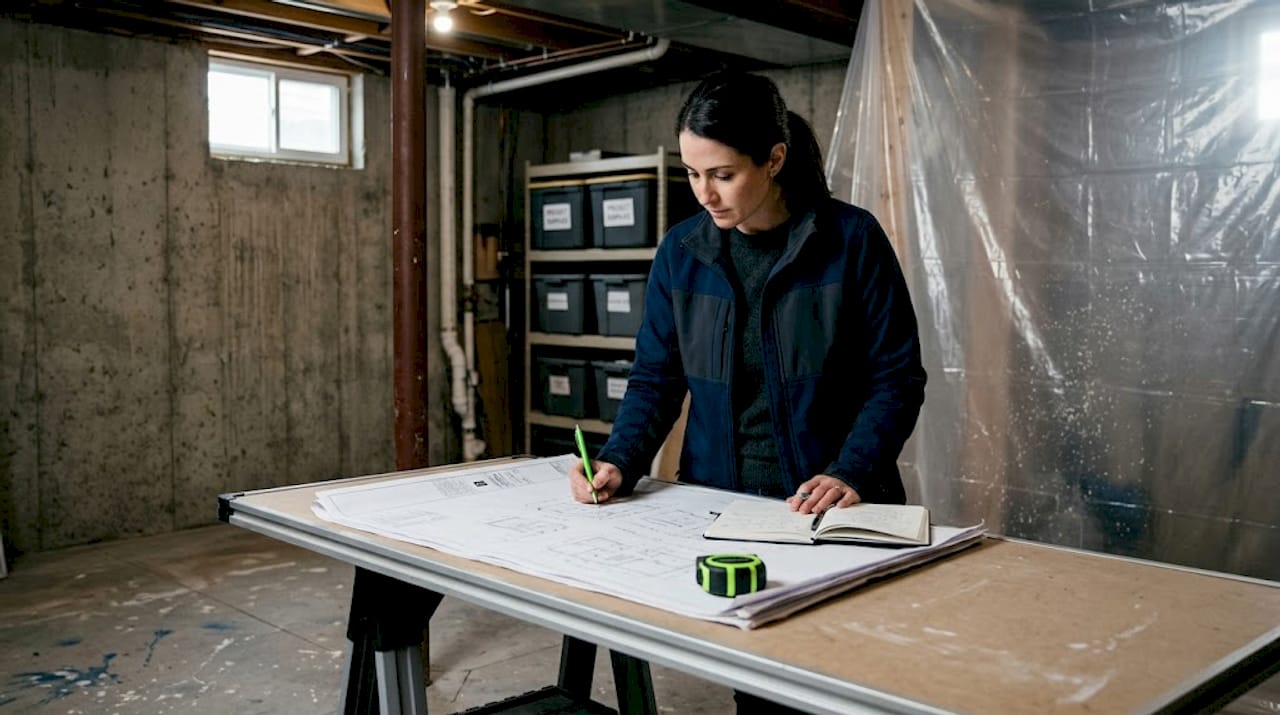
Basements in Northern New Jersey and New York City represent some of the most underused square footage in residential real estate. A finished basement can add a bedroom, home office, rental unit, or entertainment space without touching your home’s footprint. But the path from raw concrete to livable space is full of real obstacles: persistent moisture, strict local building codes, and permit requirements that vary by municipality. This guide walks you through every stage of the process, from the first assessment to final inspection, so you can approach your basement remodel with confidence and protect your investment from day one.
Table of Contents
Key Takeaways
Point | Details |
Permits are essential | Always secure permits before work to avoid fines and delays. |
Waterproofing comes first | Resolving moisture issues before building prevents mold and costly damage. |
Prioritize code compliance | Meeting local codes, especially for egress and headroom, ensures safety and value. |
Professional help pays off | Hiring experts for complex tasks can maximize ROI and prevent mistakes. |
Planning, assessment, and permits: Setting the foundation
Before a single nail goes in, you need a clear picture of what you’re working with and what the law requires. Skipping this stage is the single most common reason basement remodels stall, go over budget, or fail inspection.
Start with a thorough space assessment. Walk your basement and note the ceiling height at its lowest point, the location of support columns, the condition of the foundation walls, and any signs of existing water intrusion. In NJ and NYC, minimum ceiling height for a finished basement is 7 feet, and egress openings for bedrooms must meet a minimum of 5.7 square feet. If your current ceiling sits at 6 feet 8 inches, you may need to excavate or lower the slab, which adds significant cost.
Understand the permit process. In New Jersey, basement finishing falls under the Uniform Construction Code (UCC), administered by your local municipality. In New York City, the Department of Buildings (DOB) governs all renovation work. Both require permits before work begins. If you’re considering an accessory dwelling unit (ADU) or an in-law suite, zoning approval may also be required. These NJ remodeling tips outline how local codes shape your renovation decisions from the start.
Here is a quick overview of key code requirements:
Requirement | NJ UCC standard | NYC DOB standard |
Minimum ceiling height | 7 feet | 7 feet |
Bedroom egress opening | 5.7 sq ft minimum | 5.7 sq ft minimum |
Permits required | Yes, local building dept. | Yes, DOB filing |
ADU/in-law suite | Zoning approval needed | Zoning approval needed |
Electrical inspection | Required before close-in | Required before close-in |
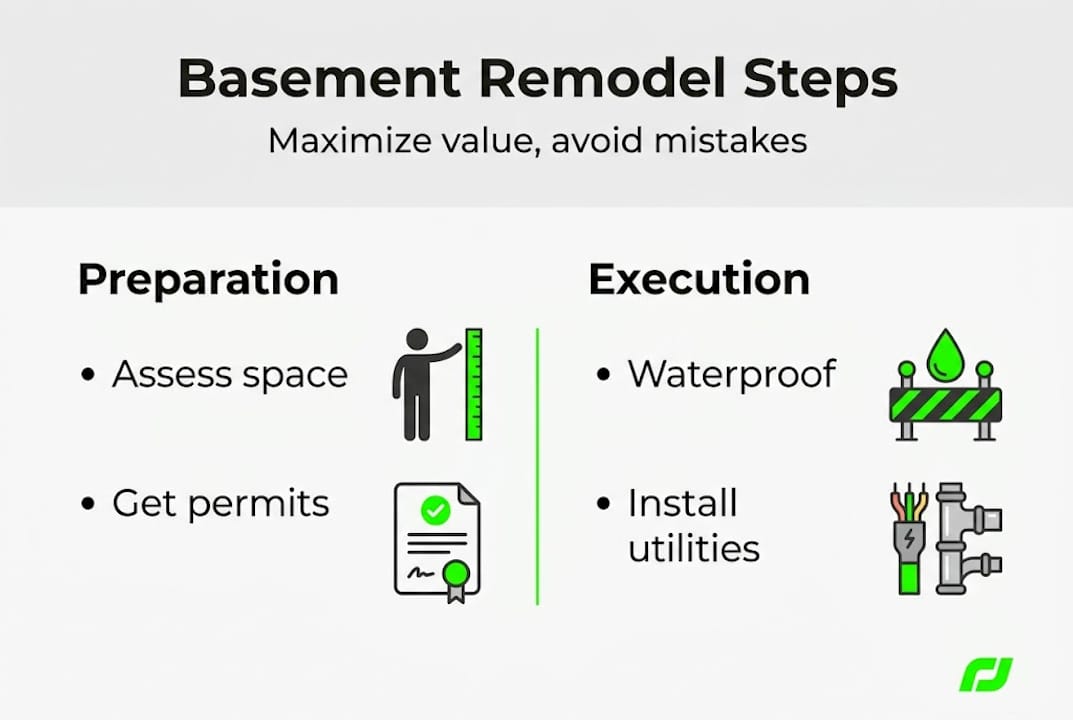
For NYC property owners, understanding the nuances of your building type matters. Owners navigating co-op and condo renovations face additional board approval requirements on top of DOB filings. Pre-war buildings have their own structural considerations, and NYC renovation essentials for older buildings are worth reviewing before finalizing your scope.
Set a realistic budget. A basic basement finish in this region runs between $25,000 and $50,000 depending on size and finishes. Adding a bathroom, wet bar, or egress window pushes that number higher, but also delivers stronger return on investment. Budget 10 to 15 percent as a contingency for surprises behind walls or under slabs.
Key planning checklist:
Measure ceiling height at multiple points, including under beams and ducts
Identify existing plumbing stack and electrical panel location
Note window locations and sizes for egress compliance
Confirm zoning allows your intended use (rental, bedroom, ADU)
Pull permits before any work starts, including demolition
Pro Tip: Visit your local building department in person before hiring anyone. A 30-minute conversation with a plans examiner can save you weeks of back-and-forth and reveal local requirements that aren’t posted online.
Moisture and waterproofing: Protect your investment
After planning and securing permits, moisture control is the most critical step before any construction begins. Moisture is the number one enemy of basement remodels in this region. It causes mold growth, structural damage, persistent odors, and failed inspections. Building over an unresolved moisture problem is like painting over rust: it looks fine for a while, then fails completely.
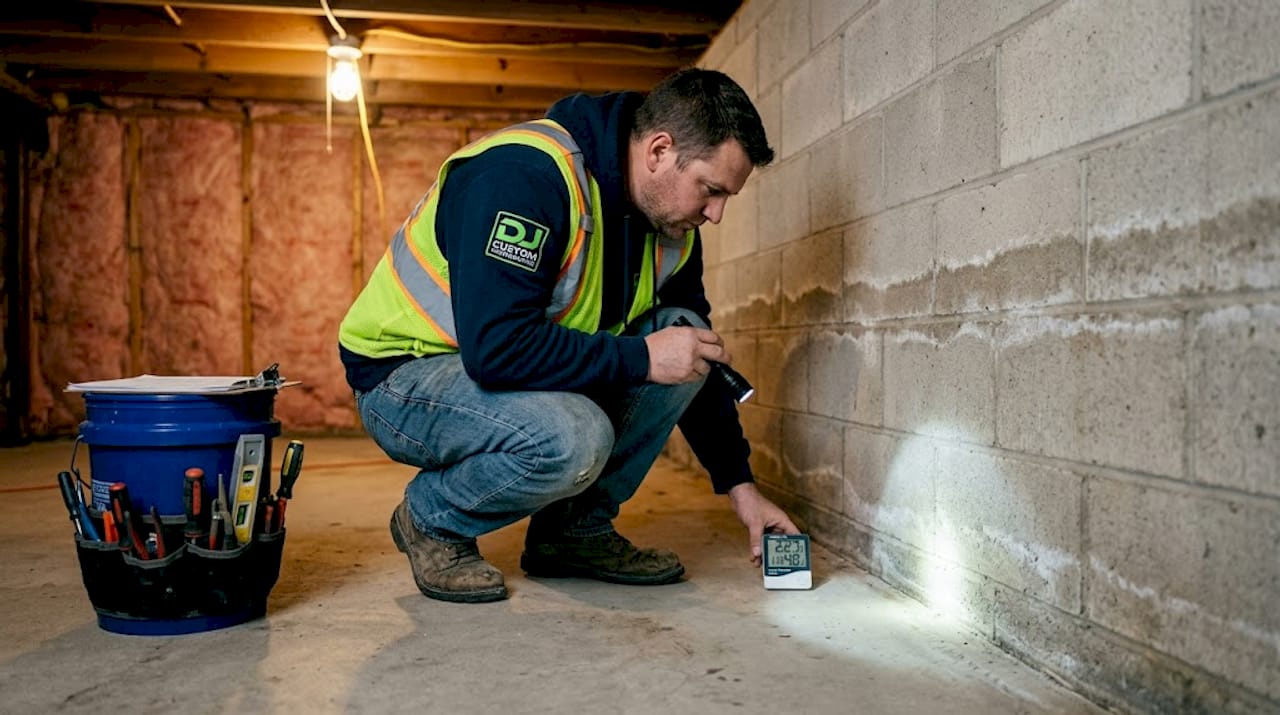
Test before you build. The plastic sheet wall test is a reliable first step. Tape a 12-inch square of clear plastic sheeting directly to your foundation wall and leave it for 24 to 48 hours. If moisture appears on the back side of the plastic (between the plastic and the wall), you have water migrating through the foundation. If moisture appears on the front side, you’re dealing with condensation from indoor humidity. Each problem requires a different solution.
Here are the primary waterproofing methods used in NJ and NYC basements:
Interior French drain system: A channel is cut around the perimeter of the slab, a perforated pipe is installed, and water is directed to a sump pit. This is the most common solution for active water intrusion.
Sump pump with battery backup: A sump pump removes collected water from the pit. Battery backup is essential in NJ and NYC, where power outages during storms are common.
Vapor barrier: A thick polyethylene sheet installed against foundation walls before framing. This blocks moisture vapor from migrating into the finished space.
Dehumidifier: A whole-basement dehumidifier, ideally one that drains automatically to a floor drain, keeps relative humidity below 60 percent year-round.
Exterior grading and downspout extensions: Confirm that the ground slopes away from your foundation at least 6 inches over 10 feet. Extend downspouts at least 4 feet from the foundation wall.
Important: Interior waterproofing systems including French drains, vapor barriers, and sump pumps typically cost between $5,000 and $15,000 depending on the size of the basement and severity of the moisture issue.
Understanding waterproofing costs relative to your total remodel budget helps you prioritize correctly. Spending $8,000 on waterproofing before framing is far less painful than spending $25,000 to tear out a finished basement after mold takes hold.
Pro Tip: Never frame directly against a concrete foundation wall without a vapor barrier. Even in basements that appear dry, seasonal ground moisture will wick through concrete and saturate wood framing over time, creating ideal conditions for mold.
Sequence matters here. Waterproofing must be fully installed and verified before any framing, insulation, or mechanical rough-in begins. If your contractor suggests framing first and waterproofing later, that is a red flag.
Utilities rough-in: Laying the groundwork for comfort
With a watertight space confirmed, you’re ready for the utilities that make a basement truly livable. Rough-in refers to all the plumbing, electrical, and HVAC work that happens before walls are closed. This stage requires licensed tradespeople and mandatory inspections in both NJ and NYC.
Electrical rough-in. A basement adds significant electrical load to your home. Most finished basements require a dedicated subpanel. All bedroom circuits must use AFCI (arc-fault circuit interrupter) breakers, and any circuits near water sources require GFCI (ground-fault circuit interrupter) protection. Electrical rough-in costs for a typical basement run between $2,000 and $5,000, depending on the number of circuits and distance from the main panel.
Utility | Key requirement | Estimated cost |
Electrical subpanel | Required for most full finishes | $800 to $1,500 |
AFCI/GFCI circuits | Code required for bedrooms and wet areas | Included in rough-in |
Plumbing rough-in | Ejector pump if below sewer line | $1,500 to $4,000 |
HVAC/ventilation | ERV or mini-split recommended | $3,000 to $8,000 |
Plumbing rough-in. Adding a bathroom or wet bar below grade requires an ejector pump (also called a sewage ejector). This pump grinds and pushes waste up to the main sewer line when gravity drainage is not possible. The ejector pit must be sealed and vented to code. Plan the bathroom location near an existing stack to minimize pipe runs and cost.
HVAC and ventilation. Basements are prone to stale air and humidity buildup. An energy recovery ventilator (ERV) brings fresh air in while exhausting stale air, maintaining air quality without major heat loss. Mini-split systems are increasingly popular for basement heating and cooling because they require no ductwork and offer precise zone control. Avoid simply extending existing ductwork into the basement without a load calculation; undersized airflow leads to comfort problems and mold risk.
Rough-in work follows a specific order:
Plumbing rough-in (first, because it may require cutting the slab)
Electrical rough-in (second, after plumbing is set)
HVAC rough-in (third, coordinated with framing)
Framing inspection (required before insulation)
Mechanical inspection (required before closing walls)
Understanding the remodeling workflow helps you schedule trades in the right order and avoid costly delays. Your interior renovation contractor should coordinate all inspections and ensure each trade signs off before the next phase begins.
Pro Tip: Schedule your rough-in inspections as early as possible. In busy municipalities, inspection wait times can run 1 to 2 weeks. Booking early keeps your project moving without gaps in the schedule.
DIY vs. hiring pros: Costs, risks, and maximizing ROI
After rough-ins, the reality of tackling certain jobs yourself or hiring out becomes a key decision. This is where many homeowners either save money wisely or create expensive problems.
What a DIYer can legally and safely do. In NJ and NYC, homeowners can generally perform their own framing, insulation, drywall, painting, flooring, and trim work without a contractor’s license. These tasks are labor-intensive but straightforward. DIY framing and painting can reduce your overall project cost meaningfully, especially in a large basement.
What requires a licensed professional. Electrical work beyond simple fixture swaps, all plumbing rough-in and drain work, structural modifications (removing or adding beams, underpinning), and HVAC installation all require licensed contractors in both states. Pulling permits as a homeowner-builder is possible in NJ for owner-occupied homes, but you take on full legal responsibility for code compliance. In NYC, most work requires a licensed contractor and a registered architect or engineer for permit filings.
Here is a practical comparison:
Task | DIY allowed? | Risk if done wrong | Recommended approach |
Framing walls | Yes | Low, if not structural | DIY possible |
Electrical rough-in | No (NJ/NYC) | High, fire and code risk | Licensed electrician |
Plumbing rough-in | No (NJ/NYC) | High, sewage and code risk | Licensed plumber |
Drywall and painting | Yes | Low | DIY possible |
Egress window install | Rarely | Structural and code risk | Licensed contractor |
Flooring | Yes | Low | DIY possible |
The ROI numbers tell a clear story. A basic basement finish delivers roughly 60 percent return on investment at resale. Add a full bathroom and a legal egress window for a conforming bedroom, and that ROI climbs to 80 to 90 percent. The added cost of professional work on critical systems is more than offset by the value it adds and the problems it prevents.
Failing inspections due to DIY code violations is more common than most homeowners expect. Fines, required demolition of finished walls, and redo costs can easily exceed what you saved by going the DIY route. Review the full remodeling cost breakdown before deciding where to cut corners and where to invest.
Key risks of unpermitted or DIY-only work:
Fines from local building departments
Required demolition to expose unpermitted work
Disclosure obligations at resale that reduce buyer confidence
Insurance claims denied for damage in unpermitted spaces
Safety hazards from non-code electrical or plumbing
Pro Tip: Pull your permits before starting any work, even if you plan to DIY most of it. Permits protect you legally, create a paper trail for resale, and ensure your work gets inspected by someone who can catch problems before they become expensive.
Why most basements fall short: Hard-learned lessons from the field
After years of working on basement remodels across Northern NJ and NYC, one pattern stands out clearly: most projects that go wrong do so because homeowners reorder the steps. They frame first, then discover moisture. They finish walls, then fail electrical inspection. They skip ventilation, then wonder why the space smells musty every summer.
The correct sequence is non-negotiable: resolve moisture first, then rough-in utilities, then pass inspections, then enclose walls. Every shortcut in that order creates a future problem that costs more than the shortcut saved.
Insulation choices also matter more than most homeowners realize. Closed-cell spray foam is the right choice against concrete foundation walls in this climate. It acts as both insulation and vapor barrier. Fiberglass batts installed directly against concrete, on the other hand, trap moisture and become a mold factory within a few seasons. The upfront cost difference is real, but the long-term outcome is not comparable.
The one factor that rarely gets enough attention is ventilation. A well-framed, properly waterproofed basement without adequate fresh air exchange will still develop air quality problems over time. Investing in an ERV system is the single upgrade that most homeowners skip and most experienced remodelers wish they had pushed harder. Explore your bathroom remodeling contractor options to see how ventilation planning integrates with wet room design from the start.
Ready to remodel your basement? Expert help is just a call away
Turning a raw basement into a finished, code-compliant living space is one of the highest-value improvements you can make to your NJ or NYC home. But it requires the right sequence, the right trades, and a team that knows local codes inside and out.

DJ Custom Contracting LLC has been delivering full-service interior renovations across Northern New Jersey and New York City since 2018. From permit filing and moisture remediation to framing, electrical coordination, and final inspection, the team manages every phase of your project. Whether you need an interior renovation contractor for a complete basement transformation or a trusted Queens general contractor for a local project, DJ Custom Contracting brings the expertise and local knowledge to get it done right. Contact the team today for a consultation and a clear project plan tailored to your space.
Frequently asked questions
What is the minimum ceiling height for a legal basement remodel in NJ or NYC?
You need at least 7 feet of finished ceiling height for code compliance in both NJ and NYC. Measure at the lowest point, including under beams and ductwork.
How much does professional interior waterproofing cost?
Professional interior waterproofing costs between $5,000 and $15,000 in this region, depending on the system used and the size of the basement.
Do I need a permit for a basement remodel in New Jersey or NYC?
Yes. Permits are required from local building departments in both NJ and NYC before any basement finishing work begins, including framing and electrical.
What kind of ROI can I expect from finishing my basement?
A basic basement finish delivers around 60 percent ROI at resale. Adding a bathroom or a legal egress bedroom can push that figure to 80 to 90 percent.
Should I tackle basement remodeling myself or hire a professional?
DIY is reasonable for framing, drywall, and finishes. However, hire licensed pros for electrical, plumbing, and structural work to meet code requirements and avoid failed inspections or legal liability.
Recommended


Comments