


Why Update Interiors: Benefits, ROI, and Smart Tips


Updating interiors is the process of enhancing a home’s or business’s internal spaces to improve appearance, usability, and market value. The reasons to refresh decor go well beyond aesthetics. Dated interior decor signals poor maintenance, affecting how residents and visitors perceive a space before a single word is spoken. Whether you own a single-family home in New Jersey or manage a commercial property in New York City, the importance of interior upgrades applies directly to your bottom line and daily comfort. This guide covers the core benefits, cost comparisons, and practical steps to update your space with confidence.
Why update interiors: core benefits for homeowners and businesses
Updating interiors delivers four measurable outcomes: improved aesthetics, better space use, enhanced well-being, and increased property value. Each of these matters whether you are preparing a home for resale or making a commercial office more productive.
Aesthetics and first impressions are the most immediate payoff. Fresh paint, updated hardware, and decluttered surfaces signal that a property is well cared for. That perception directly affects how guests, clients, and potential buyers experience the space from the moment they walk in.
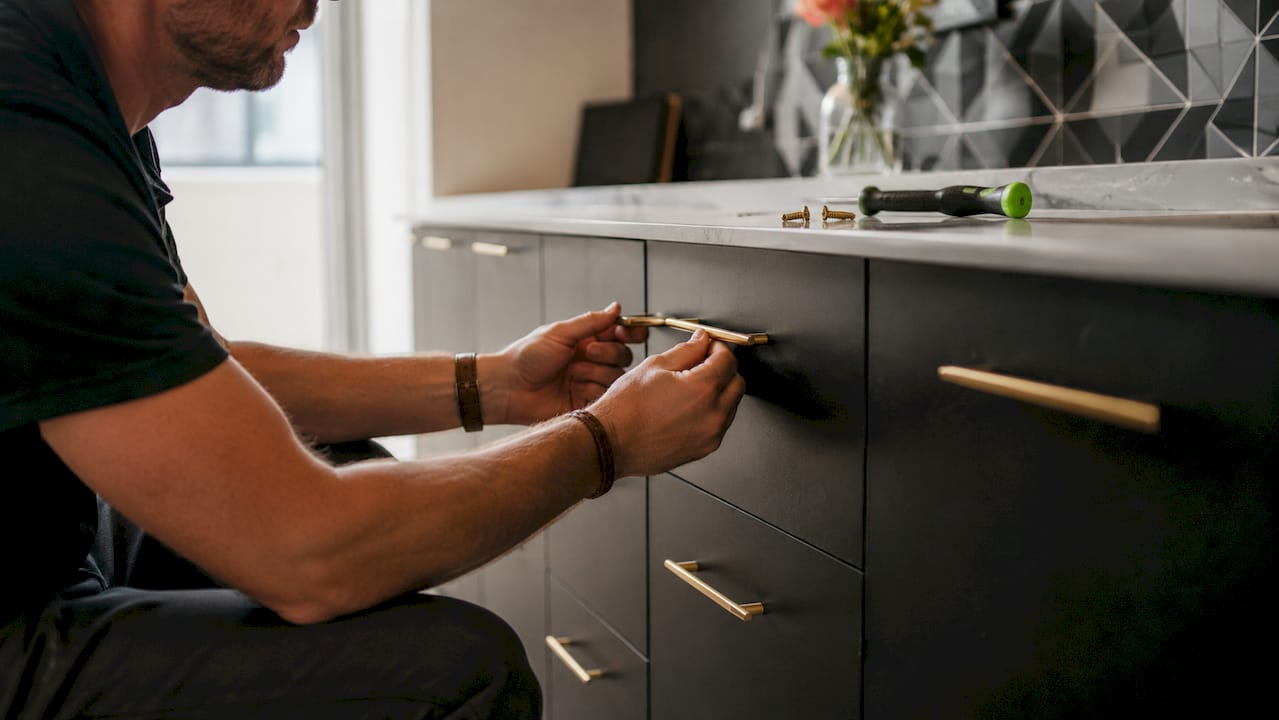
Functionality and comfort are where many owners underinvest. Research published by MDPI in 2026 found that user-centered workplace retrofits improve workspace satisfaction, daylight quality, air quality, and collaboration scores across multiple dimensions. The same principle applies to residential spaces. A layout that works with how you actually live reduces daily friction and mental fatigue.
Well-being gains are real and measurable. Poor lighting, cramped layouts, and worn finishes create low-grade stress that accumulates over time. Addressing these factors through targeted updates produces a noticeably calmer, more functional environment.
Property value is the financial argument. For homeowners considering resale, interior renovation ROI varies significantly by project type, but the data consistently shows that updated interiors command higher offers and shorter time on market.
Key benefits at a glance:
Fresh paint and updated lighting improve perceived maintenance without structural work
Layout improvements reduce daily friction and support how people actually use a space
Addressing worn finishes and damaged soft furnishings prevents rooms from feeling dated even after styling changes
Commercial interior updates that address integrated indoor environmental quality boost occupant readiness and collaboration
Pro Tip: Before spending on new furniture or decor, identify whether your dissatisfaction comes from aesthetics or from a layout that does not support how you use the room. The fix for each is completely different.
How do you know when it’s time to update your space?
Identifying the right time to refresh interiors requires looking past surface-level style preferences. Subtle signs your home needs a refresh include faded finishes, worn upholstery, fixtures that no longer function well, and layouts that create daily bottlenecks. These are condition issues, not just style issues.
Follow this process to assess your space accurately:
Walk through each room as a visitor would. Note the first thing you see, the smell, the light level, and the overall sense of order. First impressions reveal what regular occupants stop noticing.
Check condition before checking style. Scuffed baseboards, yellowed light switches, and worn cabinet hardware age a room faster than any furniture choice. Ignoring underlying wear leaves rooms feeling dated even after redecoration.
Test your layout before buying anything new. Design experts advise moving furniture physically before committing to purchases. A sofa in a different position can solve a traffic flow problem that no new rug would fix.
Identify whether the problem is layout or decor. Owners frequently blame furniture or decor when the real issue is a misfit layout. Redecorating fails when the underlying spatial logic is wrong.
Prioritize high-visibility details. Windows, lighting, paint, trim, hardware, and clutter are the details that shape perception most. Targeting these elements updates a home’s look significantly without full renovation.
Pro Tip: Take photos of each room on your phone and review them later. The camera removes familiarity bias and shows you what a buyer or client would actually see.
Minor updates vs. major renovations: costs, ROI, and disruption
The impact of modernizing interiors depends heavily on the scope of work you choose. Minor updates and major renovations serve different goals, carry different costs, and produce different returns. Understanding the difference prevents overspending and under-delivering.
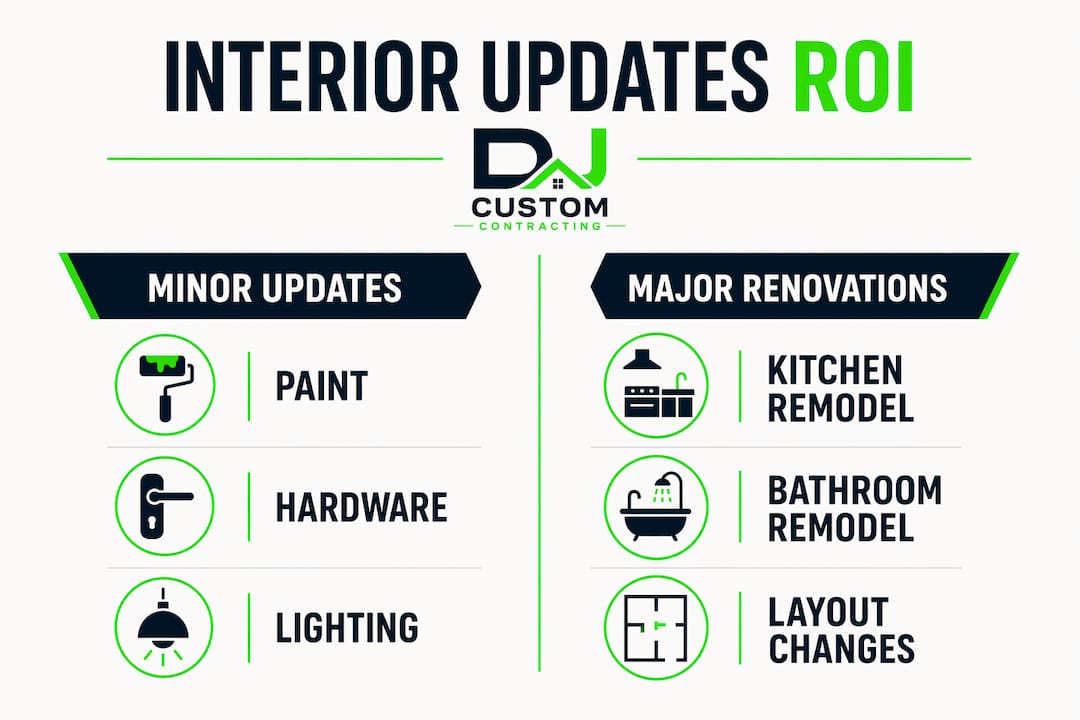
Minor updates include painting walls and trim, replacing cabinet hardware, swapping light fixtures, updating window treatments, and decluttering. These projects typically cost a few hundred to a few thousand dollars and can be completed without permits or significant disruption.
Major renovations involve structural or layout changes, full kitchen or bathroom remodels, flooring replacement throughout, and infrastructure upgrades like electrical or plumbing. These projects require permits, licensed contractors, and weeks or months of disruption.
The financial data is clear. A minor midrange kitchen remodel costs an average of $28,893 and recoups about 91.4% of that investment at resale. A major kitchen remodel averages $82,931 but recoups only about 47.7%. That gap is significant. Sellers preparing for a near-term listing get better cost recovery from targeted minor updates than from full remodels.
Major renovations are justified when the layout is genuinely dysfunctional, when infrastructure is aging and poses safety or code compliance risks, or when the property’s market position requires a significant upgrade to compete.
Update Type | Typical Cost | Estimated ROI | Disruption Level | Best For |
Paint and trim refresh | $500–$3,000 | High | Low | Quick resale prep, refreshing dated rooms |
Hardware and lighting swap | $300–$2,000 | High | Very low | Modernizing kitchens and baths affordably |
Minor kitchen remodel | ~$28,893 | ~91.4% | Moderate | Pre-sale updates, functional improvements |
Major kitchen remodel | ~$82,931 | ~47.7% | High | Long-term ownership, dysfunctional layouts |
Full interior renovation | Varies | Varies | Very high | Commercial retrofits, aging infrastructure |
For business proprietors, the calculus includes productivity and client perception alongside resale value. Commercial interior updates that address layout, daylight, air quality, and comfort produce measurable gains in occupant satisfaction. Those gains translate to retention, performance, and client confidence.
Practical tips for updating interiors effectively
The most effective interior updates share one characteristic: they address what people actually notice first. Practical design updates that focus on perceived freshness and clean lines generate stronger impressions without expensive remodeling.
Use these principles to guide your update plan:
Start with light. Lighting is the single highest-impact update in most rooms. Replace dated fixtures with current profiles, increase lumen output in work areas, and add layered lighting where only one source exists.
Paint is the most cost-effective update available. A fresh coat in a current, neutral palette transforms a room’s perceived condition and size. Focus on walls, trim, and ceilings as a complete system, not just walls alone.
Replace hardware before replacing cabinets. New pulls and hinges on existing cabinetry can modernize a kitchen or bathroom for under $300. This is one of the most overlooked updates in residential properties.
Address clutter as a structural issue. Clutter reduces perceived square footage and signals disorder. Built-in storage solutions, closet organizers, and simplified surfaces are updates with lasting functional value.
Match updates to how you actually use the space. Experts consistently emphasize matching interiors to current living patterns rather than chasing aesthetic trends. A home office that functions well beats a beautifully styled room that does not support work.
Consider natural textures and curated material palettes for 2026. Linen, wood grain, stone, and matte finishes are performing well in both residential and commercial contexts. You can explore current bathroom design trends for specific material and fixture direction.
Plan for indoor environmental quality, not just appearance. Upgrades to ventilation, window performance, and acoustic comfort contribute to how a space feels even when they are invisible. For commercial properties especially, IEQ improvements affect layout, daylight, air quality, and comfort together.
Key takeaways
Updating interiors produces the strongest results when condition issues, layout logic, and high-visibility details are addressed together rather than treated as separate problems.
Point | Details |
Condition before cosmetics | Fix worn finishes, damaged hardware, and faded surfaces before adding new decor. |
Test layouts before buying | Physically rearrange furniture to confirm a layout works before purchasing new pieces. |
Minor updates deliver better ROI | A minor kitchen remodel recoups about 91.4% versus 47.7% for a major remodel. |
Light and paint lead impact | Lighting and paint produce the highest perceived improvement per dollar spent. |
Match updates to real use | Updates aligned with how you actually live or work deliver lasting satisfaction. |
What most people get wrong about interior updates
After years of working on residential and commercial renovation projects, I have seen the same mistake repeat itself: owners treat interior updates as a styling exercise when the real problem is functional. A client will spend thousands on new furniture and window treatments, then wonder why the room still feels off. The answer is almost always layout or condition, not decor.
The properties that hold their value and feel genuinely good to be in are the ones where updates were made proactively, not reactively. Waiting until a space looks visibly worn means you have already lost years of comfort and, in commercial settings, years of productivity and client perception. I recommend treating interior updates as a regular maintenance cycle, not a one-time event. Every three to five years, walk through your property with fresh eyes and address what has aged.
The other misconception I see constantly is that major renovations always produce better results than minor ones. The data does not support that. A well-executed paint job, lighting upgrade, and hardware replacement can outperform a full remodel in terms of perceived value and actual ROI. Spend where it shows. Fix what is worn. Test before you buy. That approach produces better outcomes than any trend-driven overhaul.
— DJ
Work with Djcustomcontracting on your next interior update
Whether you are refreshing a single room or planning a full-scale renovation, Djcustomcontracting brings the expertise to get it done right. Since 2018, Djcustomcontracting has delivered residential and commercial interior renovation services across New York and New Jersey, handling everything from minor updates to complete layout transformations.

Djcustomcontracting manages every stage of your project, from initial assessment through final finishes, with full compliance with local building codes, licensing requirements, and insurance regulations. No job is too large or too small. Contact Djcustomcontracting today to discuss a tailored plan for your property and get a competitive estimate from a team that knows the trades.
FAQ
What does updating interiors actually involve?
Updating interiors covers any work that improves a space’s appearance, functionality, or condition. This ranges from painting and hardware replacement to full layout renovations and infrastructure upgrades.
How often should you update your home’s interiors?
Most design professionals recommend reassessing interiors every three to five years. Addressing wear, lighting, and layout on a regular cycle prevents spaces from feeling dated and maintains property value.
Do minor updates really add resale value?
A minor midrange kitchen remodel recoups about 91.4% of its cost at resale, compared to 47.7% for a major remodel. Targeted minor updates consistently outperform large-scale renovations in cost recovery.
What are the highest-impact interior updates for the lowest cost?
Lighting upgrades, fresh paint on walls and trim, and hardware replacement deliver the strongest perceived improvement per dollar spent. These updates address the details buyers and clients notice first.
When does a major renovation make more sense than minor updates?
Major renovations are justified when a layout is genuinely dysfunctional, when aging infrastructure poses safety or code compliance risks, or when the property needs a significant upgrade to compete in its market.
Recommended


Comments