


Nail Your Paper Trail: Capital Improvements vs Repairs for Landlords

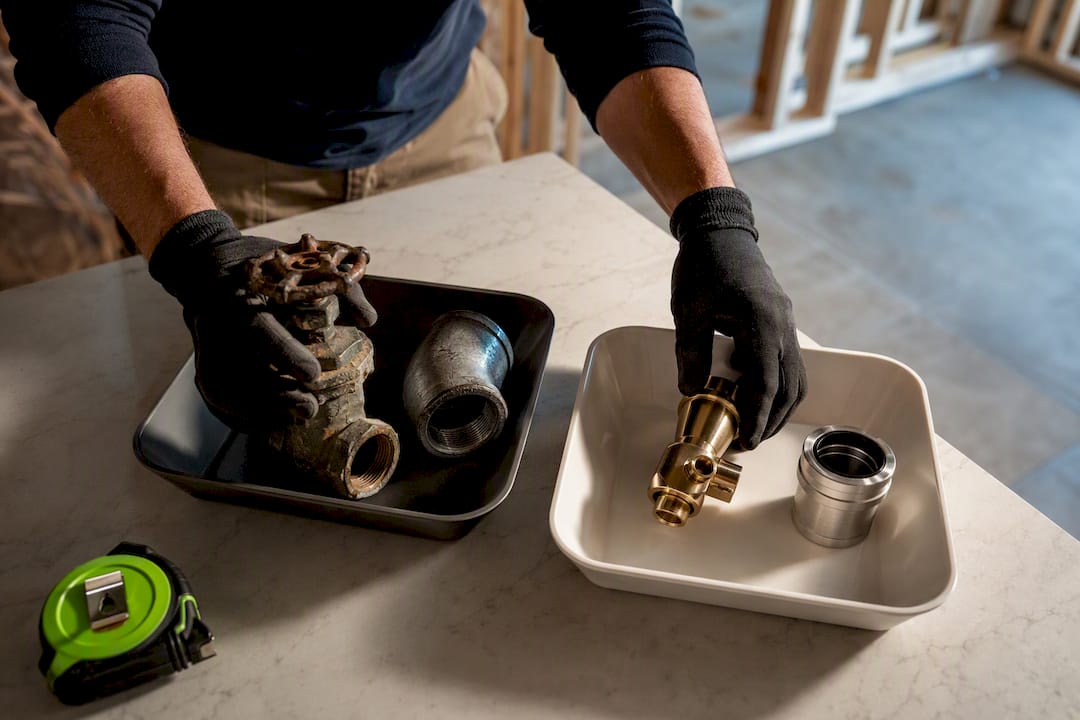
A repair is deductible in the year you pay for it under IRC §162; a capital improvement must be capitalized under IRC §263 and depreciated over 27.5 years for residential rentals or 39 years for commercial property. The IRS decides which bucket an expense falls into using the BAR test (Betterment, Adaptation, Restoration) and the unit-of-property rule, though safe harbors often let you skip that analysis and expense the cost outright. What follows walks through the definitions, the decision workflow, the borderline cases that trip up landlords every year, and the documentation habits that keep you covered if the IRS ever asks.
TL;DR:
Most small repairs, like patching a leak or replacing a broken outlet, can be deducted immediately under IRS rules, while larger upgrades must be capitalized and depreciated over time.
The BAR test determines whether an expense is a repair or a capital improvement by assessing if the work better, restores, or adapts a specific property unit, not the entire building.
Safe harbors like the de minimis rule allow expensing items under $2,500 per invoice with a proper written policy, simplifying classification and documentation.
Proper project documentation, including detailed invoices, photos, and scope memos, is essential to defend classification choices during IRS audits.
Larger projects or mixed-purpose costs should be carefully allocated to repairs versus improvements to avoid overstating basis or missing deductions.
Table of Contents
Capital Improvements vs. Repairs: What Actually Qualifies as an Improvement
The Decision Workflow: Safe Harbors, Unit of Property, and the BAR Test
IRS Safe Harbors: De Minimis, Routine Maintenance, and Small Taxpayer Rules
Roof, HVAC, and Kitchen Projects: Where Classification Gets Messy
A Contractor’s View: Scoping Work So the Tax Classification Holds Up
Splitting Costs When One Project Covers Both Repairs and Improvements
Balancing Tax Strategy With Property Maintenance: An Editorial View
How DJ Custom Contracting Documents Projects for Defensible Tax Positions
Capital Improvements vs. Repairs: What Actually Qualifies as an Improvement
A capital improvement is any expenditure that makes a betterment, restoration, or adaptation to a unit of property, under Treasury Regulation section 1.263(a)-3. That three-part test, known as the BAR test, is the backbone of the entire capital improvements vs. repairs question, and it decides whether an owner writes off the cost this year or spreads it out over decades.
In plain terms:
Betterment fixes a pre-existing defect, adds a material physical addition, or increases the property’s capacity, strength, or quality.
Restoration returns a property to working order after it has reached the end of its useful life, or replaces a major component or substantial structural part.
Adaptation changes the property’s use to something it wasn’t originally built or bought for.
Once an expense clears one of those three tests, it gets capitalized and added to the property’s basis rather than deducted immediately. That basis increase matters twice: it reduces taxable gain when you eventually sell, and it recovers through depreciation in the meantime. Residential rental real estate depreciates over 27.5 years; nonresidential commercial buildings depreciate over 39 years. Qualified Improvement Property, generally interior nonstructural work on commercial space, often qualifies for a 15-year recovery period or bonus depreciation instead of the full 39. Equipment and certain building components can fall into 5, 7, or 15-year classes if properly identified through cost segregation, which separates a building into its component parts for depreciation purposes, as explained in Cornell Law School’s overview of capital expenditures.
What Counts as a Repair or Maintenance Under IRS Rules
A repair keeps a property in its normal operating condition without making it better, bigger, or different from what it was. The IRS defines repairs as expenses that maintain the unit of property in its ordinarily efficient operating condition, and those costs are deductible in full the year you pay them.
Common repairs landlords and property managers run into every year:
Patching a roof leak instead of replacing the roof
Repairing a burst or leaking pipe
Repainting a unit between tenants
Replacing a broken electrical outlet or light switch
Fixing a cracked windowpane in an existing frame
Servicing an HVAC unit that’s still running fine
These land on Schedule E as ordinary operating expenses for individual landlords, or on the equivalent line for business returns, and they reduce taxable income immediately. That’s a real cash-flow advantage. A $4,000 repair bill this year offsets $4,000 of rental income now, while a $4,000 capital improvement on a residential property only offsets about $145 a year over 27.5 years. Cash flow now versus a slow trickle over decades is the entire reason this classification fight matters to your bottom line.
The Decision Workflow: Safe Harbors, Unit of Property, and the BAR Test
Most landlords overcomplicate this. The IRS itself recommends running through the process in a specific order, and skipping steps is where people either overpay taxes or set themselves up for an audit adjustment.
Check the safe harbors first. Before you even think about betterment or restoration, see if the expense qualifies for de minimis, routine maintenance, or small taxpayer treatment. If it does, you’re done. No BAR analysis needed.
Identify the unit of property (UOP). For a building, the IRS treats the structure and each major building system (HVAC, plumbing, electrical, roof, elevators, fire protection) as separate units of property. This step decides everything downstream.
Apply the BAR test to that specific unit. Ask whether the work betters, restores, or adapts that system, not the whole building.
Here’s where landlords get it wrong most often: they compare the cost of a repair to the value of the entire building and conclude it’s minor, so it must be a repair. That’s backwards. The comparison has to be against the specific unit of property affected, and setting the UOP incorrectly is the single most common classification error landlords make.
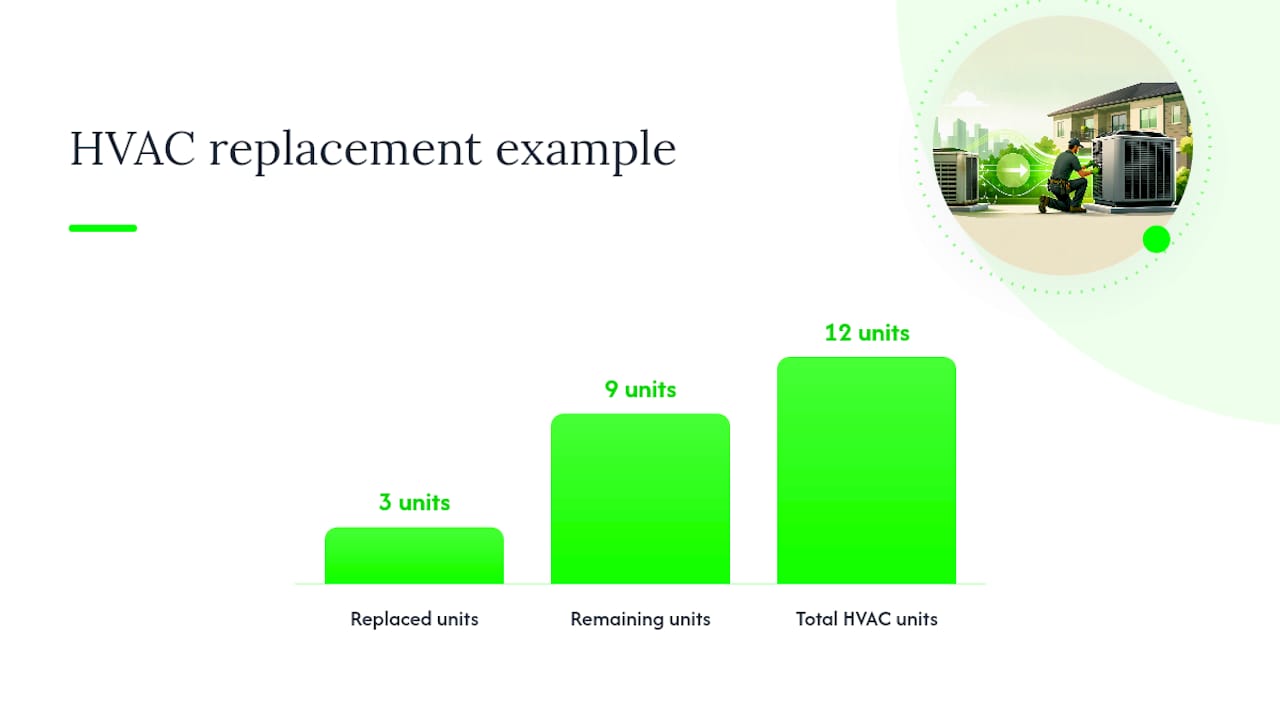
An example makes this concrete. Replacing three of twelve rooftop HVAC units on a commercial building might look tiny next to a $2 million property.
Pro Tip: Before signing off on any project over a few thousand dollars, ask your contractor to identify which building system the work touches and whether it’s a repair, a partial replacement, or a full system swap. That single question does most of the BAR analysis for you before the invoice even arrives.
IRS Safe Harbors: De Minimis, Routine Maintenance, and Small Taxpayer Rules
Safe harbors exist so landlords don’t need a tax attorney every time they fix a faucet. Three of them cover the overwhelming majority of routine spending.
De minimis safe harbor: You can expense items costing $2,500 or less per invoice or item (up to $5,000 if your business has an applicable financial statement, like an audited financial statement), as long as you have a written capitalization policy in place at the start of the tax year, per Nolo’s guidance on repairs versus improvements.
Routine maintenance safe harbor: Recurring activities you reasonably expect to perform more than once during the property’s class life (think HVAC servicing, gutter cleaning, repainting) can be expensed even if they’d otherwise look like a restoration.
Small taxpayer safe harbor: If your average annual gross receipts fall under the IRS threshold and the building’s unadjusted basis is $1 million or less, you can expense improvements up to the lesser of $10,000 or 2% of the building’s unadjusted basis, per building, per year.
The $2,500 de minimis figure is the one most landlords actually use, and it’s the fastest way to avoid a BAR analysis altogether for smaller purchases. Missing the written policy requirement is the most common way people lose this safe harbor. The policy has to exist in writing before the tax year starts, not after the IRS asks for it.
Roof, HVAC, and Kitchen Projects: Where Classification Gets Messy
The clean-cut examples are easy. The gray zone is where most disputes happen, and it’s usually on the highest-dollar projects.
Roof work: Patching a section of shingles after a storm is a repair. Replacing the entire roof is a restoration, full stop. If you replace a roof, you can often use a partial disposition election to write off the remaining, undepreciated basis of the old roof in the same year, which softens the capitalization hit considerably.
HVAC systems: Swapping a compressor or fixing a refrigerant leak is maintenance. Replacing the entire rooftop unit, or a significant share of units across a building’s HVAC system, is a restoration that gets capitalized.
Doors and windows: A same-for-same door replacement (same size, same function, comparable materials) leans toward repair. Upgrading to impact-rated windows or a security-rated commercial door adds capacity or quality, which pushes it into betterment territory. DJ Custom Contracting’s own breakdown of alterations versus renovations is useful here for sorting upgrade language from repair language before a project even starts.
Kitchen remodels: Replacing a cracked countertop section is a repair. Gutting the kitchen, replacing cabinets, countertops, and appliances as one project is a betterment, even if each individual line item looks small in isolation. The IRS looks at the plan of rehabilitation as a whole, not item by item, and commercial property owners see this most often in larger upgrade projects that combine several smaller-looking line items into one capital project.
Recordkeeping and Elections That Protect You in an Audit
Documentation is what separates a defensible tax return from a guess. The IRS doesn’t take your word for a classification; it wants a paper trail.
Keep itemized invoices that break out materials, labor, and the specific component worked on, not a single lump-sum line.
Take before-and-after photos of every project over a few thousand dollars, tied to the invoice date.
Write a short scope memo for larger projects explaining what unit of property was affected and why you classified it the way you did.
Adopt a written capitalization policy before the tax year starts to lock in de minimis safe harbor eligibility.
Make elections on time. The de minimis election is made annually on your return; bigger accounting method changes, like adopting new capitalization practices retroactively, usually require Form 3115.
Pro Tip: A cost-segregation study costs money upfront, but on a property with $500,000 or more in improvements, it often pays for itself by reclassifying components into faster depreciation schedules and unlocking partial disposition write-offs you’d otherwise leave on the table.
Involve a CPA whenever a single project crosses the small taxpayer safe harbor cap, and bring in a cost-segregation specialist on any acquisition or major renovation north of $500,000.
A Contractor’s View: Scoping Work So the Tax Classification Holds Up
Contractors control more of this outcome than owners realize. A vague invoice that just says “kitchen work, $18,000” gives your CPA nothing to work with. A line-item invoice that separates cabinet replacement, plumbing repair, and electrical work lets a tax preparer classify each piece correctly instead of capitalizing the whole job by default.
When requesting bids, ask for materials and labor broken out by component, not bundled together. Ask for photos before demolition and after completion. On maintenance-focused projects, tell the contractor explicitly that the goal is repair, not upgrade, since swapping in a nicer fixture “while we’re in there” can turn a clean repair into a betterment without anyone intending it, as explained in Small Contractor Classification: What Contractors Need to Know. DJ Custom Contracting’s guide on renovation terms that protect your budget covers the language worth locking into a contract before work starts.
How the Tax Cuts and Jobs Act Changed the Calculus
The Tax Cuts and Jobs Act reshaped bonus depreciation in ways that changed how landlords think about the capital improvements vs. repairs decision, even though it didn’t touch the BAR test itself.
That percentage has been phasing down since 2023, which puts more weight back on getting the repair-versus-improvement call right in the first place, since immediate bonus depreciation is no longer available at the same rate. The TCJA also expanded Qualified Improvement Property to a 15-year recovery period for interior nonstructural commercial improvements, correcting an earlier drafting issue and giving commercial landlords a meaningfully shorter depreciation window than the standard 39 years.
The practical effect: the safe harbors and BAR test still decide whether something is a repair or an improvement, but the TCJA changed how painful capitalization is once you land there. A capitalized improvement that qualifies for bonus depreciation or the 15-year QIP class hurts your cash flow far less than one stuck on a 39-year schedule. That’s one more reason to nail down the classification and the property class correctly instead of guessing.
Residential vs. Commercial: Where the Rules Diverge
The BAR test and safe harbors apply identically to residential and commercial property. What differs is the depreciation math and the scale of the projects landlords typically face.
Residential rental property depreciates over 27.5 years under IRS Publication 527, while nonresidential commercial buildings depreciate over 39 years. That 11.5-year gap means a $50,000 capital improvement recovers meaningfully faster on a residential property, about $1,818 a year, versus roughly $1,282 a year on commercial space.
Commercial properties also see the routine maintenance safe harbor used more heavily, since large buildings have recurring, scheduled maintenance programs (elevator servicing, roof inspections, HVAC contracts) that fit the safe harbor’s “more than once during the class life” language almost by design. Residential landlords with a handful of units often lean more on the de minimis and small taxpayer safe harbors instead, since their gross receipts and building basis are more likely to fall under those thresholds.
Multi-unit residential buildings occupy a middle ground. A duplex owner and a 40-unit apartment operator both use the 27.5-year schedule, but the apartment operator is far more likely to qualify for cost segregation studies and partial disposition elections simply because of project size. The rules don’t change by property type; the practical strategy around them does.
Splitting Costs When One Project Covers Both Repairs and Improvements
Plenty of real invoices mix repair work and capital improvements in the same project, and the IRS expects you to allocate the cost between them rather than treat the whole thing as one classification.
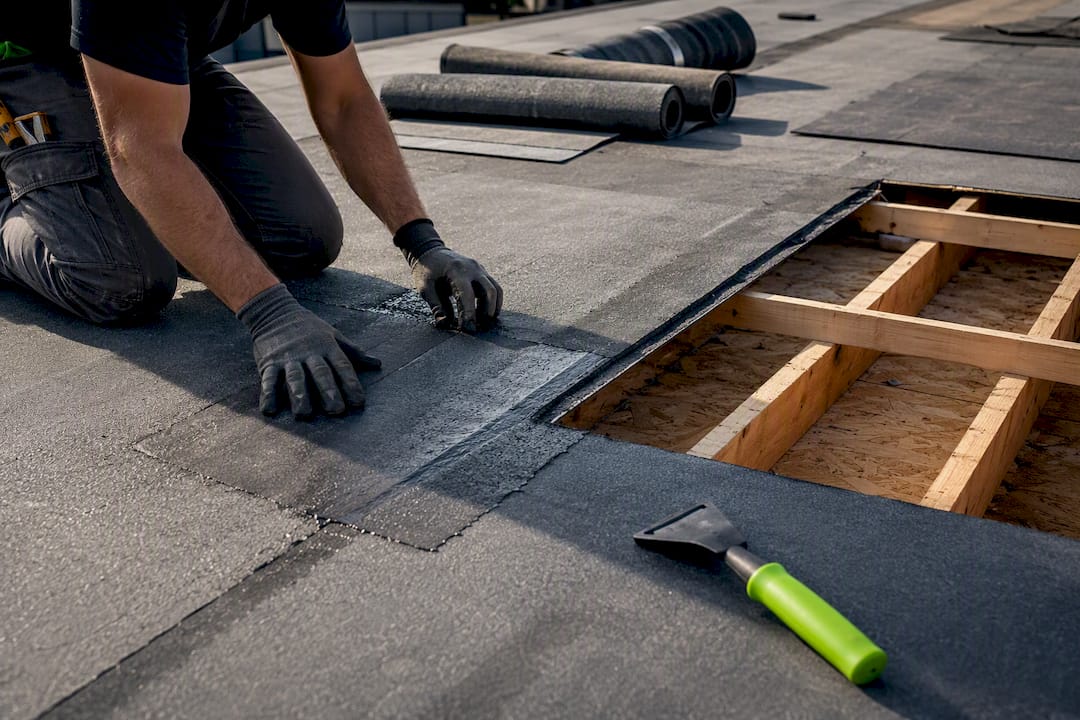
Start by separating the invoice by task, not by trade. A single roofing job that patches storm damage in one section and replaces the entire roof deck in another isn’t one expense; it’s two, and each gets its own tax treatment. Ask your contractor for a cost breakdown that maps dollars to specific tasks, ideally before the work starts rather than after.
Where a true mixed-purpose cost exists, like a service call that both repairs a leaking valve and upgrades the water heater in the same visit, allocate the invoice based on a reasonable method: time spent on each task, or the fair value of materials used for each. Keep that allocation documented in the same file as the invoice and photos. If a CPA or IRS examiner later asks why $1,200 of an $8,000 job was expensed and $6,800 was capitalized, the allocation memo is the answer.
Skipping this step and capitalizing the entire invoice because part of it qualifies is one of the more expensive mistakes landlords make. It overstates basis, understates current deductions, and creates an inflated depreciation schedule that a careful review can unwind years later, usually at the worst possible time.
Balancing Tax Strategy With Property Maintenance: An Editorial View
The instinct to capitalize everything “to be safe” costs landlords real money. Immediate deductions help cash flow today; building basis pays off only when you sell or over a very long depreciation runway. For most owners still actively operating a property, that trade favors taking the deduction whenever a defensible repair classification exists.
Audit risk is lower than landlords assume when documentation is solid, and a CPA review once a year, timed before major projects rather than after tax season, catches misclassifications while they’re still cheap to fix. Pick a written policy, document consistently, and stop relitigating the same judgment call project by project.
— DJ
How DJ Custom Contracting Documents Projects for Defensible Tax Positions
Having proper documentation is the difference between guessing at a classification and having the paperwork to back it up. Every project, from a single repair call to a full commercial renovation, should include line-item invoices, before-and-after photos, and scope documentation that ties the work to a specific building component. That’s exactly the record a CPA needs to defend a repair deduction or support a capitalized improvement if the IRS ever asks.

Whether you’re patching a roof section or planning a full kitchen gut renovation, the classification question starts with how the work is scoped, not how it’s filed in April. Our interior renovation and commercial renovation teams build that documentation into every bid from the start, so you’re not reconstructing a paper trail months later. Consider requesting a project documentation checklist before your next job, or scheduling a consultation to walk through how a specific project should be scoped and invoiced to keep your tax position clean.
Sources
For the legal text behind everything above, start with the IRS tangible property final regulations for the BAR test and unit-of-property rules, and IRS Publication 527 for residential depreciation specifics. Nolo’s landlord tax guide breaks down the safe harbors in plain language. None of this replaces a CPA who knows your specific portfolio and filing history.
This article is general information, not a substitute for advice from a qualified financial advisor. Consult a qualified financial professional about your own circumstances before acting on anything here.
FAQ
Are Repairs Considered Capital Improvements?
No. Repairs restore a property to its normal operating condition and are deductible immediately under IRC §162, while capital improvements better, restore, or adapt the property and must be capitalized and depreciated under IRC §263.
What Is the Difference Between Repairs, Maintenance, and Capital Improvements?
Repairs and routine maintenance both keep a property functioning as-is and are deductible now; capital improvements add value, extend useful life, or change the property’s use and get depreciated over 27.5 years for residential or 39 years for commercial property.
Do Repairs Need to Be Capitalized?
Generally, no. Qualifying repairs are deducted in the year paid, but if a “repair” is actually part of a larger plan of rehabilitation, such as one line item in a full kitchen remodel, the IRS may require capitalizing the entire project as a betterment.
Is Replacing a Door Considered a Capital Improvement?
It depends on the scope. A same-for-same door replacement is usually a deductible repair, but upgrading to a higher-quality, more secure, or higher-capacity door counts as a betterment and must be capitalized.
Recommended


Comments