


Facility maintenance essentials: Stay compliant and cost-efficient

Over 250,000 housing maintenance code violations were issued in New York City during 2024 alone, a number that catches many property owners completely off guard. Whether you own a single-family home in New Jersey or manage a commercial building in Manhattan, a missed inspection or overlooked repair can result in steep fines, tenant disputes, and legal exposure that drains budgets fast. This guide breaks down exactly what the codes require, which maintenance tasks matter most, how to budget realistically, and how to build a seasonal schedule that keeps your property safe, efficient, and fully compliant year-round.
Table of Contents
Key Takeaways
Point | Details |
Local codes drive priorities | NYC and NJ have strict, enforceable maintenance standards that affect all property owners. |
Proactive plans save money | Planned maintenance reduces costs and liability versus reactive, last-minute repairs. |
Seasonal checks are essential | Spring and fall inspections on HVAC, roofing, and safety items help avoid major violations. |
Documentation and permits matter | Many tasks require proper recordkeeping and permits to satisfy local law—don’t overlook the paperwork. |
Understanding facility maintenance codes in NYC and NJ
Navigating local building codes is not optional. Both New York City and New Jersey have detailed, actively enforced regulations that apply to residential and commercial structures alike. Knowing which code applies to your property is the first step toward staying protected.
NYC uses a tiered violation system under the Housing Maintenance Code, which sorts violations into three classes:
Violation class | Description | Repair deadline |
Class A | Non-hazardous (e.g., peeling paint in a non-lead area) | 90 days |
Class B | Hazardous (e.g., broken window guards, mold) | 30 days |
Class C | Immediately hazardous (e.g., lack of heat, vermin infestation) | 24 hours |
Fines escalate with each class and compound daily when left unresolved. Class C violations, in particular, can result in emergency repair orders where the city fixes the problem and bills the owner at a premium rate.
At the state level, the 2025 Property Maintenance Code of NY State (PMCNYS) sets minimum standards for light, ventilation, heating, sanitation, and fire safety across all structure types. It also specifies when permits are required, and this catches many owners by surprise. Replacing an HVAC unit, altering electrical panels, or even certain plumbing repairs may require a permit before work begins. Skipping that step can create additional violations on top of the original issue.
Key insight: Compliance is not just about passing one inspection. It requires ongoing recordkeeping, timely repairs, and awareness of permit requirements before any maintenance work begins.
A few critical compliance requirements apply to both homeowners and commercial operators in the NYC and NJ region:
Maintaining habitable temperatures (68°F from 6 a.m. to 10 p.m. when outdoor temps drop below 55°F in NYC)
Ensuring functional smoke and carbon monoxide detectors on every floor
Keeping all common areas free of hazards, pests, and structural damage
Documenting repairs with dates, contractor information, and permit numbers
Properties that fall into historically sensitive categories face additional requirements. If you are working with older structures, understanding the rules around renovating pre-war buildings is especially important, since lead paint, asbestos, and outdated systems add complexity to routine maintenance. Learning the proper process for removing code violations from your property record is also essential once a violation has been issued.
Essential maintenance tasks for compliance and performance
With the codes in mind, the next question is: what daily, seasonal, or annual tasks should you prioritize to prevent problems, keep occupants safe, and avoid fines?
The short answer is that compliance starts with the basics and builds from there. The following systems require routine attention at every property:
HVAC systems: Filters replaced every 1 to 3 months, annual professional servicing, and coil cleaning twice per year
Plumbing: Inspection for leaks under sinks and around fixtures, pipe insulation before winter, and water heater flushing annually
Electrical: Panel inspections every 3 to 5 years, outlet and GFCI testing quarterly, and immediate attention to flickering lights or tripped breakers
Roofing and gutters: Debris removal after storms, biannual professional inspections, and flashing checks around chimneys and vents
Common areas and exteriors: Walkway repairs, exterior lighting checks, and pest control on a scheduled basis
Seasonal roof and HVAC inspections are widely recognized as both legal essentials and insurance requirements. A roof that fails mid-winter creates immediate habitability issues, triggers violations, and may void insurance claims if deferred maintenance contributed to the damage.
The financial case for planned maintenance is equally clear. Facility maintenance benchmarks show that organizations scheduling 65% or more of their maintenance tasks proactively cut costs by 22% compared to those relying mainly on reactive repairs. Reactive jobs, which are repairs made only after something breaks, typically cost 50 to 100% more than the same work done on a schedule.
Statistic: Properties running mostly reactive maintenance programs pay, on average, double what proactive owners spend on identical repairs over a five-year period.
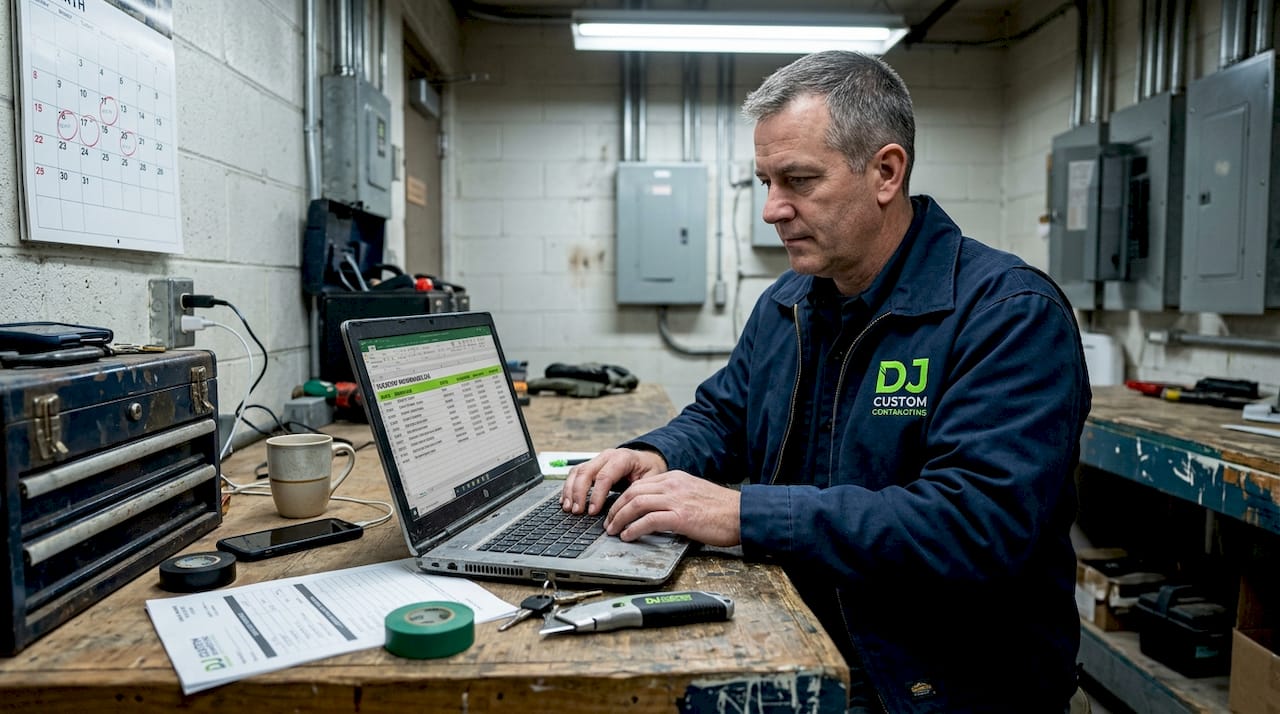
Pro Tip: Start a simple maintenance log in a shared spreadsheet or app. Record every repair, inspection date, contractor name, and permit number. This documentation alone can significantly reduce your legal exposure during a dispute or violation review.
Explore maintenance service options tailored to NYC and NJ properties if you want professional help building and executing this plan from the ground up. For properties already facing citations, guidance on correcting violations can help you resolve issues quickly and correctly.
Cost benchmarks and planning: What should maintenance really cost?
Optimizing tasks is important, but understanding the actual costs helps you plan realistically and avoid wasteful spending on emergency fixes.
Here is a breakdown of typical annual facility maintenance costs for common property types in the NYC and NJ region:
Property or system type | Estimated annual cost |
Office building (Class A, NYC) | $2.10 to $3.50 per sq ft |
Commercial HVAC servicing | $500 to $5,000 per unit |
Roof maintenance (flat/low-slope) | $0.15 to $0.50 per sq ft |
Plumbing preventive checks | $300 to $800 per year |
Electrical inspection (panel) | $150 to $500 per inspection |
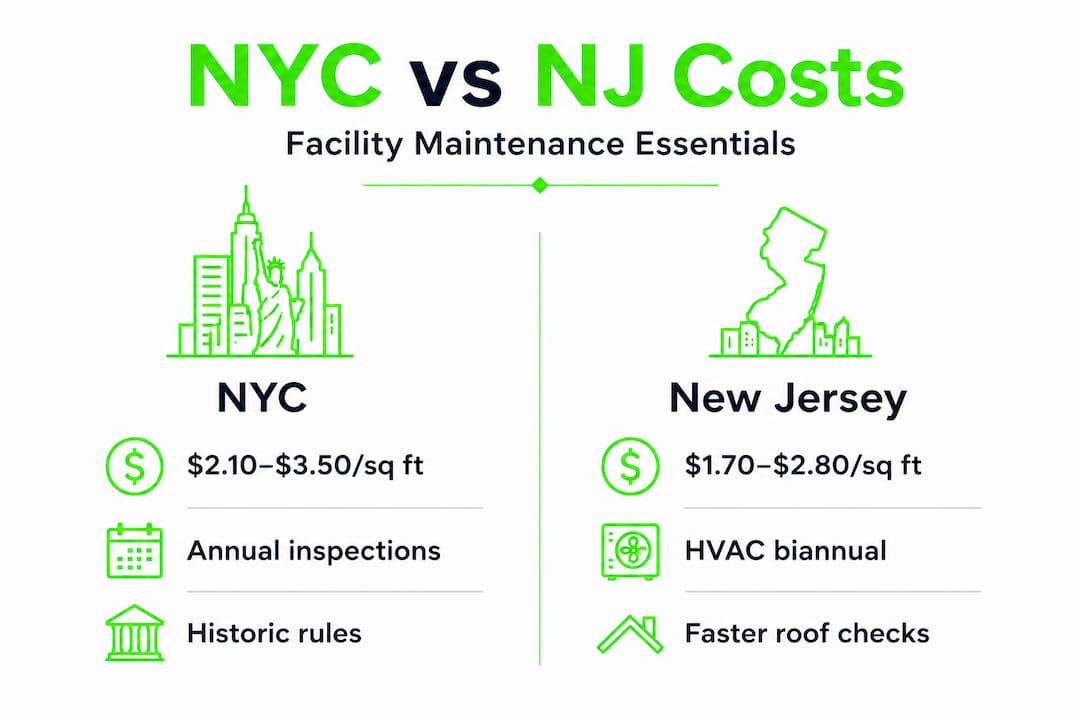
NYC Class A office facilities average $2.10 to $3.50 per square foot annually in planned maintenance spending, and properties that keep planned maintenance above 65% of total work reduce overall costs by 22%. These are not theoretical savings. They reflect real budget differences between reactive and proactive owners across thousands of properties.
The three action steps below help translate these numbers into a workable plan:
Inventory all systems. List every major mechanical, structural, and safety system at your property, including model numbers, installation years, and last service dates. This gives you a clear baseline and helps prioritize what needs attention first.
Build a preventive maintenance calendar. Assign quarterly, biannual, and annual tasks to each system on your list. Schedule contractor visits well in advance to avoid the premium pricing that comes with urgent requests in peak seasons.
Review results and adjust annually. At the end of each year, compare what you budgeted against what you actually spent. Look for patterns, such as repeated repairs to the same system, that signal replacement may be more cost-effective than continued patching.
For more detail on where facility spending is most impactful for NYC and NJ owners, professional guidance can help align your budget with local requirements and realistic cost ranges.
Seasonal maintenance schedules: NYC vs. NJ requirements
Cost is just one side of the equation. Timing your maintenance efforts and adapting to local seasonal demands keep your plan actionable throughout the year, not just during emergencies.
NYC and New Jersey share similar climates but differ slightly in their regulatory requirements, especially around HVAC and refrigerant handling. Here is a practical seasonal schedule built around both locations:
Spring (March through May): Activate and inspect air conditioning systems before peak demand. Check roof drainage, clean gutters, and repair any winter damage to flashings and membranes. Test smoke and CO detectors after any dormant period.
Summer (June through August): Monitor HVAC performance under load. Address any indoor air quality (IAQ) concerns, including humidity control targeting 30 to 60% relative humidity. Inspect exterior paint, caulking, and window seals.
Fall (September through November): Transition heating systems into service before the first cold snap. In NYC, heating season legally begins October 1. Clean and inspect boilers, furnaces, and heat pumps. Perform biannual roof inspection before winter precipitation begins.
Winter (December through February): Focus on pipe insulation, heating system monitoring, and snow removal from roofs and walkways. Address any ice dam formation promptly to prevent water intrusion.
New Jersey HVAC regulations require separate spring and fall checkups for cooling and heating systems, respectively. NJ also enforces EPA 608 certification requirements for anyone handling refrigerants, meaning refrigerant work must be done by a licensed technician. Hiring someone without that certification can expose you to federal fines in addition to any state penalties.
Biannual roof inspections in spring and fall are a recognized best practice for preventing major compliance and insurance claims. Catching a failing membrane seal or a clogged drain in October costs a fraction of repairing water-damaged ceilings and flooring in February.
Pro Tip: For NJ commercial properties, document your HVAC technician’s EPA 608 certification number in your maintenance records. Inspectors and insurers may request this during reviews, and having it on file saves time and demonstrates due diligence.
If you are planning property upgrades alongside your maintenance schedule, understanding the residential additions workflow or working with a commercial renovation specialist can help integrate both compliance and improvement projects without duplication of effort.
Our take: Why most owners underestimate the hidden risks in facility maintenance
Having worked across residential and commercial properties in NYC and Northern New Jersey since 2018, we have seen the same patterns repeat across thousands of service calls. Owners who focus only on visible repairs tend to overlook the systems that carry the highest legal and financial risk.
Indoor air quality, for example, rarely gets attention until a tenant files a complaint or an inspector finds mold behind a wall panel. By that point, remediation costs are far higher than what a simple humidity control upgrade would have cost years earlier. The same holds true for fire safety controls, electrical panels running past their expected lifespan, and aging plumbing connections that fail slowly and silently until a major water loss event occurs.
What surprises many owners is that recordkeeping failures can be just as costly as physical neglect. A property that had every repair done correctly but cannot produce documentation during a violation dispute may still face fines. Courts and inspectors look at what you can prove, not just what you believe happened.
The deeper truth is that facility maintenance is asset protection as much as it is compliance. A well-maintained property holds its value better, attracts reliable tenants, carries lower insurance premiums, and faces fewer costly surprise repairs. Owners who treat maintenance as overhead to minimize are essentially trading long-term asset value for short-term savings. The math rarely works in their favor.
A strong maintenance plan does more than help you pass inspections. It protects the people inside the building, preserves the investment you have made in the property, and reduces your exposure to the kind of legal and financial disruptions that force reactive decisions under pressure.
Need help with facility maintenance? Your next step
Keeping your property compliant and running efficiently takes consistent effort, the right knowledge, and access to skilled professionals who understand NYC and NJ regulations inside and out. Many homeowners and business owners find that partnering with a reliable contractor is the most practical way to stay ahead of requirements without letting maintenance consume all of their time and attention.

DJ Custom Contracting LLC has been supporting property owners across New York City and Northern New Jersey since 2018 with building and facility maintenance solutions designed for both residential and commercial properties. Whether you need routine upkeep, DOB violation removal, interior renovation work, or commercial renovation support, the team brings hands-on expertise and competitive pricing to every project, no matter the scale. Reach out today to discuss what your property needs and get a plan in place before the next inspection cycle.
Frequently asked questions
What are the most common facility maintenance code violations in NYC?
Heat and hot water failures, pest infestations, water leaks, and fire safety deficiencies are among the most frequently cited violations under NYC’s Housing Maintenance Code, with many falling into the Class B or Class C categories that require fast action.
How often should I schedule facility maintenance to stay compliant?
Most facilities should schedule key system inspections at least annually, with HVAC and roofing inspected twice per year. Spring and fall roof inspections specifically reduce the risk of code violations and insurance claim denials tied to deferred maintenance.
Do I need a permit for repairs or maintenance in New York State?
Yes, many types of maintenance work involving existing systems require a permit under the Property Maintenance Code of NY State. Always confirm permit requirements before starting any repair or replacement project, even if it seems routine.
How does planned maintenance save money compared to reactive repairs?
Planned maintenance programs reduce costs by up to 22% when at least 65% of work is scheduled in advance, while reactive repairs routinely cost 50 to 100% more than the same work done proactively.
Recommended


Comments