


Interior remodeling workflow guide for NY and NJ


Remodeling a home or commercial property in New York or New Jersey is one of the most complex construction challenges you can face. Poor planning is behind 39% of remodeling project failures, and in high-regulation markets like NYC and the Garden State, that number reflects real consequences: blown budgets, stalled permits, contractor disputes, and spaces that never reach their potential. Whether you manage a Brooklyn brownstone, a Manhattan co-op, or a commercial suite in Bergen County, understanding the full remodeling workflow before breaking ground is the single most reliable way to protect your investment, your timeline, and your sanity.
Table of Contents
Key Takeaways
Point | Details |
Map your workflow | Every successful remodel follows a clear multi-phase process, from vision setting to closeout and sign-off. |
Plan for permits | NY/NJ regulations and permits often cause the biggest delays—budget for time and expert guidance. |
Budget smartly | Set aside a 15-30% contingency and order materials well before demolition to prevent cost overruns. |
Minimize disruption | Phased commercial workflow, after-hours work, and advanced planning keep operations and living spaces functional. |
Expert help pays off | Professional project management and expeditors lower failure rates, hassle, and maximize ROI. |
Understanding the phases of interior remodeling workflow
Before committing money or signing contracts, you need a clear picture of how a successful remodeling project actually flows from start to finish. Skipping phases or rushing through them is where most projects run into serious trouble.
The interior remodeling process follows a structured sequence that applies to both residential renovations and commercial build-outs. According to industry standards, a standard workflow consists of 7 to 10 phases, covering everything from the initial consultation through design, approvals, demolition, finishing, inspections, and closeout. Each phase builds on the previous one, and gaps or skipped steps create compounding problems downstream.
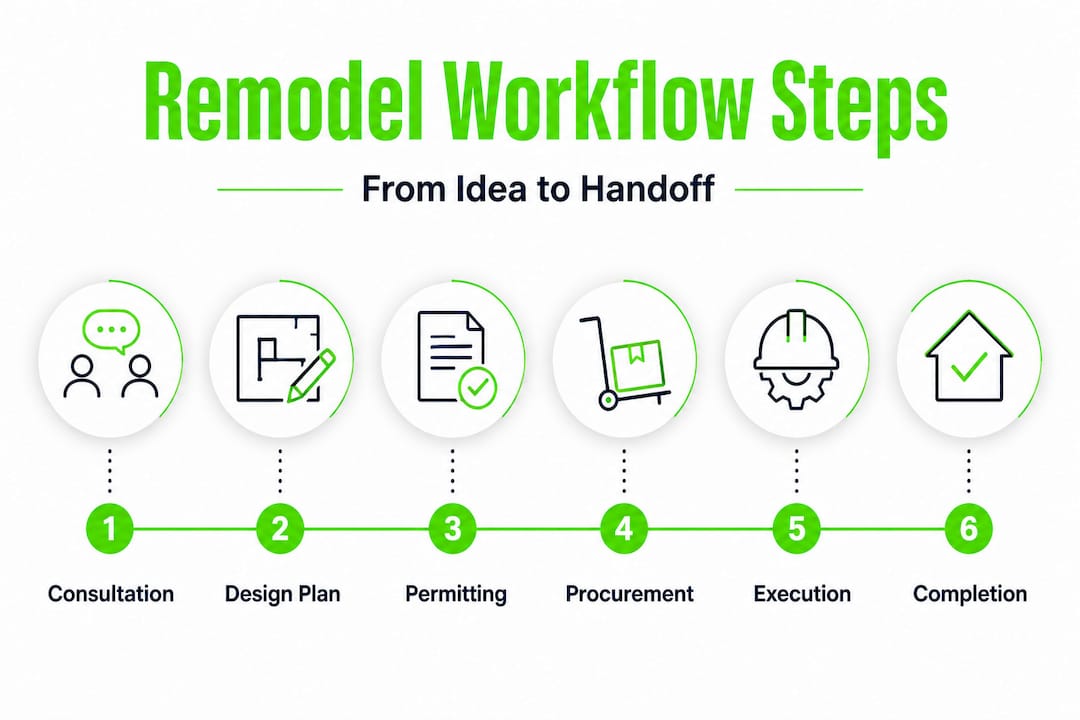
Here is a breakdown of the core phases and what you can realistically expect from each:
Phase | Typical duration | Key deliverables |
Consultation and scoping | 1 to 2 weeks | Project goals, site walkthrough, initial scope |
Design and planning | 2 to 6 weeks | Drawings, specifications, material selections |
Budgeting and contracts | 1 to 2 weeks | Cost estimates, contractor agreements |
Permits and approvals | 4 to 12 weeks | DOB filings, board approvals, asbestos testing |
Procurement | 4 to 14 weeks (parallel) | Materials ordered, lead times managed |
Demolition | 1 to 3 weeks | Site clearing, hazardous material removal |
Rough construction | 4 to 10 weeks | Structural, MEP (mechanical, electrical, plumbing) work |
Finishing and interiors | 2 to 6 weeks | Millwork, flooring, painting, fixtures |
Inspections and sign-offs | 1 to 3 weeks | Code compliance, punch lists |
Closeout and handoff | 1 to 2 weeks | Warranties, documentation, final walkthrough |
For residential projects, the combined timeline often runs 3 to 6 months. Commercial remodels, especially in occupied buildings, can stretch to 6 to 12 months depending on scope, phasing requirements, and regulatory complexity.
The critical difference between residential and commercial workflows comes down to coordination scale. Residential projects typically involve 5 to 15 subcontractors. A mid-size commercial renovation can require 20 or more specialized trades, plus building management sign-offs, ADA (Americans with Disabilities Act) compliance checks, fire marshal reviews, and tenant coordination. If you are tackling a basement remodeling workflow, the phasing is more straightforward, but egress, waterproofing, and fire separation requirements still apply and must be factored into the timeline from day one.
Identify the scope as either residential or commercial before the design phase begins
Build phase dependencies into your timeline so delays in one phase don’t blindside the next
Lock in contractor agreements before permits are filed to avoid procurement delays
Treat inspections as a built-in phase, not an afterthought at the end of construction
Permitting, approvals, and compliance hurdles in NY and NJ
Once your workflow is outlined, the next reality to confront is permitting. In New York and New Jersey, this phase alone can determine whether a project finishes on time or gets stuck for months before a single nail is driven.
In New York City, the NYC permit workflow is managed by the NYC Department of Buildings (DOB). Interior renovations typically require an Alt-2 or Alt-1 filing, depending on whether work is classified as minor alterations or a change of use. On top of the DOB, co-op and condo owners must submit renovation plans to their building’s board for review. DOB permits and board approvals, combined with required asbestos testing for pre-1987 buildings and the use of licensed expeditors to manage filings, means the pre-construction window alone can span 2 to 6 months in NYC. Many property owners underestimate this timeline and find themselves in expensive contractor holding patterns while paperwork clears.
In New Jersey, the picture is different but equally demanding. NJ permitting varies by township, and costs run 15 to 25% above the national average. What is acceptable under code in one municipality may trigger additional reviews in another. For example, structural modifications to a kitchen in Jersey City follow different local requirements than those in Montclair or Hoboken. Township zoning boards, construction departments, and state-licensed contractor requirements all add layers to the process.
“In NY and NJ, failing to plan for permitting is essentially planning to fail. The regulatory environment here isn’t optional, and it’s not negotiable. The projects that succeed are the ones that treat compliance as part of the design, not a hurdle to clear afterward.”
Key compliance steps to build into every NY/NJ remodel:
Asbestos and lead paint testing for any building constructed before 1980 (required before demolition)
ADA compliance for any commercial space undergoing a change of use or significant renovation
State-registered contractors are required for certain trade work in New Jersey; unlicensed work voids permits
Landmark Preservation Commission (LPC) reviews for historic buildings in designated NYC districts
Fire suppression system modifications for commercial remodels that change occupancy loads
If you own or manage property in a pre-war building, add structural engineer reviews and LPC filings to your compliance checklist. Pre-war structures often contain surprises including original knob-and-tube wiring, terra cotta flue liners, and non-standard ceiling heights that affect both material costs and permit classifications.
For NJ permitting tips, the most reliable approach is to hire a contractor who already has existing relationships with local construction officials. That local knowledge shortens review cycles considerably and helps avoid costly back-and-forth on code interpretation.
Budgeting, procurement, and expert project management
With compliance tackled, getting your budgeting and procurement strategy right is what separates projects that stay on track from those that spiral into cost overruns and missed milestones.

Real budget benchmarks for NY and NJ give you a clear starting point. Kitchen remodel costs in New Jersey run $40,000 to $80,000 for a mid-range renovation, while NYC projects for comparable scope land between $65,000 and $130,000. Cabinets alone consume 30 to 40% of a typical kitchen budget, making them the single largest line item. When managed well, kitchen renovations return 70 to 80% of their cost at resale, making them one of the stronger ROI (return on investment) renovations available.
One of the most overlooked budget rules is the contingency fund. A 15 to 30% contingency is not optional in the NY/NJ market. Hidden conditions behind walls, plumbing reroutes triggered by code compliance, and material substitutions due to supply chain shifts are all routine findings, not rare exceptions. Locking in a budget planning strategy from the start protects you from these inevitable surprises without stopping the project cold.
Procurement is another phase that demands early action. Material lead times for custom cabinets, specialty tile, windows, and HVAC (heating, ventilation, and air conditioning) equipment can run 4 to 14 weeks. If you wait until permits are approved to order materials, you will sit in a completed shell waiting for a range hood or a tile shipment. The smart approach is to finalize material selections during the design phase and place orders as soon as permits are submitted, not after they are approved.
Here is where the money typically goes in a full interior renovation:
Labor: 35 to 45% of total project cost; the largest combined category
Cabinets and millwork: 20 to 35%; custom work significantly raises this figure
MEP rough work: 15 to 25%; plumbing and electrical are non-negotiable cost centers
Finishes and fixtures: 15 to 20%; where scope creep most often inflates budgets
Permits and fees: 3 to 7%; often underestimated, especially in NYC
Contingency reserve: 15 to 30%; must be set aside before construction starts
Pro Tip: Weekly project status updates from your general contractor, delivered in writing with photos and updated schedules, are one of the highest-value practices in commercial renovation project management. Digital project management platforms make it easy to track submittals, RFIs (requests for information), and inspection results in real time, dramatically reducing miscommunication between trades.
Execution: managing construction, inspections, and handoff
After sound budgeting and procurement planning, the construction phase is where your preparation meets reality. This is where well-planned projects move efficiently and under-planned ones begin to unravel.
Here is a numbered breakdown of the execution sequence that applies to both residential and commercial renovations:
Site protection and setup: Dust barriers, floor protection, utility shutoffs, and temporary facilities (portable toilets, dumpsters) go in before any demolition begins.
Selective demolition: Walls, fixtures, flooring, and ceilings are removed in a controlled sequence; hazardous materials identified during pre-demo testing are removed by licensed abatement contractors.
Rough MEP installation: All rough plumbing, electrical, and HVAC work is completed and inspected before walls are closed.
Structural framing and blocking: New partitions, headers, and blocking for future fixtures are framed and inspected.
Insulation and waterproofing: Thermal, acoustic, and moisture barriers are installed based on the project type and occupancy.
Drywall and rough finishes: Walls are closed, taped, and finished to the specified level before painting begins.
Cabinet, millwork, and fixture installation: This phase is highly sequenced; flooring typically goes in after cabinets to protect finished surfaces.
Final MEP trim-out: Outlets, fixtures, plumbing trim, and HVAC grilles are installed after finishes are complete.
Punch list walkthroughs: Owner and contractor inspect all work, generating a written list of items requiring correction before final payment.
Final inspections and sign-offs: Municipal or DOB inspectors review completed work; certificates of occupancy or approval are issued.
For commercial properties with active tenants, phased construction is the standard approach. Work proceeds floor by floor or zone by zone so that business operations continue in unaffected areas. Final sign-offs and warranty documentation complete the workflow and protect the building owner from post-construction liability.
Edge cases that commonly affect NY/NJ projects include noise ordinance restrictions that limit construction hours, temporary kitchen setups for residential clients during a full kitchen gut, LPC review delays for historic district properties, and structural discoveries in pre-war renovations that require engineering reviews mid-project. Documenting every inspection result, punch list item, and warranty certificate protects both the property owner and the contractor in the event of post-project disputes.
Pro Tip: Keep a dedicated project binder or shared digital folder with every permit, inspection report, contractor warranty, material spec sheet, and change order. This documentation package becomes a critical asset at resale and for future maintenance planning.
What experts wish every NY/NJ remodeler knew
After working across hundreds of projects in New York and New Jersey, the pattern behind failed remodels is remarkably consistent. It almost never comes down to bad craftsmanship. It comes down to skipped planning steps and the decision to manage a complex, multi-trade project without professional coordination.
The 39% failure rate from poor planning is not a statistic about unlucky homeowners. It reflects the real consequences of treating remodeling as a simple series of contractor phone calls rather than a managed workflow. Expert coordination, combined with digital project management tools, consistently improves outcomes by reducing communication gaps, catching code issues early, and keeping procurement on schedule. That coordination is not a luxury in the NY/NJ market. It is a fundamental requirement.
The second lesson experienced professionals share is that layout and function must drive every design decision before aesthetics are considered. A kitchen with beautiful countertops but a dysfunctional work triangle will frustrate you every single day. A commercial office with stunning finishes but no acoustic separation will drive tenants away. Building 15 to 30% contingency into your budget and prioritizing layout efficiency over decorative choices are the two decisions that most reliably separate satisfying renovations from regrettable ones.
There is also an uncomfortable truth about regulatory agility. Contractors who know the DOB system, maintain relationships with building inspectors, and understand township-specific code variations in NJ are not just a convenience. They deliver real financial value by avoiding stop-work orders, reducing inspection cycles, and handling compliance surprises without project shutdowns. The cost of hiring experienced remodeling expertise is almost always less than the cost of navigating a regulatory problem without it.
Finally, contingency planning is not pessimism. In a market where wall cavities hide original 1920s plumbing and NJ soil conditions can surprise even veteran excavators, expecting the unexpected is simply professional practice. The projects that finish on time and on budget are the ones where the contingency was planned and rarely needed, not the ones where it was skipped and desperately required.
Find expert help for your NY/NJ remodeling project
Managing a full interior renovation from scoping through closeout requires coordinated expertise, especially when navigating NY and NJ regulations, permitting timelines, and trade scheduling. Getting that workflow right from day one protects your investment and keeps your project moving forward without costly surprises.

DJ Custom Contracting LLC has been delivering residential and commercial renovation solutions across New York and New Jersey since 2018. Whether you need a trusted interior renovation contractor for a full home remodel or an experienced commercial renovation contractor to manage a phased office build-out, the team brings licensed expertise, local code knowledge, and end-to-end project management to every job. No project is too large or too small. Reach out today to start your project the right way.
Frequently asked questions
How long does a typical interior remodel take in NYC or NJ?
For residential projects, expect 6 to 20 weeks in NYC and 6 to 12 weeks in NJ depending on scope and permit timing; commercial remodels typically range from 2 to 6 months based on phasing complexity. NYC’s pre-construction permitting window alone can add 2 to 6 months for larger projects, so early planning is essential.
What permits are required for interior remodeling in NYC?
Most NYC interior renovations require DOB Alt-2 or Alt-1 filings, and co-op or condo owners must also secure board approvals before work can begin. Asbestos reports are mandatory for buildings constructed before 1987.
How can I minimize disruption during a commercial remodel?
Phased construction schedules and after-hours work are the most effective strategies for keeping business operations running during a renovation. Early MEP coordination also prevents the kind of last-minute shutdowns that disrupt tenants most severely.
Should I hire a project manager or expeditor for NY/NJ interior remodeling?
Hiring a project manager or DOB expeditor is strongly recommended for any project involving permits, board approvals, or multi-trade coordination. Their expertise prevents costly mistakes, accelerates filing timelines, and serves as a critical buffer between you and the regulatory process.
Recommended


Comments