


Alteration Permits in New York and New Jersey: 2026 Guide


Alteration permits are official approvals granted by local building authorities that authorize modifications to existing properties involving structural, electrical, plumbing, or mechanical work. In New York City, the NYC Department of Buildings (DOB) administers these permits through a three-tiered classification system. In New Jersey, municipal building departments handle the same function with their own local requirements. Whether you own a brownstone in Brooklyn or a commercial property in Newark, understanding what are alteration permits and when you need one protects your investment, keeps your project legal, and prevents costly delays. Permit-related fees and mandatory inspections apply to nearly all significant renovation work in both states.
What are alteration permits and what work requires them?
An alteration permit is the formal authorization a property owner must obtain before making changes that go beyond cosmetic updates to an existing building. The permit confirms that proposed work complies with local building codes, zoning rules, and safety standards before a single wall is touched.
Cosmetic renovations like painting, wallpaper, or cabinet replacement generally do not require permits. That exemption covers a lot of routine maintenance. The moment work crosses into structural, mechanical, or systems territory, a permit becomes mandatory.
Work that triggers an alteration permit requirement includes:
Structural changes: removing or adding walls, altering load-bearing elements, or modifying floor systems
Electrical upgrades: new panel installations, rewiring, or adding circuits beyond a single outlet
Plumbing reroutes: moving drain lines, supply pipes, or adding new fixtures in new locations
Window and door replacements: enlarging or relocating openings in exterior walls
HVAC installations: new ductwork systems, boiler replacements, or central air additions
Additions: any expansion of the building footprint or floor area
The line between exempt and permit-required work can be subtle. Even minor plumbing relocations or adding electrical outlets may require permits, unlike pure cosmetic changes. A kitchen remodel that moves the sink two feet to the left crosses into permit territory immediately.
Pro Tip: When in doubt, call your local building department before starting work. A five-minute phone call costs nothing. An unpermitted renovation can cost thousands to correct.
How are alteration permits classified in New York City?
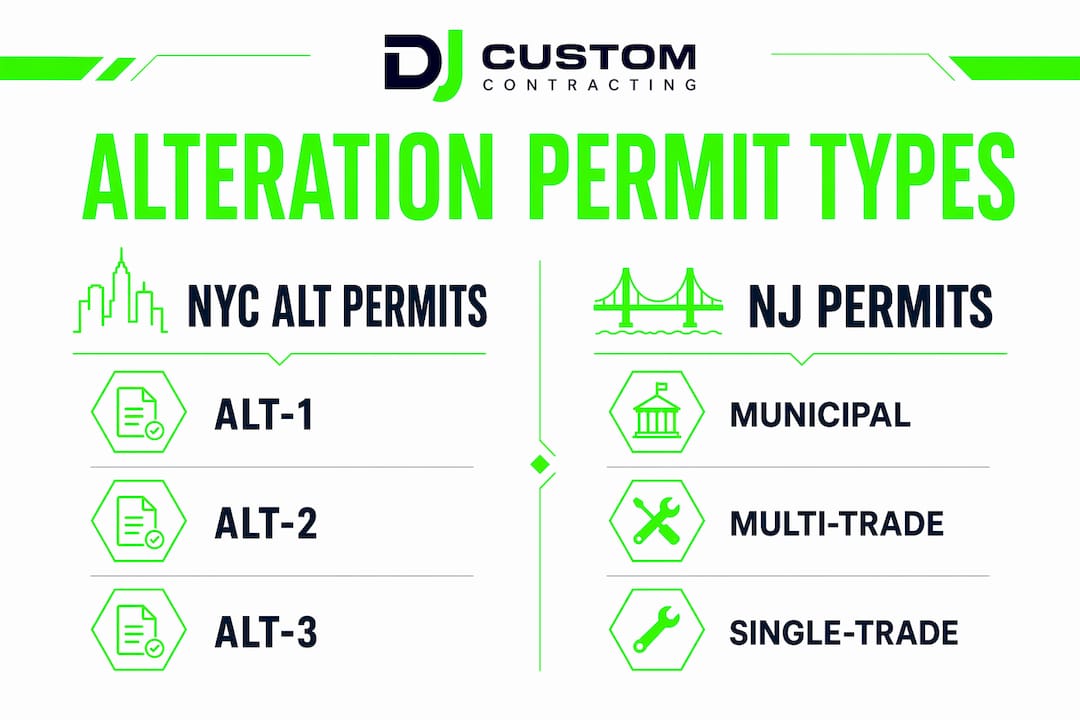
New York City uses a three-tiered classification for alteration permits: ALT-1 for major use, egress, or occupancy changes; ALT-2 for multi-trade work with no change in use; and ALT-3 for minor single-trade work. Each tier carries different documentation requirements, filing fees, and processing timelines.

ALT-1: Major alterations
ALT-1 applies when a renovation changes the legal use or occupancy of a building, such as converting a warehouse to residential units or adding a new means of egress. This permit type results in a new or amended Certificate of Occupancy. It carries the highest documentation burden and the highest cost.
ALT-2: Multi-trade renovations
Almost all multi-trade residential interior renovations in NYC fall under ALT-2 filings. This is the most common permit category for property owners undertaking typical remodeling projects. ALT-2 covers work that spans multiple trades (plumbing and electrical together, for example) but does not change the building’s occupancy classification.
ALT-3: Minor single-trade work
ALT-3 covers minor work limited to a single trade, such as replacing a water heater or upgrading a single electrical circuit. The documentation requirements are lighter, and property owners can sometimes self-file for these projects.
The table below summarizes the three types, their scope, typical 2026 costs, and common project examples.
Permit type | Scope | 2026 median filing fee | Common project examples |
ALT-1 | Major use or occupancy change | $8,000–$25,000 | Warehouse-to-residential conversion, new egress |
ALT-2 | Multi-trade, no occupancy change | $2,200–$4,500 | Full kitchen gut renovation, bathroom addition |
ALT-3 | Minor single-trade work | $200–$800 | Water heater replacement, single circuit upgrade |
The minimum filing fee for all types is $130 as of 2026. ALT-2 approvals often take 2–5 business days for clean filings with complete documentation. ALT-1 filings take considerably longer due to the occupancy review process.
Pro Tip: Misclassifying your project as ALT-3 when it qualifies as ALT-2 is one of the most common filing errors. The DOB will reject the application and restart the clock. Confirm your classification with a licensed architect before filing.
How to apply for an alteration permit
Applying for an alteration permit follows a defined sequence. Skipping any step delays approval and can trigger a stop-work order once construction begins.
Determine the permit type. Identify whether your project is ALT-1, ALT-2, or ALT-3 based on the scope of work and whether occupancy changes.
Hire a licensed architect or engineer. Multi-trade or major alterations require a licensed architect or engineer as the applicant of record, responsible for plan accuracy. Property owners can self-file only for simple single-trade ALT-3 projects.
Prepare required documents. Typical documentation includes existing and proposed drawings, structural and MEP (mechanical, electrical, plumbing) plans, owner authorization, and the current Certificate of Occupancy.
File through NYC DOB NOW. NYC uses the DOB NOW online portal for permit applications. New Jersey property owners file through their municipal building department, which varies by town.
Await plan review and approval. The NYC DOB reviews and approves plans before construction begins to confirm code compliance and set inspection standards.
Schedule inspections. Inspections occur at defined stages during construction and at project completion. The final inspection triggers the issuance of a sign-off or updated Certificate of Occupancy.
Receive final approval. Work is not legally complete until the DOB issues a final sign-off. Keep all permit documents on site throughout construction.
Many property owners underestimate how much documentation the DOB requires. Incomplete submissions are the single biggest cause of processing delays. Investing time in thorough plan preparation upfront saves weeks on the back end.
Common pitfalls and how to stay compliant
Permit compliance failures are more common than most property owners expect, and the consequences are serious. Failure to obtain required permits can result in fines, legal action, and work stoppages. Selling a property with open permit violations also complicates closings and can reduce sale price.
The most frequent mistakes include:
Starting work before permit approval. The DOB can issue a stop-work order and require demolition of completed work to allow inspection.
Misclassifying the alteration type. Filing ALT-3 for work that requires ALT-2 leads to rejection and restarts the timeline.
Incomplete documentation. Missing owner authorization, outdated Certificate of Occupancy, or unsigned plans all trigger resubmission.
Skipping inspections. Required inspections at structural, rough-in, and final stages must be scheduled and passed before proceeding.
Ignoring landmark or historic district rules. Properties in NYC landmark districts or New Jersey historic zones require additional approvals from preservation agencies before DOB filing.
Many value-adding renovations that boost property value, such as kitchen expansions or bathroom additions, require permits. Skipping the permit to save time often costs far more when the violation surfaces during a sale or refinance.
Pro Tip: Keep a dedicated permit file for every project. Include the approved plans, inspection reports, and final sign-off. Future buyers, lenders, and insurers will ask for this documentation.
New York vs. New Jersey: key differences in alteration permits
New York City and New Jersey share the same underlying goal for alteration permits, which is ensuring safe, code-compliant construction. The two jurisdictions differ significantly in how they administer that goal.
Factor | New York City | New Jersey |
Permit classification | ALT-1, ALT-2, ALT-3 (DOB system) | Varies by municipality; no statewide tiered system |
Filing platform | NYC DOB NOW (online portal) | Municipal building department (varies by town) |
Professional requirement | Licensed architect or engineer for ALT-1 and ALT-2 | Similar professional requirements for major structural work |
Occupancy change trigger | ALT-1 required; new Certificate of Occupancy issued | Equivalent process at municipal level |
Processing time | 2–5 business days for clean ALT-2 filings | Varies widely by municipality |
New Jersey’s permitting processes differ locally but generally involve review by municipal building departments, often requiring architect or engineer plans for major structural work. Some New Jersey towns have streamlined online portals; others still require in-person submissions. Confirming the specific process with your local building department before filing is the most reliable approach.
NYC’s DOB NOW system gives property owners and their architects real-time filing status updates. That transparency is a genuine advantage over the more fragmented New Jersey process. For NYC compliance guidance, understanding which DOB portal to use and how to track your application status saves significant time.
What I’ve learned from years of permit work in NYC and New Jersey
The permit process looks straightforward on paper. In practice, the gap between a clean filing and a rejected one often comes down to details that experienced contractors know and first-time filers miss.
The most consistent mistake I see is property owners treating the permit as an afterthought. They finalize their contractor, set a start date, and then ask about permits. That sequence almost always causes delays. The permit application should be the first step after design is complete, not the last step before construction begins.
Classification errors are the second most common issue. An owner assumes their kitchen renovation is a simple ALT-3 because it “feels minor.” But the moment that project involves new plumbing rough-in and electrical panel work, it becomes ALT-2. That misclassification costs two to three weeks of reprocessing time at minimum.
Landmarked properties add another layer that catches owners off guard. A building in a NYC historic district requires Landmarks Preservation Commission approval before the DOB will accept the filing. Skipping that step means the DOB rejects the application outright, regardless of how complete the plans are.
My honest advice: hire a licensed architect who files regularly with the DOB or your local New Jersey building department. Their filing experience is worth far more than their drafting fee. A professional who knows the reviewers, understands current code interpretations, and submits complete packages the first time will save you money and months of frustration.
— DJ
Djcustomcontracting handles your alteration permit needs
Property owners in New York and New Jersey need a contractor who understands permit requirements before the first tool is picked up. Djcustomcontracting has been delivering compliant residential and commercial renovations since 2018, working alongside licensed architects and engineers to keep every project properly permitted and code-compliant.

From interior gut renovations to exterior alterations, Djcustomcontracting manages the full scope of work with full awareness of DOB and municipal permit requirements. The team handles interior renovation projects of all sizes, coordinating permit filings, inspections, and final approvals so property owners stay protected throughout the process. No job is too large or too small. Contact Djcustomcontracting to discuss your project and get a clear picture of what permits your renovation requires.
Key takeaways
Alteration permits are mandatory legal authorizations for structural, electrical, plumbing, and mechanical work on existing buildings, and skipping them creates fines, stop-work orders, and title complications that cost far more than the permit itself.
Point | Details |
Permit classification matters | NYC uses ALT-1, ALT-2, and ALT-3; choosing the wrong type delays approval and restarts the process. |
Cosmetic work is exempt | Painting, wallpaper, and cabinet replacement do not require permits; structural and systems work always does. |
Professional filing is required | ALT-1 and ALT-2 filings must be submitted by a licensed architect or engineer, not the property owner. |
Documentation drives approval speed | Complete drawings, owner authorization, and a current Certificate of Occupancy are required before review begins. |
NJ differs from NYC | New Jersey permits are administered locally with no statewide tiered system; confirm requirements with your municipality. |
FAQ
What are alteration permits used for?
Alteration permits authorize modifications to existing buildings involving structural, electrical, plumbing, or mechanical work. They confirm that proposed work complies with local building codes before construction begins.
Do I need an alteration permit for a kitchen renovation in NYC?
Most full kitchen renovations in NYC require an ALT-2 permit because they involve multiple trades. A project that moves plumbing, adds electrical circuits, and modifies walls will not qualify as a minor ALT-3 filing.
How long does the alteration permit process take in NYC?
ALT-2 approvals typically take 2–5 business days for clean, complete filings. ALT-1 filings take longer due to occupancy review requirements.
Can a property owner file an alteration permit without an architect?
Property owners can self-file for simple single-trade ALT-3 projects. ALT-1 and ALT-2 applications legally require a licensed architect or engineer as the applicant of record.
What happens if I renovate without an alteration permit?
Unpermitted work can result in fines, legal action, and stop-work orders. It also creates title complications that surface during property sales and refinancing.
Recommended


Comments