


NJ Commercial Exterior Facade Upgrades: 2026 Guide

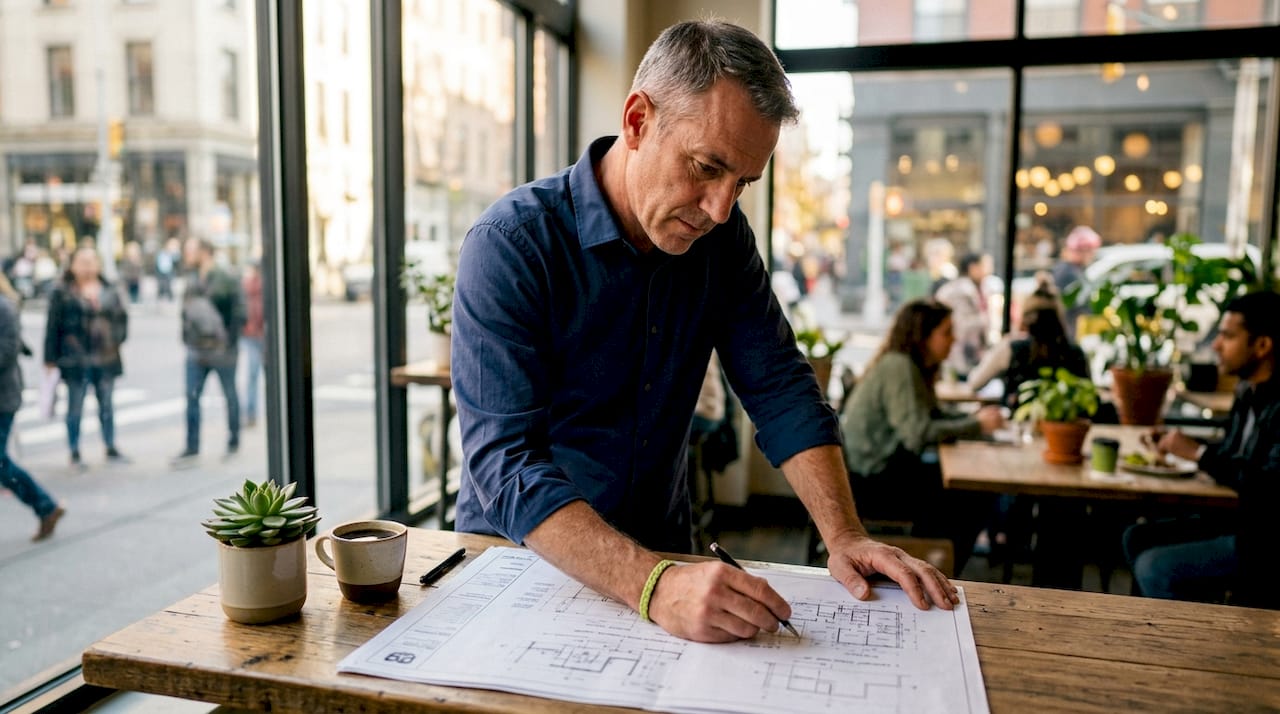
NJ commercial exterior facade upgrades are defined as the planned replacement or overlay of a building’s outer cladding system to improve aesthetics, structural performance, and energy efficiency. Property owners and facility managers across New Jersey face a clear choice: upgrade now with modern materials and methods, or absorb escalating maintenance costs and declining tenant appeal. Djcustomcontracting has worked on commercial exteriors since 2018, and the pattern is consistent. Buildings that invest in professional facade improvements hold their market position. Buildings that delay lose it.
1. NJ commercial exterior facade upgrades: top materials to know
The right material determines cost, installation speed, structural impact, and long-term performance. Four materials dominate commercial building facade renovation in New Jersey: fiber cement panels, aluminum composite material (ACM) panels, curtain wall glazing systems, and flexible stone veneer.
Fiber cement and ACM panels are the most common starting point for NJ owners. Fiber cement panels weigh 15–25 kg/m², making them manageable for most existing structures. ACM panels are lighter still and highly versatile in terms of color and profile options.
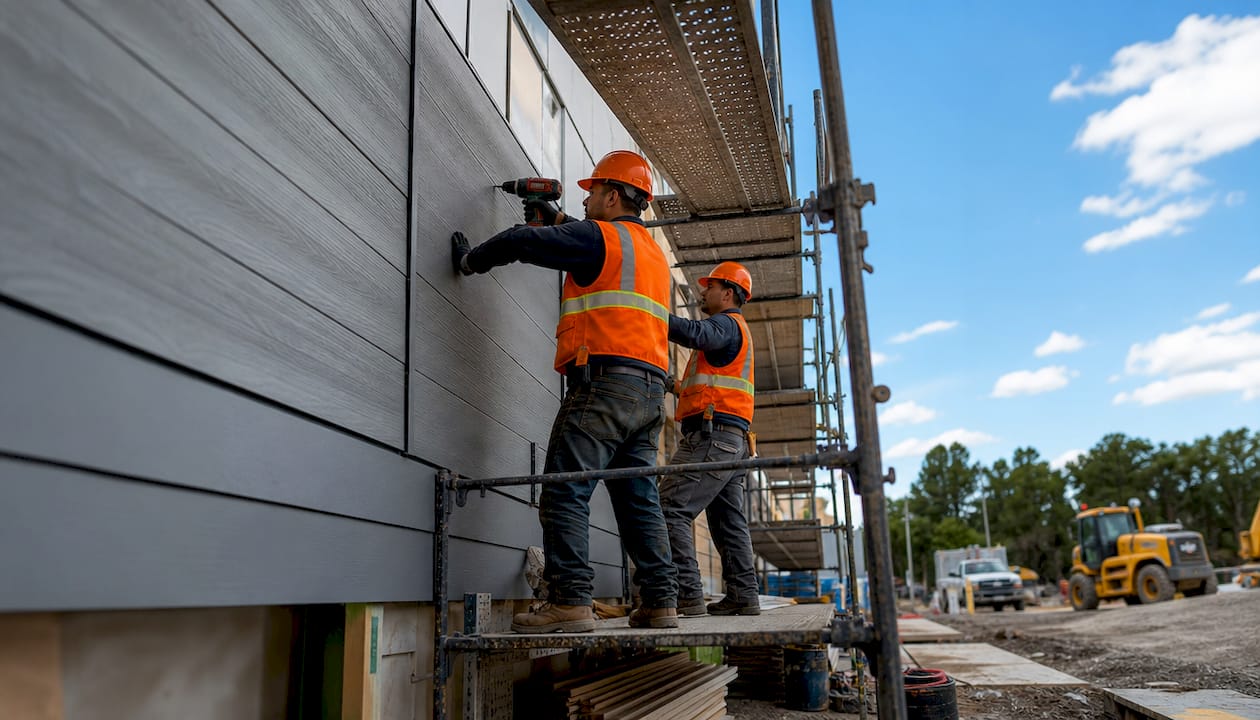
Flexible stone panels weigh approximately 3.5–6.0 kg/m² and carry a Class A2 fire safety rating. That combination makes them ideal for occupied commercial buildings where structural load limits are a concern and fire code compliance is non-negotiable.
Curtain wall glazing systems deliver the highest thermal performance but require the most planning. Retaining the primary curtain wall structure and replacing only frames and glazing can shorten renovation schedules and reduce costs while achieving modern thermal performance standards.
Material | Weight (kg/m²) | Fire Rating | Best Use Case |
Fiber cement | 15–25 | Class A | Mid-rise commercial |
ACM panels | 6–10 | Class A | Retail, office facades |
Flexible stone veneer | 3.5–6.0 | Class A2 | Overlay retrofits |
Curtain wall glazing | Varies | Class A | High-rise, premium office |
Pro Tip: In New Jersey, always verify that your chosen material meets the International Building Code (IBC) fire rating requirements adopted by your municipality before ordering. Fire classification requirements vary by building height and occupancy type.
2. How to upgrade commercial facades without demolition in New Jersey
The overlay method, also called over-cladding, is the most practical approach for occupied commercial buildings. Overlay systems use a mechanically fixed lightweight sub-frame attached through existing cladding to the substrate, allowing installation of new panels without full demolition. A structural assessment is mandatory before any overlay begins, to confirm the existing wall can carry the added load.
The benefits of overlay renovation over full demolition are significant:
Reduced noise and debris. Workers install panels on an external frame, keeping interior spaces functional.
Lower business disruption. Tenants and operations continue during most of the project.
Faster project timelines. Without demolition, scheduling becomes more predictable.
Cost savings. Avoiding full tear-down reduces labor hours and disposal costs.
Phased facade renovations convert essential maintenance into market repositioning opportunities, increasing property value. A phased approach means completing one building elevation at a time, which keeps at least part of the facade active and presentable throughout the project.
Minimizing business disruption during commercial renovations is a priority that Djcustomcontracting builds into every project plan. You can read more about managing renovation downtime for commercial properties to understand what a well-structured project schedule looks like.
Pro Tip: Before committing to an overlay system, hire a licensed structural engineer to assess your existing wall assembly. The cost of that assessment is minor compared to the risk of discovering load issues mid-project.
3. Energy efficiency and thermal benefits of modern facade upgrades
Facade upgrades deliver measurable energy savings, not just visual improvement. Adding exterior continuous insulation through facade retrofits reduces heating and cooling costs and prevents condensation by addressing thermal bridging in the wall assembly. Thermal bridging occurs when structural elements conduct heat through the insulation layer, reducing its effectiveness.
Modern curtain wall replacements can achieve thermal transmittance values (Uw) as low as 1.35 W/m²·K. A 2025 office facade renewal case study demonstrated that reusing the building frame and replacing only the curtain wall components saved 20% in costs and reduced the carbon footprint by 30 tons of CO2. That result shows what targeted upgrades can achieve without a full rebuild.
Upgrade Type | Thermal Benefit | Cost Impact |
Continuous exterior insulation | Eliminates thermal bridging | Moderate upfront, lower HVAC costs |
Curtain wall frame and glazing replacement | Achieves Uw ≤ 1.35 W/m²·K | Higher upfront, significant energy savings |
ACM panel overlay with insulation batt | Improves envelope performance | Lower cost, moderate thermal gain |
New Jersey’s climate adds specific pressure here. Cold winters and humid summers mean a poorly insulated facade drives HVAC costs up year-round. Exterior insulation applied during a facade upgrade addresses both seasons in one project.
4. Cost considerations and budgeting for facade renovations in NJ
Commercial facade renovation costs range from $32 to $140+ per square foot, with material choice and structural complexity driving the final number. That range is wide because a fiber cement overlay on a simple two-story retail building sits at the low end, while a full curtain wall replacement on a multi-story office building sits at the high end.
Key factors that affect your total budget include:
Material selection. Flexible stone and ACM panels cost less per unit than custom curtain wall systems.
Structural complexity. Buildings requiring reinforcement before overlay installation add engineering and labor costs.
Facade area. Larger surface areas reduce cost per square foot through economies of scale.
Access requirements. High-rise buildings require scaffolding or swing-stage systems, which add to project cost.
Local permit fees. New Jersey municipalities charge varying permit fees for exterior renovation work.
Labor typically represents 40%–60% of total project cost on commercial facade work. Material costs are more predictable; labor costs fluctuate with project complexity and site conditions. Understanding what drives exterior renovation costs before you budget prevents surprises during the bidding process.
Pro Tip: Get at least three itemized bids from licensed NJ contractors. Ask each bidder to separate material costs, labor costs, and permit fees so you can compare accurately.
5. Common challenges and how to overcome them during NJ facade upgrades
Commercial facade projects in New Jersey face predictable obstacles. Knowing them in advance lets you plan around them rather than react to them.
Structural load limits. Older buildings were not designed for added facade weight. Lightweight materials like flexible stone veneer (3.5–6.0 kg/m²) and ACM panels solve this without structural reinforcement.
Local code compliance. New Jersey municipalities enforce the IBC and local fire codes. Your contractor must pull permits and coordinate inspections before and after installation.
The demolition dilemma. Failure to upgrade facades due to demolition fears leads to costly long-term structural liabilities. Overlay systems eliminate the need for full demolition while still delivering a code-compliant, modern exterior.
Business disruption. Occupied buildings cannot tolerate extended shutdowns. Phased scheduling and planning to avoid business interruptions during exterior work keeps tenants in place and revenue flowing.
Sustainability requirements. NJ property owners increasingly face pressure to reduce embodied carbon. Using recycled low-carbon aluminum profiles in curtain wall upgrades significantly reduces the project’s carbon footprint compared to standard aluminum.
Pro Tip: Schedule facade work in spring or early fall in New Jersey. Extreme summer heat and winter freeze-thaw cycles affect adhesive curing times and panel expansion tolerances.
6. How facade upgrades add measurable property value in NJ
Exterior facade improvements do more than improve curb appeal. They directly affect lease rates, tenant retention, and assessed property value. Phased renovations reposition properties in the market, converting deferred maintenance into a competitive advantage. A building with a fresh, modern exterior commands higher rents and attracts stronger tenants than one showing visible wear.
New Jersey’s commercial real estate market is competitive, particularly in Essex County, Bergen County, and Hudson County. Property owners who invest in exterior upgrades that add value consistently report improved occupancy rates after project completion. The facade is the first thing a prospective tenant or buyer evaluates.
Energy-efficient facades also reduce operating expenses, which improves net operating income (NOI). Higher NOI directly increases a property’s appraised value. The financial case for facade renovation extends well beyond aesthetics.
Key takeaways
NJ commercial exterior facade upgrades deliver the strongest return when owners select lightweight materials, use overlay installation methods, and phase the work to protect ongoing operations.
Point | Details |
Material selection matters most | Lightweight options like ACM and flexible stone veneer work on most existing structures without reinforcement. |
Overlay beats demolition | Overlay systems cut noise, debris, and business disruption while meeting NJ code requirements. |
Energy savings are real | Continuous exterior insulation and curtain wall upgrades reduce HVAC costs year-round in NJ’s climate. |
Budget range is wide | Costs run $32–$140+ per sq. ft.; structural complexity and material choice drive the final number. |
Phased work protects revenue | Completing one elevation at a time keeps tenants in place and the property presentable throughout. |
What I’ve learned from NJ commercial facade projects
Working on commercial exteriors since 2018 has taught me one thing that most articles skip: the biggest risk in a facade upgrade is not the material choice or the budget. It is the decision to delay.
Property owners often wait because they fear disruption. They assume a facade renovation means shutting down operations, losing tenants, and absorbing months of chaos. That assumption is outdated. Lightweight overlay systems have changed the math entirely. I have seen buildings complete full exterior re-cladding while tenants operated normally on every floor. The key is a contractor who plans the phasing before the first panel is ordered.
The second lesson is about material weight. NJ’s older commercial building stock was not built for heavy cladding additions. Owners who choose fiber cement or flexible stone veneer avoid the structural engineering costs that come with heavier systems. That decision alone can save tens of thousands of dollars on a mid-size project.
My honest recommendation: do not treat a facade upgrade as a maintenance expense. Treat it as a repositioning decision. The buildings in NJ that command the best lease rates are not always the newest. They are the ones that look the best and perform the most efficiently. A well-executed facade renovation gets you there faster than almost any other single investment.
— DJ
Djcustomcontracting’s approach to NJ commercial facade work
Djcustomcontracting has delivered commercial facade renovation services across New Jersey since 2018, working with property owners and facility managers on projects ranging from single-story retail re-cladding to multi-story office exterior upgrades.
Every project starts with a site assessment that covers structural load capacity, local permit requirements, and a phased schedule designed to protect your tenants and operations. Djcustomcontracting handles permitting, inspections, and material coordination so you are not managing multiple vendors. If your building is in Essex County, the team also provides general contracting services covering the full scope of exterior and interior work. Contact Djcustomcontracting to schedule your facade assessment and get a clear, itemized project plan.
FAQ
What do NJ commercial facade upgrades typically cost?
Commercial facade renovation in New Jersey costs between $32 and $140+ per square foot. Material choice, structural complexity, and building height are the primary cost drivers.
Can a facade be upgraded without closing the building?
Yes. Overlay systems install new panels on a lightweight sub-frame over existing cladding, allowing most commercial buildings to remain fully operational during the project.
What materials work best for NJ commercial exteriors?
Fiber cement panels, ACM panels, and flexible stone veneer are the most practical choices for NJ properties. Flexible stone veneer weighs only 3.5–6.0 kg/m² and carries a Class A2 fire rating, making it suitable for buildings with structural load constraints.
How long does a commercial facade renovation take in NJ?
Project timelines vary by building size and method. Overlay renovations on a single-story retail building can complete in weeks. Multi-story phased projects typically run several months, depending on facade area and permit processing times.
Do NJ facade upgrades require permits?
Yes. All exterior facade work in New Jersey requires building permits. Your contractor must submit plans, pull permits from the local municipality, and schedule required inspections before and after installation.
Recommended


Comments