


Why Comply with Local Laws: A Guide for NY and NJ Owners

Complying with local laws is defined as adhering strictly to the rules and regulations established by municipal and state authorities to protect legal operation, community safety, and property rights. For homeowners and business owners in New York and New Jersey, this adherence is not optional. It determines whether your contracts are enforceable, your property is insurable, and your projects can proceed without interruption. Legal compliance is a main driver of economic success, removing the financial drain of legal battles before they start. Understanding why comply with local laws matters is the first step toward protecting everything you have built.
What are the legal and economic benefits of complying with local laws?
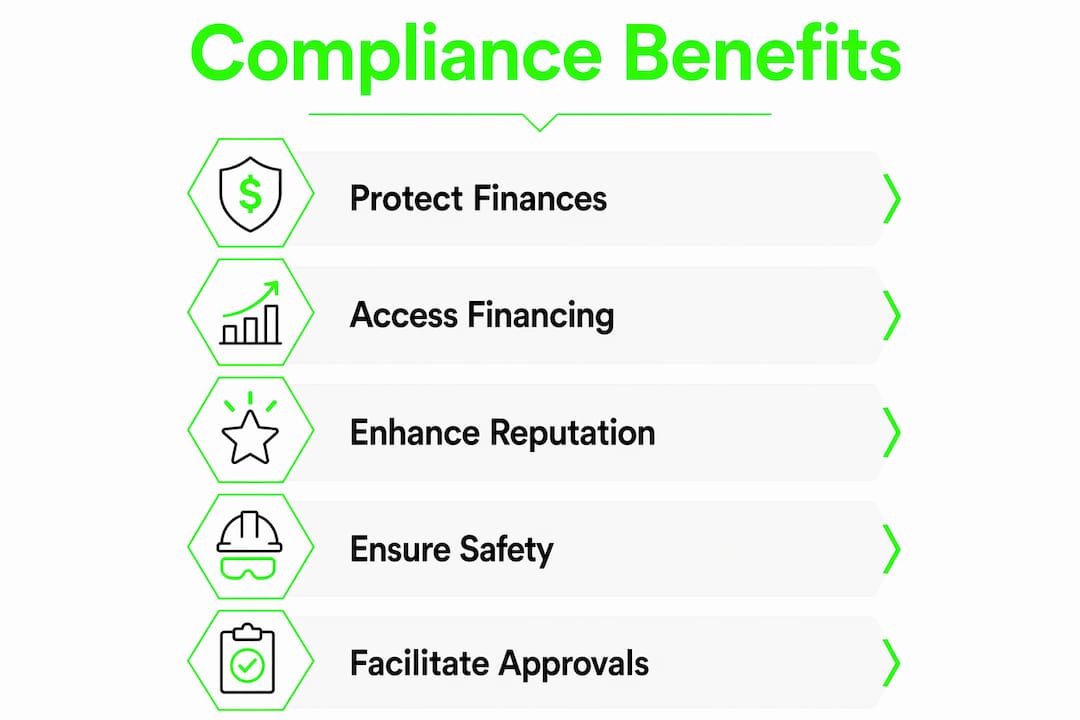
Local law adherence reasons go well beyond avoiding a fine. Compliance creates a foundation that protects your finances, your reputation, and your ability to operate long term.
Financial and legal protection
Non-compliance exposes you to fines, lawsuits, forced shutdowns, and costly remediation work. A single unpermitted renovation in New York City can result in a Department of Buildings stop-work order, leaving a project frozen mid-construction. The consequences of ignoring regulations include operational disruptions, damaged reputation, and legal actions that cost far more than the original compliance expense.
Access to financing and insurance

Lenders and insurers check compliance records before approving loans or policies. A property with open violations or unpermitted work is harder to finance and harder to insure. Companies with higher standards attract better employees and face fewer regulatory disruptions. That same principle applies to property owners: a clean compliance record opens doors that violations close.
Reputation and community standing
Organizations embracing compliance build stronger relationships with customers and local authorities. In dense markets like New York and New Jersey, word travels fast. A business known for cutting corners on licensing or zoning loses clients, tenants, and community goodwill quickly. Compliance is a competitive advantage, not just a legal obligation.
The benefits of following laws compound over time. Each year of clean permits, current licenses, and proper tax filings makes your property or business more valuable and more defensible.
Pro Tip: Before starting any renovation or business expansion in NY or NJ, pull your full permit and violation history from the local Department of Buildings. Knowing your current standing takes less than an hour and can prevent costly surprises.
How do local laws create predictable, safe interactions for NY and NJ property owners?
Local laws provide a shared set of expectations that enable thousands of daily safe interactions between neighbors, contractors, tenants, and government agencies. Without them, every transaction would require individual negotiation over basic safety and conduct standards.
Building codes, traffic regulations, and health standards exemplify laws that foster order and safety. In New York and New Jersey, building codes set minimum standards for structural integrity, fire safety, and electrical systems. Health codes govern restaurants, rental units, and commercial spaces. Zoning laws determine what can be built where, protecting residential neighborhoods from incompatible commercial uses.
“Local laws reduce uncertainty and enable economic and social functions by providing clear conduct standards. In regions like New York and New Jersey, building and health codes create predictable and safe community conduct that property owners and businesses rely on every day.”
This predictability has direct economic value. When a contractor knows the exact permit requirements for a kitchen addition in Bergen County, the project can be priced, scheduled, and completed without guesswork. When a tenant knows their building meets fire code, they sign leases with confidence. Predictability fosters trust, and trust drives economic activity.
The impact of local law compliance on daily operations is often invisible until something goes wrong. A property that meets code sells faster, closes financing sooner, and attracts better tenants. One that does not can sit on the market for months while violations are resolved.
Pro Tip: Check the New Jersey Department of Community Affairs and the New York City Department of Buildings websites regularly. Both publish updated code amendments and inspection requirements that affect active properties.
What risks arise from ignoring local laws, especially informal workarounds?
The most dangerous compliance failures are not the obvious ones. They are the quiet workarounds that seem harmless until a sale, refinancing, or inspection reveals the full liability.
Informal workarounds often create permanent liabilities that surface during sales, financing, or compliance checks. Local approvals may lack authority and lead to penalties for businesses relying on unofficial permits. The four most common risk categories for NY and NJ owners are:
Unpermitted construction. Work done without a permit creates a violation that attaches to the property deed. Future buyers, lenders, and insurers will find it.
Zoning violations. Operating a business in a residentially zoned space, or building beyond setback limits, can result in forced removal of the structure at the owner’s expense.
Licensing gaps. Contractors and business operators without current state and local licenses face fines and may be barred from bidding on public or commercial work.
Tax and registration failures. Unregistered business entities or unpaid local taxes create liens that block property transfers and financing.
A critical misconception is that local approval is enough. Local officials’ verbal or written assurances do not override higher-level state or municipal laws and often fail under scrutiny. A town supervisor’s informal sign-off on a variance does not protect you when the state building inspector arrives.
Risk type | Short-term appearance | Long-term reality |
Unpermitted work | Project completed faster | Violation on deed, blocked sale |
Informal local approval | Feels resolved | No legal protection at state level |
Unlicensed contractor | Lower upfront cost | Owner liable for injuries and code failures |
Zoning workaround | Business operating | Forced closure or demolition order |
The real cost of a regulatory inquiry includes hundreds of lost staff hours and halted projects, well beyond any fine. That cost lands on the property owner, not the contractor who did the unauthorized work.
How can NY and NJ owners maintain ongoing compliance with local laws?
Compliance is an ongoing process requiring local expertise rather than generic automated tools. A blend of human expertise and regular review helps owners adapt to evolving local laws effectively.
Practical steps for maintaining compliance include:
Conduct annual permit and license audits. Review all active permits, business licenses, and contractor certifications each year. Small lapses in permits, licensing, zoning, and tax areas can quietly grow into large liabilities discovered only during transactions or regulatory scrutiny.
Work with licensed, insured professionals. Every contractor you hire should carry current New York or New Jersey state licensing and general liability insurance. Check contractor insurance requirements before signing any agreement.
Monitor local code updates. New York City and New Jersey municipalities update building, fire, and health codes regularly. Subscribe to Department of Buildings bulletins and local zoning board agendas.
Understand local licensing requirements. New York and New Jersey have distinct licensing rules for contractors, landlords, and business operators. Reviewing local licensing requirements for your specific project type prevents gaps that create liability.
Avoid relying on political access or informal approvals. Relying on political access or informal approvals creates zero real legal protection and long-term liabilities. Document every approval through official channels.
Build compliance into your project planning. Permit timelines, inspection schedules, and code reviews belong in every project plan from day one, not as an afterthought.
Proactive compliance audits in employment, zoning, and safety prevent large liabilities discovered during due diligence. Owners who treat compliance as a routine business function rarely face the catastrophic surprises that catch others off guard. For a broader look at how industry regulations shape daily operations, the pattern holds across sectors: proactive beats reactive every time.
Key Takeaways
Local law compliance is the single most reliable way for New York and New Jersey property owners and business operators to protect their investments, avoid costly penalties, and build lasting community trust.
Point | Details |
Compliance protects finances | Fines, shutdowns, and legal battles cost far more than proper permits and licenses. |
Predictability drives value | Code-compliant properties sell faster, finance easier, and attract better tenants. |
Informal approvals carry no legal weight | Local verbal assurances do not override state law and fail under regulatory scrutiny. |
Audits prevent hidden liabilities | Annual reviews of permits, licenses, and zoning catch small lapses before they become costly problems. |
Compliance builds competitive advantage | Owners with clean records access better financing, insurance, and professional partnerships. |
Why I see compliance as the smartest investment a property owner can make
After years of working on renovation and contracting projects across New York and New Jersey, I have seen the same pattern repeat itself. An owner saves a few thousand dollars by skipping a permit or hiring an unlicensed crew. Two years later, they spend ten times that amount resolving violations before a sale closes. The math never works out in favor of the shortcut.
What surprises most owners is how visible their compliance record actually is. Buyers, lenders, and insurers all pull the same public records. A single open violation can delay a closing by months. An unpermitted addition can kill a deal entirely. The property owner almost always pays the price, even when the original mistake was made by a contractor they trusted.
The mindset shift that changes everything is treating compliance as trust-building rather than cost-minimizing. When you follow building code requirements consistently, you build a track record that regulators, lenders, and neighbors recognize. That track record has real dollar value when you refinance, sell, or expand.
My honest advice: do not wait for a violation notice to take compliance seriously. Build it into every project from the first conversation with your contractor. Ask for permit numbers, license copies, and inspection schedules before work begins. The owners who do this consistently are the ones who never end up in my office trying to fix a problem that should never have existed.
— DJ
Djcustomcontracting keeps your project on the right side of the law
Renovation and maintenance projects in New York and New Jersey carry real regulatory weight. Permits, inspections, code compliance, and DOB violation removal are not details you want to manage alone.

Djcustomcontracting has handled residential and commercial projects across NY and NJ since 2018, with every job executed in accordance with applicable local laws, licensing requirements, building codes, and insurance regulations. Whether you need interior renovation services that meet NYC building standards or exterior renovation work that clears local zoning requirements, Djcustomcontracting manages the compliance process from permit application through final inspection. No job too big, no job too small.
FAQ
What does it mean to comply with local laws?
Complying with local laws means following all rules set by municipal and state authorities, including building codes, zoning regulations, licensing requirements, and health standards. For property owners in New York and New Jersey, this covers permits, inspections, and contractor qualifications.
What are the consequences of ignoring local regulations in NY or NJ?
Non-compliance consequences include fines, stop-work orders, forced removal of unpermitted structures, blocked property sales, and legal liability for injuries on non-code-compliant properties. These costs consistently exceed the original cost of proper compliance.
Does a local official’s approval protect me from state-level violations?
Local verbal or written assurances do not override higher-level state or municipal laws. A local approval that conflicts with state building or zoning law provides no legal protection during inspections, sales, or financing reviews.
How often should I audit my property’s compliance status?
Annual audits of permits, licenses, zoning status, and tax records are the standard practice for NY and NJ property owners. Proactive audits catch small lapses before they grow into liabilities discovered during due diligence or property transactions.
Why should I hire a licensed contractor instead of saving money on unlicensed work?
Unlicensed work creates liability that attaches to the property owner, not the contractor. If unpermitted work causes injury or fails inspection, the owner bears the legal and financial consequences. Licensed contractors carry insurance and accountability that protect your investment.
Recommended


Comments