


Basement apartment conversion: NYC homeowner's guide

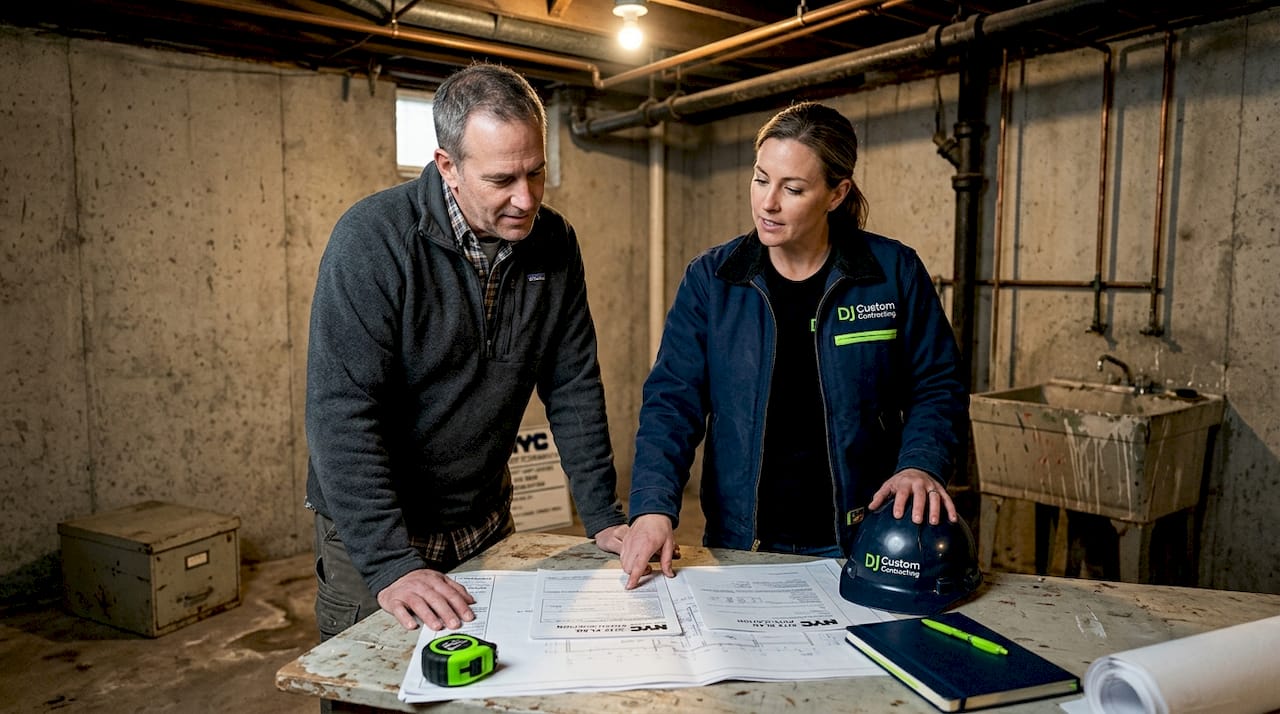
That unused space beneath your home could be generating $2,000 or more each month. For homeowners across New York City, northern New Jersey, and Long Island, a basement apartment conversion is one of the most financially rewarding projects you can undertake on a property you already own. But the path from raw concrete to a legal, rentable unit is not a straight line. It runs through zoning rules, building permits, egress requirements, and waterproofing decisions that, if handled incorrectly, can cost you far more than you would have earned. This guide walks you through every critical stage, from legal groundwork to final inspection.
Table of Contents
Understanding legal requirements and permits for basement conversions
Preparing your basement: waterproofing, egress, and utilities
Detailed steps to execute a basement apartment conversion project
Common challenges and how to avoid costly mistakes in basement conversions
Estimating costs and potential returns on investment for your basement apartment
Why many homeowners hesitate to legalize basement apartments — and what truly works
Professional basement apartment conversion services to maximize your investment
Key Takeaways
Point | Details |
Legal clarity is crucial | Understanding if your basement qualifies legally for conversion prevents costly mistakes and fines. |
Waterproofing matters most | A dry, mold-free basement ensures tenant comfort and legal habitability compliance. |
Permit approval takes time | Budget 4 to 12 weeks for plan review and expect multiple inspections throughout construction. |
Costs vary widely | Plan for $55,000 to $120,000 based on baseline conditions and scope of work. |
Professional help reduces risk | Expert contractors manage permits, coordinate trades, and ensure code compliance efficiently. |
Understanding legal requirements and permits for basement conversions
Before you spend a dollar on materials, you need to know whether your basement can legally become a living space. This is where many homeowners run into their first surprise.
The basement vs. cellar distinction matters enormously. New York City has a precise legal definition for each. A basement and cellar differ in one key way: a basement sits at least 50% above curb level and can be converted into a habitable unit, while a cellar sits mostly below curb level and cannot legally be used for sleeping or cooking. If your space is technically a cellar, no amount of renovation will make it a legal apartment under current NYC code. Get this confirmed before you invest in plans.
In New Jersey and Long Island municipalities, similar zoning rules apply, though the terminology and thresholds vary by town. Some municipalities prohibit basement rental units altogether in single-family zones. Others allow them only as accessory dwelling units (ADUs) with strict size and entrance requirements. Confirm your zoning classification at your local building department before doing anything else.
What permits do you actually need? A basement apartment conversion is not a cosmetic project. It triggers building, plumbing, and electrical permits at minimum. In NYC, this means filing an Alteration-CO application through DOB NOW, the Department of Buildings’ online portal. You will also need:
A licensed architect or engineer to prepare and certify plans
Plumbing and electrical sub-permits
Fire safety and egress compliance documentation
A final Certificate of Occupancy (C of O) that reflects the new legal use
Unpermitted conversion work in NYC can result in DOB stop-work orders and fines ranging from $2,500 to $25,000. That is not a risk worth taking when a proper permit process protects your investment.
Preparing your basement: waterproofing, egress, and utilities
With the legal basics clear, the next step is preparing your basement physically. This stage sets the foundation for everything that follows, and skipping any part of it creates problems that surface months or years after tenants move in.
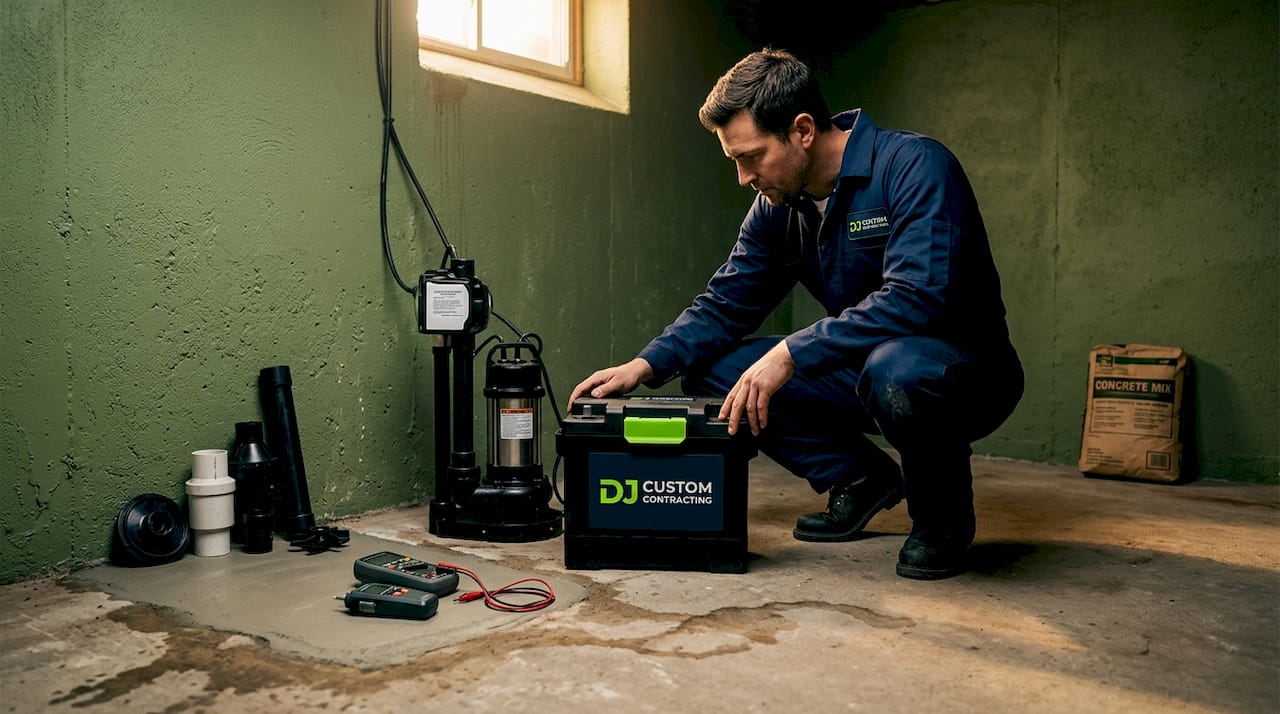
Waterproofing: the step most homeowners underestimate
Waterproofing is the most critical pre-construction requirement for any basement living space. Moisture intrusion causes habitability violations, mold growth, and tenant turnover. A rental unit that floods or smells musty will cost you far more in vacancy and legal complaints than the waterproofing would have.
A complete waterproofing system for a basement rental unit typically includes:
Interior perimeter drainage channel installed at the footing level
A sump pump with battery backup to handle power outages during heavy rain
Foundation crack injection or sealing using epoxy or polyurethane
Vapor barrier installation across the floor slab and lower walls
Waterproofing component | Estimated cost range |
Interior perimeter drainage | $4,000 to $9,000 |
Sump pump with battery backup | $800 to $2,500 |
Foundation crack sealing | $500 to $3,000 |
Vapor barrier installation | $1,200 to $3,500 |
Pro Tip: Always install a battery-backup sump pump, not just a standard electric model. Power outages frequently coincide with the same heavy rain events that cause basement flooding.
Egress windows: code requirements you cannot negotiate around
Every basement bedroom must have a code-compliant egress window that meets minimum dimensions for emergency escape. In NYC, the minimum clear opening is 20 inches wide and 24 inches tall, with a minimum clear area of 5.7 square feet. The sill cannot be more than 44 inches from the floor.
Installing an egress window in a below-grade basement also requires excavating a window well, which adds cost and waterproofing considerations. Factor this into your planning early.
Utility separation and HVAC
Separate metering or sub-metering is typically required for code compliance and simplifies tenant billing. Dedicated HVAC and water heating systems reduce disputes and prevent a tenant’s usage from affecting the primary unit. See our basement remodeling guide for a detailed breakdown of utility separation options.
Detailed steps to execute a basement apartment conversion project
Now that you understand prep needs, here is the step-by-step sequence that moves a basement conversion from concept to a legally habitable apartment.
On-site assessment. Measure your basement dimensions, ceiling height (minimum 7 feet is required in NYC), existing foundation condition, and current utility locations. Confirm zoning permits a rental unit at this address.
Hire a licensed architect or engineer. This is not optional in NYC. Your design professional will prepare architectural and MEP (mechanical, electrical, plumbing) plans, confirm code compliance, and sign off on submissions.
File with DOB NOW. Submit your alteration application, plans, and supporting documents. DOB plan examination takes 4 to 12 weeks, and experienced contractors can manage all phases for smoother timelines.
Begin structural and systems work. Once permits are issued, construction can start. Use our home addition checklist to track each trade milestone.
Schedule phased inspections. Rough-in inspections for plumbing and electrical must happen before walls are closed. Do not skip these or assume they can be addressed later.
Final inspection and C of O. After all work is complete, a DOB inspector will verify compliance. A successful inspection results in an amended Certificate of Occupancy that legally recognizes the new apartment. Reference our interior remodeling workflow guide for NJ-specific steps.
DIY vs. hiring a full-service contractor:
Approach | Advantages | Risks |
DIY or partial | Lower labor cost, more control | Permit errors, code violations, failed inspections |
Full-service contractor | Coordinated trades, permit management, code expertise | Higher upfront cost |
Pro Tip: Even homeowners who want to self-manage some work should hire a licensed contractor for the permit filing and inspections. The DOB process in NYC alone is complex enough to justify professional support.
Common challenges and how to avoid costly mistakes in basement conversions
Before the final financial picture, it helps to understand what goes wrong most often. These are the errors that derail projects and drain budgets.
Not confirming legal eligibility first. Spending $30,000 on framing and finishes only to discover your space is a cellar, not a basement, is a scenario that happens more often than you would expect. Confirm your space’s legal classification before hiring anyone.
Skipping waterproofing to save money. Waterproofing feels expensive early in a project and invisible after completion. But when a basement rental unit floods or develops mold, the cost in habitability complaints, tenant loss, and remediation far exceeds what waterproofing would have cost upfront.
Filing permits late or not at all. Some homeowners begin construction and file for permits simultaneously or after the fact. DOB inspectors can issue stop-work orders on active projects, which freeze all work until the violation is resolved, sometimes for months.
The Basement and Cellar Legalization Program, introduced to help owners bring illegal units into compliance, carries its own complexity. Enrollment does not guarantee a safe harbor from enforcement, and the process involves plan approvals and construction work just like a standard conversion.
Decades of enforcement-heavy strategies have created a climate of fear that deters homeowners from legalizing basement apartments, even when legalization would protect them. Addressing a building code violation proactively is almost always less expensive than responding to a complaint or enforcement action.
Confirm zoning and legal use classification before any spending
Get waterproofing professionally designed and installed, not pieced together
File permits before breaking ground, not after
Use the Legalization Program as a structured pathway, not a shortcut
Consult a contractor with DOB experience when in doubt
Pro Tip: Contact your local DOB borough office or NJ municipality early in planning. A preliminary inquiry, before any permit filing, can clarify requirements without triggering enforcement.
Estimating costs and potential returns on investment for your basement apartment
Understanding finances completes the preparation needed to move forward with confidence on your basement conversion.
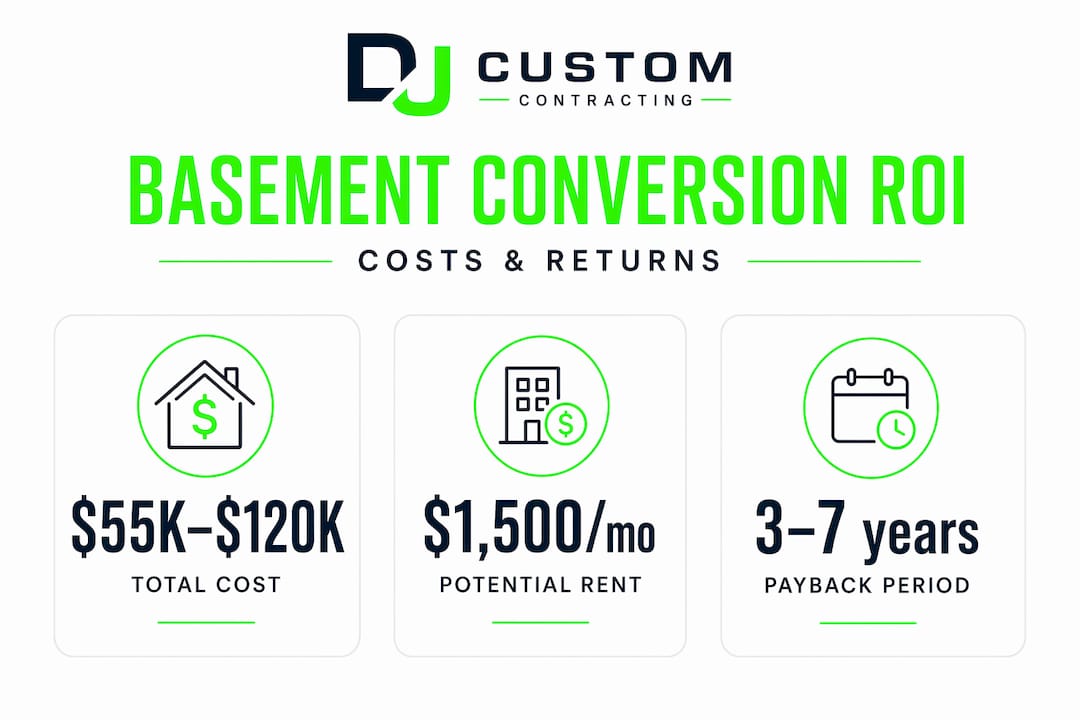
Total project costs range from $55,000 to $120,000 depending on your basement’s existing condition and the level of finishes you choose. A finished basement with existing plumbing nearby will fall toward the lower end. A raw, below-grade space with no utilities and water infiltration issues will push toward the upper range.
Cost breakdown by major component:
Project component | Estimated cost range |
Waterproofing system | $8,000 to $18,000 |
Egress window installation | $3,000 to $8,000 each |
Plumbing rough-in and fixtures | $7,000 to $15,000 |
Electrical upgrade and panel work | $5,000 to $12,000 |
HVAC installation | $6,000 to $14,000 |
Framing, insulation, and drywall | $8,000 to $18,000 |
Permits, architect, and DOB fees | $5,000 to $15,000 |
Return on investment:
Monthly rental income typically ranges from $1,800 to $4,000 in the NYC metro area, depending on location and apartment size
Payback period on conversion costs generally runs 3 to 6 years
A legal basement apartment can increase your home’s resale value by $50,000 to $150,000 or more
Short-term rental use, such as listing the unit to convert a basement for Airbnb, can accelerate payback in high-demand neighborhoods, though local short-term rental regulations must be checked separately
Pro Tip: Pull rental comparable data for your specific ZIP code before finalizing your budget. Rental rates in Hoboken, NJ differ significantly from those in Jamaica, Queens or Great Neck, NY. Your actual income potential should shape how much you invest in finishes. See the financial impact of renovating for a deeper look at NYC-specific numbers.
Why many homeowners hesitate to legalize basement apartments — and what truly works
Here is what experience on the ground in NYC and northern New Jersey consistently reveals: the biggest obstacle to a successful basement apartment conversion is not cost. It is fear.
Enforcement-heavy historical approaches have created an environment where homeowners with illegal basement units are genuinely afraid that trying to legalize will invite the very scrutiny they have been avoiding. So they do nothing. The unit stays illegal, stays substandard, and keeps generating risk rather than stable income.
The reality is more nuanced. DOB and local municipalities in New Jersey generally focus enforcement on complaints and hazardous conditions, not routine inspections of owner-occupied homes. A homeowner who proactively engages the legalization process is rarely at greater risk than one who does nothing. In fact, a legally converted unit with proper egress, waterproofing, and fire safety protections is far less likely to generate a complaint in the first place.
What actually works is a straightforward approach: hire a contractor with genuine DOB filing experience before your project, not after a problem appears. Legalization programs like NYC’s Basement and Cellar Legalization Program are imperfect tools, but engaging them with professional guidance reduces uncertainty significantly. The contractors who know which borough offices move faster, which plan examiners flag specific issues, and how to structure submissions to avoid rejections are the ones who get projects completed on time.
The other piece that rarely gets enough emphasis is the physical condition of the space. A dry, structurally sound, well-ventilated basement apartment does not just pass inspections more easily. It generates fewer tenant complaints, experiences less vacancy, and holds its value longer. Waterproofing is not a permit requirement to satisfy and move on. It is the long-term performance foundation of your entire investment.
Professional basement apartment conversion services to maximize your investment
Completing a basement apartment conversion in New York City or New Jersey requires coordinating architects, licensed trades, DOB filings, and multiple inspections under tight regulatory scrutiny. Getting any one of those elements wrong can freeze your project or generate fines that exceed what you saved by cutting corners.

DJ Custom Contracting has handled interior renovation projects across NYC and northern NJ since 2018, managing every phase from permit filing through final inspection. Whether you need a full general contractor to run your basement conversion from start to finish, or specialized support for the structural and systems work, the team brings licensed expertise and direct DOB experience to every project. As a licensed addition and alteration contractor, DJ Custom Contracting handles the complexity so you can focus on the return. Reach out to discuss your basement conversion and get a realistic assessment of your space’s potential.
Frequently asked questions
Do I always need a permit to convert my basement into an apartment in NYC?
Yes. Converting unoccupied basement space to habitable rooms requires an Alteration-CO application and an updated Certificate of Occupancy, along with building, plumbing, and electrical permits.
What is the difference between a basement and a cellar in legal terms?
A basement sits at least 50% above curb level and can be legally occupied, while a cellar is mostly below curb level and cannot be used for sleeping or cooking under NYC building code.
How much does it typically cost to convert a basement into a livable apartment?
Costs range from $55,000 to $120,000 depending on the existing basement condition, required structural and utility work, and your choice of finishes.
What are common mistakes that cause basement apartment projects to fail inspections?
Waterproofing failures and improper egress windows are primary causes of failed inspections, along with unpermitted work discovered during the review process.
Recommended


Comments