


Contractor Tested Office Maintenance Checklist: CMMS Plan, Audit Ready

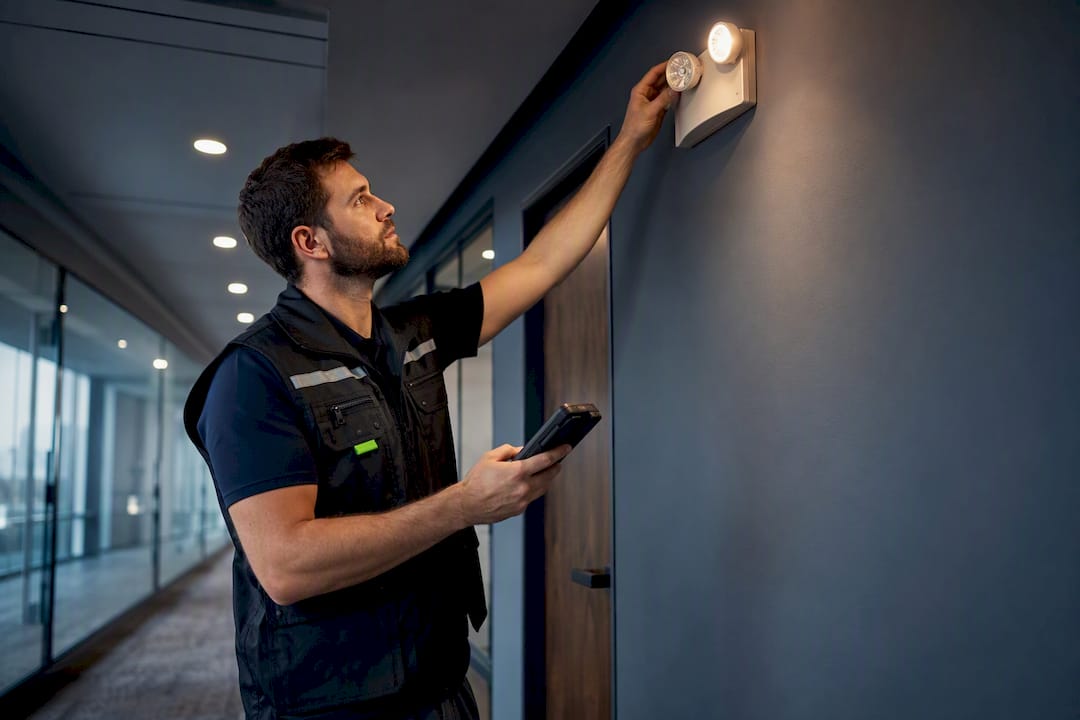
A field-ready facility maintenance checklist for an office building runs on frequency tiers: daily, weekly, monthly, seasonal, and annual, each tied to specific systems like HVAC, electrical, plumbing, and life-safety. Start today with a daily walk-through and log every result in a template or CMMS. Align inspection intervals with OSHA and ASHRAE guidance so the checklist doubles as audit documentation, not just a to-do list.
TL;DR:
Regular inspection intervals should be aligned with OSHA and ASHRAE standards to ensure compliance and effective documentation for audits.
Daily checks should focus on high-touch surfaces, restrooms, trash, exit pathways, and HVAC issues, with logs capturing photographic evidence and responsible staff.
Monthly inspections for HVAC, electrical, and plumbing systems help detect slow failures like clogged condensate lines, Discoloration, and leaks before they cause costly damage.
Seasonal preparations require scheduled roof, gutter, and HVAC checks, plus exterior maintenance like vegetation trimming and snow removal contracts, to prevent weather-related issues.
Annual inspections must be performed by licensed contractors, including fire systems, elevators, and structural assessments, with all documentation stored to support legal and insurance cases.
Table of Contents
What Belongs in a Daily and Weekly Office Maintenance Checklist?
Which Monthly Checks Catch HVAC, Electrical, and Plumbing Problems Early?
System-by-System Checkpoints for HVAC, Electrical, Plumbing, and More
What Documentation Protects You in an Audit or Insurance Review?
What Emergency Procedures Should Be Tied to Facility Maintenance?
How Does Sustainability Factor Into Office Maintenance Practices?
How Should You Communicate Maintenance Work to Building Occupants?
How Do You Prioritize Maintenance Tasks When Everything Feels Urgent?
Field Perspective From DJ: Placing Checklists Inside Operational Routines
Djcustomcontracting’s Preventive Maintenance Program for Office Buildings
What Belongs in a Daily and Weekly Office Maintenance Checklist?
Daily rounds catch the problems that turn into insurance claims if nobody notices them for a week. A five-minute walk-through, done consistently, prevents more damage than an elaborate annual plan that sits in a binder.
Daily tasks should cover the areas occupants touch and notice first:
Wipe down high-touch surfaces (door handles, elevator buttons, shared kitchen equipment).
Check restrooms for supply levels, leaks, and clogged fixtures.
Confirm trash and recycling are collected and bins aren’t overflowing.
Walk exit paths and stairwells to confirm they’re clear of boxes, cords, or furniture.
Listen and look for obvious HVAC issues: unusual noise, uneven temperature, or a burning smell.
Test a sample of lighting fixtures and confirm exit signs are illuminated.
Weekly tasks go a layer deeper than daily rounds:
Deep-clean common areas including carpets, glass partitions, and break rooms.
Spot-check HVAC filters for visible dust buildup, especially in high-traffic zones.
Inspect small equipment (copiers, water heaters, dishwashers) for leaks or error codes.
Look for pest activity signs: droppings, gnaw marks, or nesting material in storage areas.
Run a quick functional test on emergency lighting to confirm battery backups engage.
The best programs treat this routine as asset management rather than housekeeping. Every task should get logged with three pieces of information: a photo if the item is visual, a short note describing the condition, and the name of whoever performed the check. That third field matters more than most facility teams realize, because it creates accountability when something slips through.
A simple daily log entry might read: “Restroom 2nd floor, 8:15 AM, soap dispenser empty, refilled, J. Torres.” That’s a complete record. It took ten seconds to write and it’s exactly what an insurance adjuster or building owner wants to see if a slip-and-fall claim ever surfaces months later.
Pro Tip: Keep a laminated daily checklist clipped to a clipboard near the building entrance for the first month of any new program. Staff comply better with a physical prompt than a digital form they have to remember to open.
Which Monthly Checks Catch HVAC, Electrical, and Plumbing Problems Early?
Monthly inspections exist to catch the failures that build slowly. Nobody notices a clogged condensate line on day one. By day thirty, it’s dripping through a ceiling tile.
HVAC monthly checkpoints:
Replace or inspect filters. A one-inch filter in a standard office system generally needs replacement every 60 to 90 days, but high-occupancy buildings or spaces near construction dust often need monthly swaps.
Check the condensate pan and drain line for algae growth or blockage.
Verify building automation system (BAS) setpoints still match occupancy schedules, especially after any tenant changes.
Confirm outdoor unit coils are free of leaves, debris, or ice buildup depending on season.
Proper HVAC upkeep isn’t just a comfort issue. Well-maintained systems and building envelopes measurably cut wasted energy in commercial buildings, which shows up directly on the utility bill.
Electrical and lighting monthly checkpoints:
Test emergency lighting under simulated power loss, not just a visual glance at the fixture.
Track bulb and ballast replacement cycles so failures don’t cluster all at once.
Test GFCI outlets in kitchens, restrooms, and mechanical rooms using the built-in test button.
Scan electrical panels for discoloration, unusual heat, or a burning odor.
Plumbing monthly checkpoints:
Inspect visible supply lines and fixtures under sinks for slow leaks.
Run water in rarely-used drains (basement floor drains, unused restrooms) to keep trap seals from evaporating.
Exercise sump pumps manually if the building has one, even outside rainy season.
By the numbers: ASHRAE’s technical standards cover HVAC performance and indoor air quality benchmarks that most commercial maintenance programs use as their baseline, rather than relying solely on manufacturer defaults, particularly ASHRAE’s published guidelines for ventilation rates.
Escalate anything electrical that shows heat discoloration or a burning smell immediately. That’s not a monthly-checklist item anymore. That’s a same-day call to a licensed electrician.
How Do You Prepare an Office Building for Seasonal Changes?
Seasonal prep is where most office buildings get caught off guard, not because the tasks are hard, but because nobody puts them on a calendar until the first cold snap or the first heat wave already happened.
Spring and fall roof and envelope checks:
Inspect roof membrane for cracking, blistering, or ponding water after winter thaw.
Clear gutters and downspouts before heavy fall leaf drop and spring rain.
Check flashing around rooftop units, vents, and parapet walls for separation.
Confirm downspouts direct water at least several feet away from the foundation.
HVAC seasonal tune-ups:
Schedule cooling plant service in early spring, before the first heat wave forces reactive repairs.
Schedule heating plant service in early fall, before the first cold snap.
Verify start/stop sequences on rooftop units match the new seasonal schedule in the BAS.
Grounds and exterior readiness:
Trim vegetation away from HVAC condensers and building entrances.
Inspect parking lot striping, curb stops, and pavement cracks before winter freeze-thaw cycles widen them.
Line up a snow and ice removal contract before the first forecasted storm, not after.
Building a seasonal calendar sounds obvious, but the failure point is almost always timing. Put roof inspections on the calendar for late March and late September, tied to a recurring reminder, not a mental note. A property maintenance checklist that lives only in someone’s head disappears the day that person takes vacation.
What Annual Inspections Require Licensed Contractors?
Annual tasks are where the checklist stops being optional and starts being a legal and insurance requirement. Most of these need a licensed vendor, not in-house staff, and most produce a certificate you’re required to keep on file.
Fire alarm and suppression system testing. Full system tests, sprinkler flow tests, and standpipe inspections follow intervals set by NFPA 25, and licensed fire protection contractors typically handle the documentation.
Elevator annual inspection. Elevators require inspection to ASME A17.1 standards, performed by a certified vendor who files a report with the local authority having jurisdiction.
Electrical thermography. An infrared scan of electrical panels under load catches loose connections and overheating components before they cause an outage or a fire.
Generator load testing. If the building has backup power, an annual full-load test confirms it will actually carry the building during an outage, not just start up.
Backflow preventer certification. Most municipalities require annual testing of backflow devices by a certified tester, with results filed with the water authority.
Roof and structural assessment. A full walk-through by a roofing contractor, distinct from the quarterly visual check, looking at membrane life expectancy and structural load points.
Every one of these tasks generates paperwork, and that paperwork belongs in one place: an annual compliance folder. Keep signed inspection reports, contractor licenses, and certificates of insurance together, along with dated photos from each visit. Licensed, documented work on specialist systems protects the property owner if an incident ever triggers an insurance investigation or a liability claim. A missing sprinkler service record is a far bigger problem during a claims review than the actual cost of the inspection ever was.
System-by-System Checkpoints for HVAC, Electrical, Plumbing, and More
A walk-through goes faster when you organize it by system instead of by room. Each system below has a short list of checkpoints worth memorizing, because these are the ones that generate the most work orders.
HVAC
Filter condition (visual check, monthly)
Thermostat/BAS setpoint accuracy (monthly, in-house)
Belt tension and condition on air handlers (quarterly, in-house or vendor)
Refrigerant pressure and coil condition (annual, licensed HVAC technician)
Ductwork for visible damage or disconnection (annual, vendor)
Common failure sign: uneven temperatures between floors or a specific zone running warmer than the rest. Immediate mitigation is a filter check and a BAS setpoint review before calling a vendor.
Electrical
Panel condition, no discoloration or heat smell (monthly, in-house)
GFCI function (monthly, in-house)
Emergency and exit lighting function (monthly, in-house)
Full electrical load thermography (annual, licensed electrician)
Common failure sign: a breaker that trips repeatedly under normal load. That’s not a reset-and-move-on situation. It needs a licensed electrician before the circuit gets used again.
Plumbing
Visible leaks under fixtures (weekly, in-house)
Drain flow and clearing (monthly, in-house)
Water heater temperature and pressure relief valve (quarterly, in-house)
Backflow preventer certification (annual, licensed tester)
Common failure sign: slow-draining sinks across multiple fixtures at once, which usually points to a main line issue rather than an isolated clog.
Life-safety (fire)
Extinguisher pressure gauge and inspection tag (monthly, in-house)
Fire door closure and clear egress paths (monthly, in-house)
Sprinkler head condition, no obstruction (quarterly, in-house)
Full alarm and suppression system test (annual, licensed fire protection contractor)
Common failure sign: an extinguisher tag past its inspection date. Replace or service it the same day it’s found. This is one of the OSHA-relevant checkpoints inspectors look for first.
Building envelope and roof
Roof membrane condition, no visible cracking or ponding (quarterly, in-house visual, annual vendor)
Gutter and downspout clearance (seasonal, in-house)
Window and door seal condition (annual, in-house)
Common failure sign: a water stain on a ceiling tile near an exterior wall, which almost always traces back to a roof or flashing failure upstream.
Elevators
Door sensor function and unusual noise (monthly, in-house observation)
Emergency phone function (monthly, in-house)
Full mechanical inspection (annual, licensed elevator contractor)
Common failure sign: a door that hesitates or bounces before closing. Take it out of service and call the vendor rather than waiting for the annual visit.
How Should You Organize Checklists: Spreadsheets or CMMS?
A shared spreadsheet works fine for a single small office with one or two people managing maintenance. Once you’re coordinating multiple buildings, multiple vendors, or a team larger than three or four people, the spreadsheet starts breaking down. Someone overwrites a formula, a version gets emailed around, and nobody’s sure which copy is current.
A computerized maintenance management system (CMMS) solves that coordination problem. Moving from spreadsheets to a CMMS enables automatic scheduling, photo capture on mobile devices, and a searchable audit trail, which cuts down on missed tasks significantly compared to manual tracking.
When building a preventive maintenance template, whether in a spreadsheet or a CMMS, include these fields on every entry:
Asset ID and location
Inspector name and date/time
Pass or fail status
Measured value where relevant (temperature, pressure, voltage)
Photo attachment
Immediate action required (yes/no)
Vendor assigned and due date if escalated
Completion sign-off
Condition-based maintenance is worth understanding even if you’re not ready for it yet. Instead of replacing a belt every six months on a fixed schedule, sensor data or inspection trends can justify stretching or shortening that interval based on actual wear, which extends asset life and cuts emergency repairs.
Pro Tip: Pilot any new CMMS on one building or one floor for the first 90 days before rolling it out everywhere. Use that window to catch confusing form fields and retrain staff before the mistakes multiply across every property you manage.
For teams still building out their digital workflow, a commercial facility maintenance workflow built around clear ownership and escalation paths tends to outperform any specific software choice.
What Documentation Protects You in an Audit or Insurance Review?
Documentation is the difference between a maintenance program that looks good and one that holds up when someone questions it, whether that’s an insurance adjuster, a building inspector, or a tenant’s attorney after an incident.
Cover these compliance checkpoints as part of routine maintenance, not as a separate project:
Confirm exit routes stay clear and exit signage stays illuminated, matching OSHA’s evacuation and egress guidance.
Verify walking and working surfaces are free of trip hazards, loose flooring, or unmarked level changes.
Test emergency lighting under simulated outage conditions, not just a visual check.
Confirm licensed contractors handle sprinkler servicing under NFPA 25 and elevator inspections under ASME A17.1, since these tasks carry legal and insurance weight that in-house staff can’t substitute for.
Retain inspection records and contractor certificates for at least the length of your insurance policy period, and many facility managers keep several years of history on hand for major systems like fire suppression and elevators. At minimum, each record should show the date, the inspector or contractor name, the specific findings, and any corrective action taken.
Retaining licensed contractor documentation does more than satisfy a filing requirement. It’s the evidence that protects the property owner if a tenant or visitor ever files a claim tied to a building system. An insurance company reviewing a fire-related claim wants to see the sprinkler service report from six months prior, not a verbal assurance that “someone checks that regularly.”
Digital logging with dated photos shortens the time it takes to respond to an audit request from days of searching through email threads to minutes of pulling a report.
How Much Should You Budget for Office Facility Maintenance?
Budgeting for maintenance splits into two buckets: routine upkeep and preventive programs. Routine upkeep covers daily cleaning, consumables, and minor repairs. Preventive programs cover the scheduled servicing that keeps major systems from failing early.
Facility teams typically build their annual maintenance budget around a percentage of the building’s overall operating costs or replacement value, then adjust based on the building’s age and system condition. An older building with original HVAC equipment needs a larger preventive allocation than a recently renovated one, simply because aging components fail more often and cost more to keep running.
Break the budget into categories that match your checklist structure: HVAC servicing and filters, electrical testing and repairs, plumbing and fixture maintenance, fire and life-safety servicing, elevator contracts, and grounds and envelope work. Line items tied directly to checklist categories make it much easier to spot where costs are creeping up year over year.
Preventive spending is cheaper than reactive spending, almost without exception. A failed compressor discovered during a scheduled monthly check costs a fraction of an emergency replacement during a July heat wave, when demand for HVAC technicians spikes and parts availability tightens. Build a small contingency line, typically a percentage of the annual maintenance budget, for the unplanned repairs that any building eventually generates regardless of how well the preventive program runs. If your program consistently uses more than the contingency line, that’s a signal your inspection intervals need tightening, not just your spending.
What Emergency Procedures Should Be Tied to Facility Maintenance?
Emergency preparedness and routine maintenance aren’t separate programs. They’re the same program viewed from different angles. A building where emergency lighting gets tested monthly and exit paths get walked daily is a building that’s already most of the way toward a solid emergency response plan.
Build these procedures directly into your maintenance routine:
Confirm every staff member knows where the electrical, water, and gas shutoffs are located, and post laminated signage near each one. During a burst pipe or an electrical fault, the person who finds the problem first often isn’t a maintenance specialist. It’s whoever happens to be nearby.
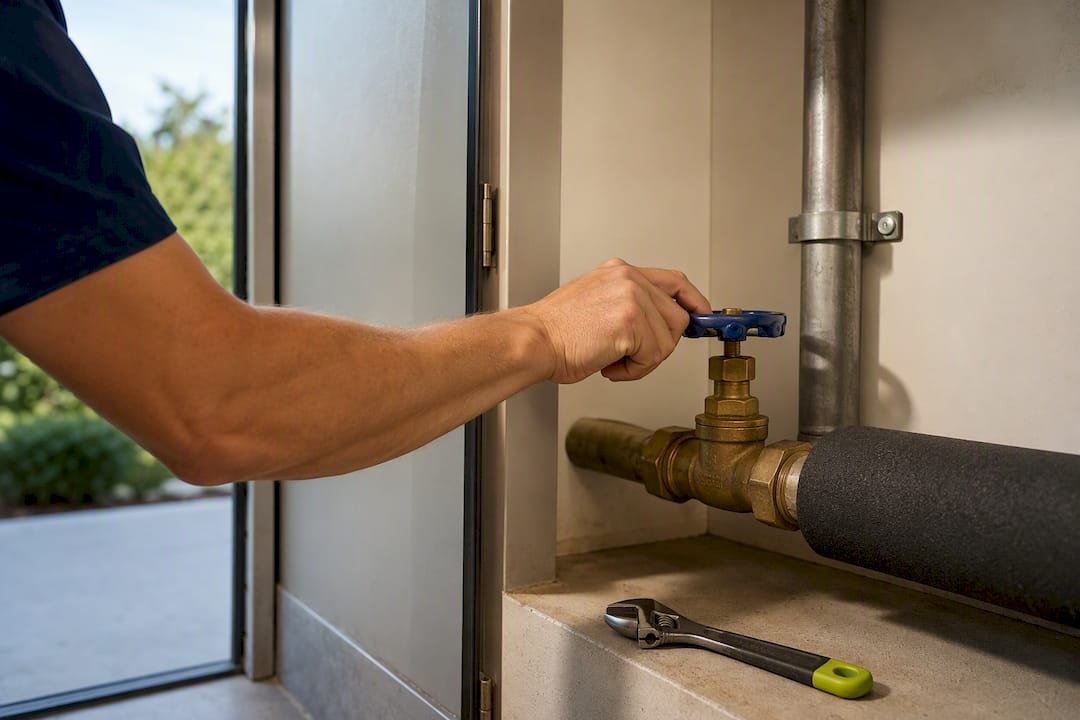
Keep an emergency contact sheet current with licensed vendors for electrical, plumbing, HVAC, and fire suppression, including after-hours numbers. Review this list quarterly, since vendor contacts and phone numbers change more often than most teams expect.
Run a fire drill and confirm evacuation routes align with current floor plans, particularly after any office layout change or new tenant buildout. A route that worked before a wall went up during a renovation might dead-end now.
After any emergency, minor or major, log what happened and what the response revealed. A pipe burst that floods a server room isn’t just a repair job. It’s a data point telling you the sump pump needs monthly exercise instead of quarterly, or that the shutoff valve location needs better signage. Feed that lesson back into the checklist itself, not just the repair invoice.
How Does Sustainability Factor Into Office Maintenance Practices?
Sustainable maintenance and cost-effective maintenance usually point in the same direction, which makes this an easier sell than most environmental initiatives.
HVAC tune-ups are the clearest example. Well-maintained systems and properly sealed building envelopes reduce wasted energy in commercial buildings, and that reduction shows up directly on utility bills within a billing cycle or two, not years down the road.
A few sustainability considerations worth building into your checklist:
Choose cleaning products and consumables with lower environmental impact where the cost difference is minor, particularly for high-volume items like restroom supplies and trash liners.
Track lighting upgrades to LED fixtures as part of your bulb replacement cycle rather than a separate capital project. Replacing failed fluorescent tubes with LED equivalents as they burn out spreads the upgrade cost over time instead of requiring one large expenditure.
Monitor water fixtures for leaks more aggressively than a purely cost-driven program would suggest. A slow leak wastes water continuously, and low-flow fixture upgrades during routine replacement cycles reduce consumption without a separate retrofit project.
Consider filter and consumable disposal practices, particularly for HVAC filters and lighting components that contain materials requiring specific disposal methods in some jurisdictions.
None of this requires a separate green initiative or a large budget line. It requires treating the maintenance checklist as the natural place to fold sustainability decisions in, one replacement cycle at a time.
How Should You Communicate Maintenance Work to Building Occupants?
Maintenance work that surprises occupants generates far more complaints than maintenance work that’s simply announced in advance, even when the disruption is identical.
Set a standard notice window for planned work. Non-disruptive tasks like filter changes or lighting checks generally need no advance notice at all. Anything that shuts off water, HVAC, or power to a work area deserves at least 24 to 48 hours’ notice through email or posted signage, longer for major system shutdowns that affect an entire floor or building.
Post physical signage at the point of disruption, not just a building-wide email that gets buried in someone’s inbox. A sign on a restroom door reading “Out of service until 2 PM, plumbing repair in progress” answers the question before anyone has to ask facilities.
Designate a single point of contact for maintenance questions during active work, whether that’s a front desk staff member or a facilities email address. Occupants who don’t know who to ask tend to escalate straight to their manager or the building’s leasing office, which creates friction that a clear contact point avoids entirely.
Close the loop after major work. A brief follow-up, even just “HVAC repair on the 3rd floor is complete, normal temperatures should resume by end of day,” reassures occupants that the issue was actually resolved rather than just paused.
For emergency or unplanned outages, speed matters more than polish. A quick note posted at elevator banks and sent by email, even before you know the full timeline, beats a delayed but thorough explanation sent an hour later.
How Do You Prioritize Maintenance Tasks When Everything Feels Urgent?
Not every item on a facility maintenance checklist carries the same weight, and treating them as equally urgent burns out staff and buries the tasks that actually matter.
Rank tasks by two factors: the likelihood of failure and the consequence if it fails. A dripping faucet is low likelihood of catastrophic failure and low consequence, so it waits for the next routine visit. A tripping breaker on a server room circuit is a different story entirely, high consequence even if the likelihood of total failure seems low, and it jumps the queue immediately.
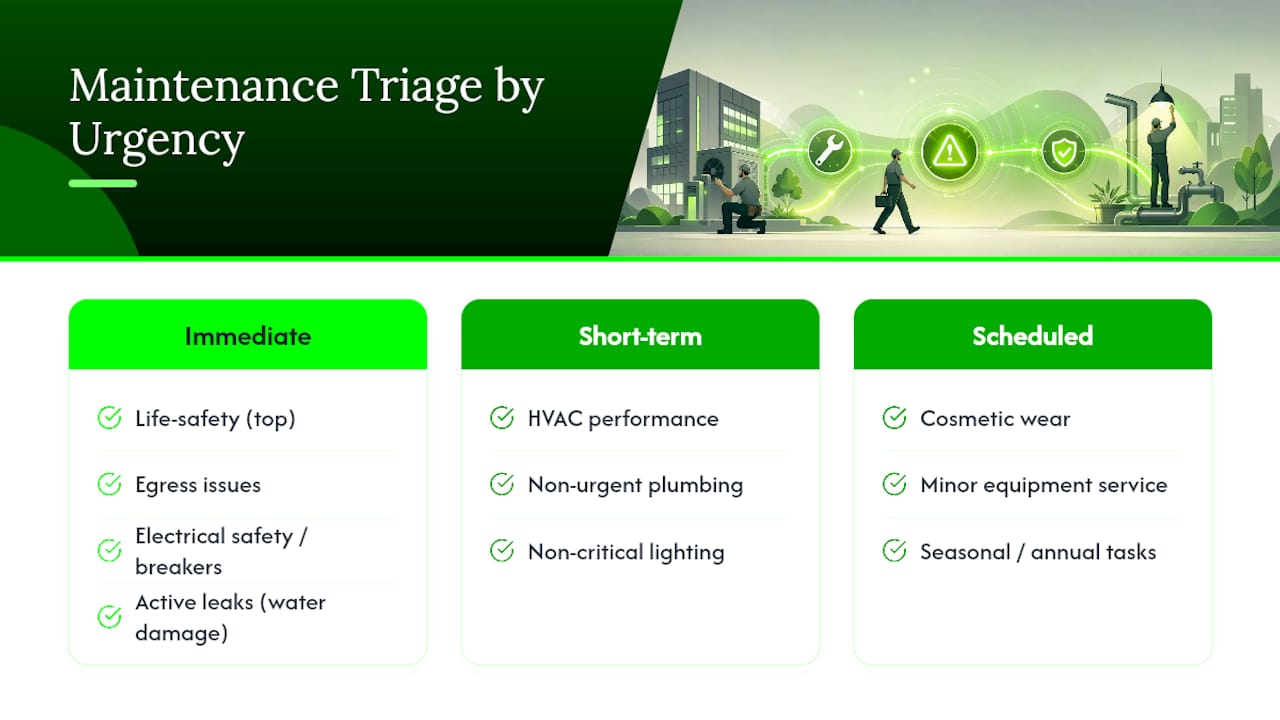
Life-safety items always sit at the top regardless of how minor they seem. An expired fire extinguisher tag or a burnt-out exit sign bulb might look like a small fix, but the regulatory and liability exposure attached to it outweighs almost every other pending task on the list.
Group the rest into three practical tiers:
Immediate (same day): Anything affecting egress, electrical safety, or active leaks with water damage potential.
Short-term (this week): HVAC performance issues, non-urgent plumbing repairs, lighting outages in non-critical areas.
Scheduled (next maintenance cycle): Cosmetic wear, minor equipment servicing, and anything already on a fixed seasonal or annual calendar.
A CMMS or even a color-coded spreadsheet column makes this triage visible at a glance, which matters when a facility manager is juggling a dozen open items and needs to know which three actually need attention today.
What Does a Practical Checklist Template Look Like?
A template only earns its place in your workflow if someone actually fills it out consistently, which means simplicity beats completeness every time.
A workable daily template needs five columns: task, location, status (pass/fail), notes, and inspector initials. That’s it. Anything more elaborate for a daily round becomes a form people start skipping.
A monthly or quarterly template needs more depth, matching the fields covered earlier: asset ID, location, inspector, date, pass/fail, measured value where applicable, photo, immediate action needed, and sign-off. This is the format that holds up in an audit, because it captures not just that something was checked but what was actually found.
Here’s a sample entry from an HVAC monthly checklist:
Asset: RTU-3, Roof. Inspector: M. Alvarez. Date: 3/14/2026. Filter condition: Pass. Condensate line: Fail, minor algae buildup. Action: Cleared line, added treatment tablet. Photo: attached. Sign-off: M. Alvarez.
That single entry took under two minutes to complete and gives anyone reviewing it, an owner, an insurer, a new facility manager, a complete picture of what happened and why.
For seasonal templates, build the checklist around the calendar rather than the system. A “spring roof and envelope” template that bundles gutter clearing, flashing inspection, and downspout checks into one form gets completed as a single site visit instead of three separate trips.
The template itself matters less than the discipline of using the same one every time. A facility maintenance checklist that changes format every quarter creates gaps precisely where consistency matters most.
Field Perspective From DJ: Placing Checklists Inside Operational Routines
Most facility teams don’t fail because they lack a checklist. They fail because the checklist lives separately from how the building actually runs. The shift from reactive to preventive maintenance isn’t about buying software or printing a longer form. It’s about making small, repeatable checks part of the daily rhythm until skipping them feels wrong.
On commercial projects, the pattern repeats constantly: a building with a documented monthly HVAC check catches a failing condensate pump before it drops water through a ceiling. A building without that check calls us for water damage restoration after the fact, at a cost that dwarfs what a filter swap would have run. The checklist isn’t paperwork. It’s the cheapest insurance policy a facility manager has.
Set a quarterly review of the checklist itself, not just the building. Ask what got missed, what took too long, and what a contractor flagged that wasn’t on the form yet. A checklist that never changes is a checklist that’s already falling behind the building it’s supposed to protect.
— DJ
Djcustomcontracting’s Preventive Maintenance Program for Office Buildings
A checklist tells you what needs attention. Turning that list into scheduled, documented work across HVAC, electrical, plumbing, and life-safety systems is a different job, and it’s the one most office administrators don’t have time to run alongside everything else on their desk. Djcustomcontracting is the alternative to hiring and coordinating separate vendors one emergency at a time. Its Comprehensive Preventative Maintenance Program folds seasonal HVAC tune-ups, envelope repair, and licensed contractor coordination into one managed relationship instead of a rotating list of one-off calls.

An engagement typically starts with an onsite assessment of the building’s current systems and existing maintenance history, followed by a preventive maintenance program built around your specific asset conditions and occupancy patterns. From there, Djcustomcontracting coordinates the licensed contractors your annual compliance items require, from fire suppression servicing to elevator inspections, and keeps the documentation organized in one place. Full details on scope and services are on the building and facility maintenance page. If your current checklist is more aspiration than routine, request an onsite assessment and get a program built around the building you actually manage.
Authoritative Resources and Standards
For egress and walking-working surface requirements, OSHA’s evacuation guidance is the primary reference facility teams should check checklist items against. HVAC and indoor air quality benchmarks come from ASHRAE’s technical standards, which most commercial programs use as their baseline. For electrical task specifics, Holland Electric’s maintenance task list offers practical checkpoint examples. For understanding the shift from paper to digital tracking, review how CMMS adoption changes maintenance workflows compared to spreadsheet-based systems.
Sources
FAQ
What Should I Include in a Facility Walk-Through Checklist?
A walk-through checklist should cover egress paths, emergency lighting, HVAC observations, restroom and common area conditions, and visible plumbing or electrical issues, logged with a pass/fail status and inspector name for each item.
What Are the Core Elements of a Maintenance Program?
A solid program typically covers inspection scheduling, task assignment, documentation and recordkeeping, safety compliance, contractor coordination, and a review process that adjusts intervals based on what inspections reveal.
What Is Included in a Maintenance Checklist?
A maintenance checklist includes the specific task, the asset or location, the required frequency, the person responsible, a pass/fail or measured result, and space for notes or photos documenting the finding.
What Do Regularly Scheduled Maintenance Checks Typically Cover?
Regularly scheduled checks typically cover HVAC filter and system condition, electrical panel and emergency lighting function, plumbing fixtures and drains, fire extinguisher and exit signage status, and general building envelope condition.
Does Djcustomcontracting Offer Ongoing Preventive Maintenance for Office Buildings?
Yes, Djcustomcontracting’s Comprehensive Preventative Maintenance Program covers scheduled upkeep and licensed contractor coordination for office and commercial buildings; pricing is available upon request through the services page.
Recommended


Comments