


Clear a DOT Sidewalk Violation in NYC Within 75 Days

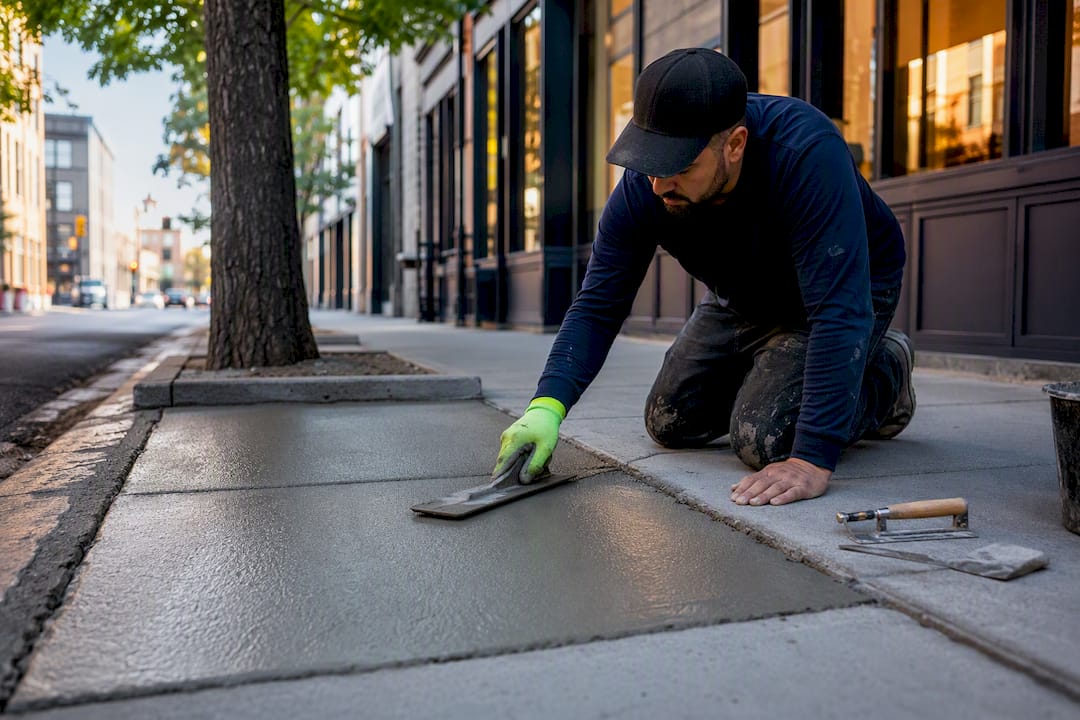
To clear a DOT sidewalk violation, hire a licensed contractor, get a sidewalk construction permit, complete repairs to Department of Transportation specifications, and call 311 to schedule a dismissal inspection. Do this within the 75 day window from your notice date. Miss it and the City can perform the repair itself and bill you through the Department of Finance, with a lien attached if the bill goes unpaid.
TL;DR:
Property owners have 75 days from notice to hire a licensed contractor, get DOT-approved repairs, and schedule a dismissal inspection to avoid City-performed repairs and liens.
Having proper documentation, including a valid permit, accurate measurements, and photos of the completed work, is crucial for a successful dismissal inspection.
Disputes can be filed if the inspection reveals measurement errors or damage caused by City infrastructure, and early filing improves the chances of a successful appeal.
All sidewalk repairs and permits must be completed within the 75-day window, regardless of weather delays or permit processing times; unaddressed violations become City liabilities.
Coordinating permit submission, repairs, and inspections upfront saves time and prevents extra costs, with licensed contractors handling the entire process end to end.
Table of Contents
What Is a NYC Sidewalk Violation, and Why Does It Matter?
A Notice of Sidewalk Violation is a legal notice, not an invoice. DOT inspectors document defects like trip hazards, undermined or cracked flags, sunken sections, and improper slope, then file the notice with the County Clerk against the property. That filing is what makes it dangerous: it sits on record, follows the title, and can complicate a sale or refinance until DOT confirms the repair, according to NYC DOT’s sidewalk guidance.
Common triggers for a violation include:
Raised or sunken sidewalk flags creating a trip hazard
Cracked, broken, or missing sections of concrete
Improper cross slope or ponding water
Sidewalk undermined by tree roots or utility work
Every violation comes with a Preliminary Inspection Report, or PIR. That document is your factual baseline. It lists the exact defects DOT recorded, their locations, and dimensions, and it’s the record you’ll check against if you plan to fix the sidewalk or dispute the finding, per NYC311’s sidewalk violation guidance.
How Do You Correct and Close a DOT Sidewalk Violation?
Fixing the concrete is only half the job. DOT won’t remove a violation from the County Clerk record until an inspector confirms the repair meets its specs and you’ve formally requested a dismissal inspection.
Hire a licensed contractor who knows DOT’s repair specifications, not just general concrete work. A contractor unfamiliar with the sidewalk repair checklist is the number one reason dismissal inspections fail on the first try.
Obtain the sidewalk construction permit before any work starts. The contractor typically files this with DOT, and the permit number becomes part of your evidence package for dismissal.
Complete repairs to DOT specs. That means expansion joints placed correctly, a sealed and level surface, and detectable warning surfaces installed wherever the work touches a pedestrian ramp.
Call 311 to schedule your dismissal inspection. Have your violation number, permit number, block and lot, and a working phone number or email ready when you call.
Keep your paper trail. Photos of the finished work, contractor receipts, and a signed completion statement all help if the inspector has questions on site.
The dismissal inspection is mandatory. Repairs alone don’t clear the record; DOT confirmation does, according to NYC311.
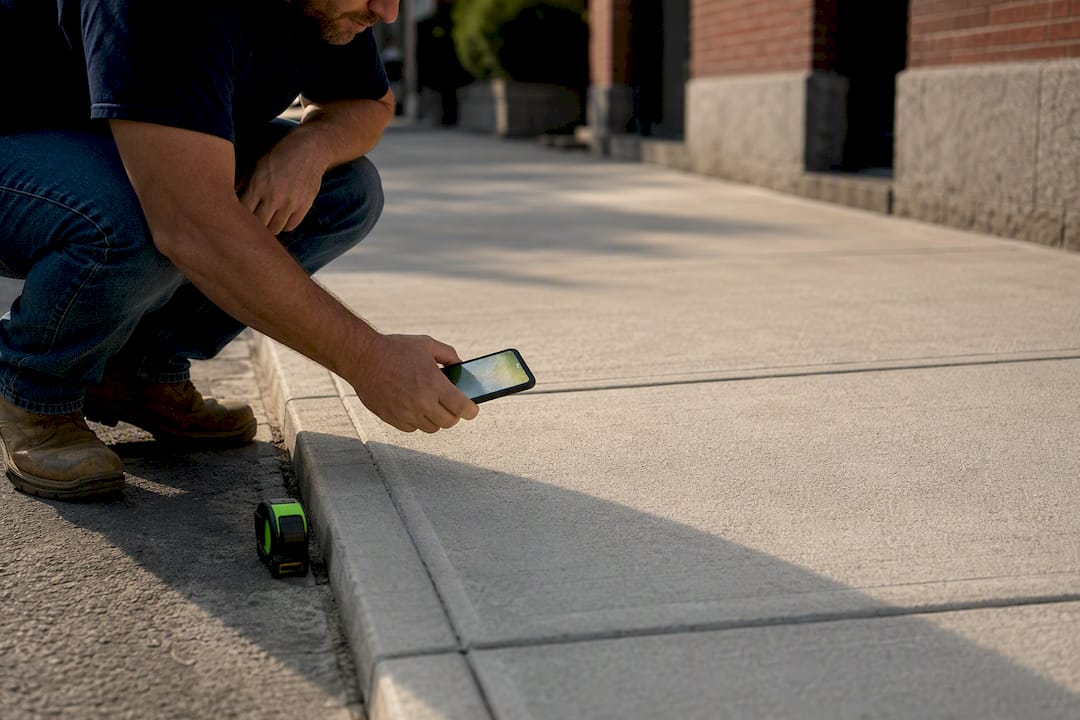
Pro Tip: Photograph the sidewalk from multiple angles the same day the contractor finishes, with a phone that timestamps images. If the inspector flags something weeks later, dated photos are the fastest way to prove the work was already done correctly.
How Do You Appeal a Sidewalk Violation?
If you believe the violation is wrong, whether the PIR misstates a measurement or the damage traces back to a City tree, you can request a re-inspection instead of repairing on faith. Call 311 within 75 days of the notice and ask specifically for a “Dispute New Sidewalk Violation, Re-Inspection Request.”
A different inspector handles your case the second time around, and DOT will notify you by mail at least five days before the visit. Scheduling may take some time, so file the dispute early rather than waiting to see if the issue resolves itself, per NYC311’s dispute process.
Strong appeal evidence includes:
PIR measurements that don’t match the actual sidewalk
Dated photos showing the condition at the time of inspection
Ownership or survey records clarifying property lines
Documentation tying the damage to a City tree, water main break, or utility cut
Some small residential properties, specifically 1, 2, and 3 family homes, get different treatment when a City tree alone caused the damage. DOT has moved away from issuing violations or liens against those owners in tree-only cases, so it’s worth flagging in your dispute if it applies.
Do You Need a Permit for Sidewalk Sheds or Emergency Repairs?
Any new sidewalk construction work requires a permit filed by your licensed contractor, and that permit does not pause your 75 day clock. Owners sometimes assume filing paperwork buys extra time. It doesn’t. Weather delays, contractor scheduling, and permit processing all have to fit inside that same window.
Sidewalk sheds carry their own rules, especially when a shed extends into the street and needs both DOT and Department of Buildings sign off. Key points to know:
Sheds require prior approval in almost every case, except genuine safety emergencies.
Emergency work allows a limited-time start, but the permit filing must follow soon after.
Initial shed permits are generally valid for a limited period or until the contractor’s insurance lapses.
Illegal or unpermitted sheds can draw Environmental Control Board violations and stack up fast if left uncorrected, according to NYC DOB’s sidewalk shed rules.
Coordinating DOT and DOB approvals up front saves weeks compared to scrambling after a stop work order lands on the job.
What Happens if You Miss the 75 Day Repair Window?
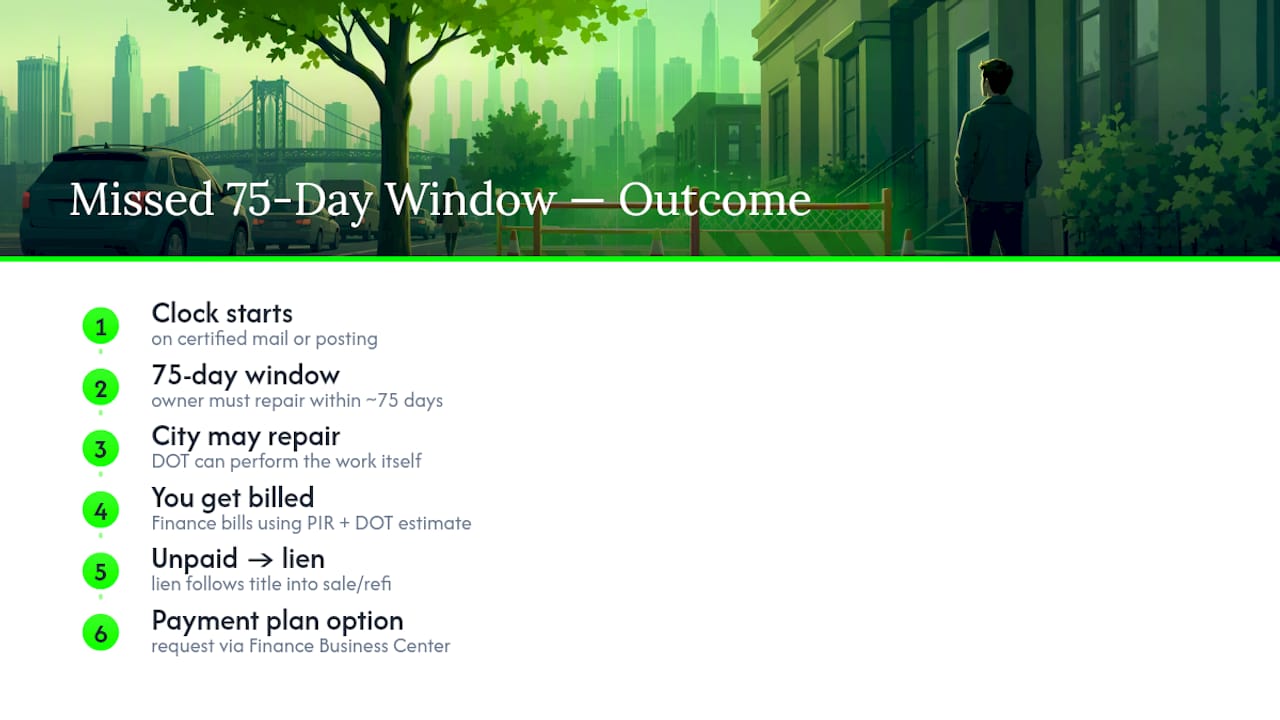
The clock starts the day you receive certified mail or the day the notice is posted, whichever applies to your case. It runs regardless of season, so don’t wait for spring if your notice arrives in January.
If repairs aren’t done in time, DOT can perform the work itself, and the Department of Finance bills the property owner based on the PIR and DOT’s own cost estimate. Unpaid bills can turn into a lien against the property, which follows the title into any future sale or refinance, per NYC DOT’s sidewalk page.
Roughly 75 days is all a property owner gets between notice and City-performed repair, per DOT’s Street Works Manual, a tighter window than most owners expect when they first open the envelope.
If a City-performed repair bill lands on your desk, don’t ignore it. Property owners can request a payment plan through a Finance Business Center rather than let interest accrue on the full balance.
What Should You Check Before Calling 311 for Dismissal?
DOT inspectors reject a fair number of dismissal requests simply because paperwork or physical details are missing on site. Running through DOT’s own sidewalk repair checklist before you dial 311 saves a wasted trip.
Check item | What DOT looks for |
Permit and permit number | Valid sidewalk construction permit tied to the completed work |
Violation number, block, and lot | Matches DOT’s original notice exactly |
Expansion joints | Placed at property lines and where sidewalk meets curb |
Joint condition | Sealed, level, and free of gaps or lippage |
Detectable warnings | Installed on any pedestrian ramp included in the repair |
Site access | Sidewalk fully visible and unobstructed for the inspector |
Documentation | Contractor receipts, dated photos, completion statement |
Bring this to the inspection, and you cut the odds of a second visit dramatically.
How DJ Custom Contracting Handles DOT Sidewalk Violations
DJ Custom Contracting works DOT and DOB violation removal as a core part of its business, not a side service bolted onto general renovation work. That distinction matters once you’ve seen how many dismissal inspections fail over a missed expansion joint or an unfilled permit.
The typical process starts with a site assessment cross-checked against your PIR, flagging any discrepancy before a shovel touches the ground. From there, permit submission, DOT-spec repairs, and full photo documentation happen in sequence, ending with the 311 call to schedule dismissal. Owners who move fast on that first step, engaging a contractor the same week a notice arrives, consistently avoid the scramble that comes with a 75 day deadline closing in.
— DJ
Get Your NYC Sidewalk Violation Resolved Without the Back and Forth
A licensed contractor can handle the entire sidewalk violation process end to end: permit filing, DOT-spec repair work, and dismissal inspection scheduling, so you’re not the one chasing paperwork between three different city agencies while your 75 day clock runs down.

Every job starts with an on-site assessment against your PIR to confirm exactly what DOT flagged, followed by permit submission and repairs built to the specs inspectors actually check: correct expansion joint spacing, sealed and level surfaces, and detectable warnings where ramps require them. A licensed and insured contractor documents the finished work with photos and a completion record you can hand directly to the inspector, which also protects you if a dispute or appeal ever comes up later. If unpermitted work is discovered during the sidewalk assessment, a contractor can guide you through legalizing that work before it becomes a second violation.
Ready to get a repair scoped and moving before your window closes? Visit the services page to request an estimate and get a contractor on your sidewalk this week, not next month.
Sources
FAQ
What Is a NYC Sidewalk Violation?
It’s a Notice of Sidewalk Violation that DOT files against a property with the County Clerk after an inspection finds a defect like a trip hazard, cracked concrete, or improper slope. It’s not a fine by itself, but unaddressed violations can lead to City-performed repairs and a lien, per NYC DOT.
How Do You Clear a Sidewalk Violation in NYC?
Hire a licensed contractor, obtain a sidewalk construction permit, complete repairs to DOT specifications, and call 311 to request a dismissal inspection. DOT only removes the violation from record after an inspector confirms the work, according to NYC311. Djcustomcontracting handles this entire sequence for property owners who want it managed by one licensed contractor.
How Can I Check the Status of My NYC DOT Sidewalk Violation?
Call 311 and reference your violation number to get an update on inspection or dismissal status. Have your address, block, and lot ready, since DOT ties records to those details rather than just a name.
What Happens if I Ignore a Sidewalk Violation Notice?
If repairs aren’t made within 75 days of the notice, DOT can perform the work itself and the Department of Finance will bill the property owner using the PIR and DOT’s cost estimate. An unpaid bill can result in a lien against the property, which can complicate a future sale or refinance, per the Street Works Manual.
Recommended


Comments