


Commercial Facility Maintenance Workflow in 2026

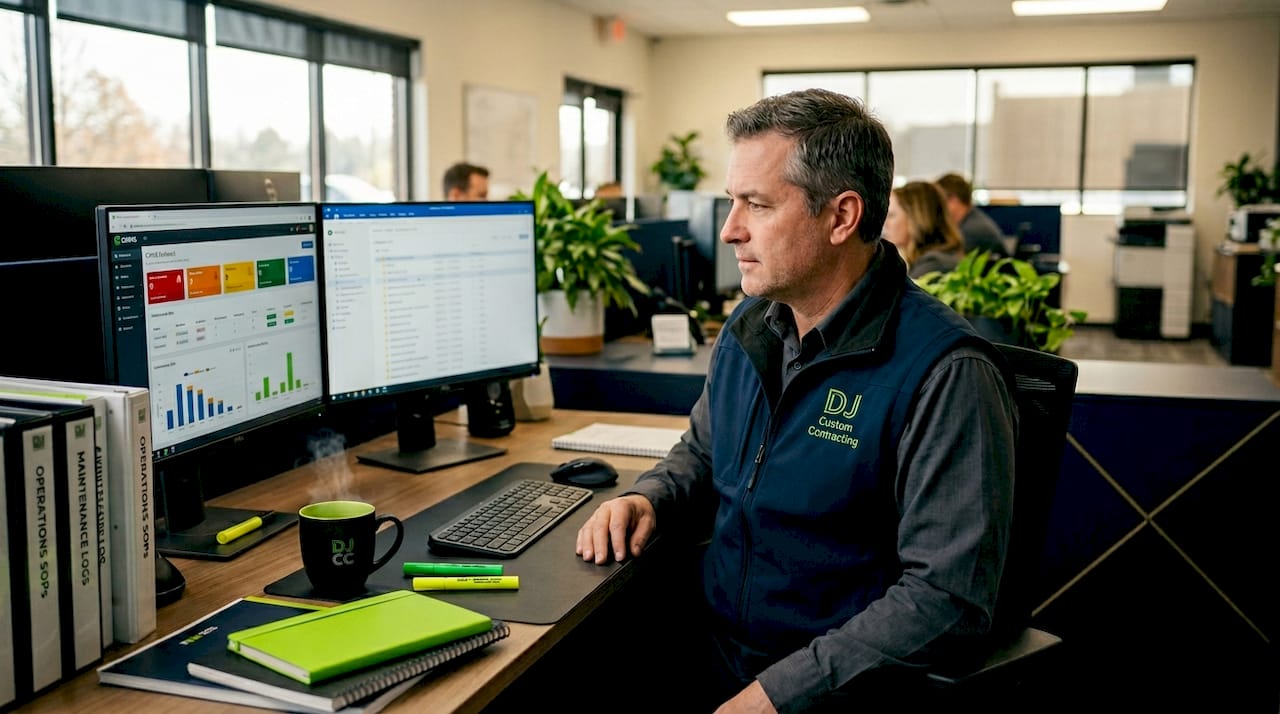
A disorganized commercial facility maintenance workflow doesn’t just create inconvenience. It destroys your budget. Commercial building managers lose $2.80 per square foot every year to reactive maintenance, and emergency repairs cost three times more than scheduled service. For a 200,000-square-foot portfolio, that gap represents over half a million dollars annually. This guide walks you through the prerequisites, execution steps, and measurement tools you need to build a workflow that actually controls costs, keeps tenants satisfied, and holds up under regulatory scrutiny.
Table of Contents
Key takeaways
Point | Details |
SOPs eliminate rework | Documented procedures reduce technician rework rates by 30% and cut onboarding time by 40%. |
Single intake channel matters | One digital request channel prevents lost tickets and creates a traceable audit trail from start to finish. |
Reactive maintenance is expensive | A Planned Maintenance Percentage below 60% signals a reactive spiral and higher long-term costs. |
CMMS drives productivity | Adopting a Computerized Maintenance Management System can improve technician productivity by up to 74%. |
KPIs reveal hidden gaps | Tracking response time, first-fix rate, and emergency percentage exposes bottlenecks before they become crises. |
Prerequisites for an effective commercial facility maintenance workflow
Before you redesign any process, you need a clear picture of what you are actually managing. There is a critical distinction between facility maintenance and facility management that many property owners blur together. Facility maintenance covers hands-on upkeep: repairs, inspections, cleaning, and systems servicing. Facility management sits above that layer and covers budgeting, compliance oversight, and vendor contracts. Mixing these up leads to the wrong people making the wrong decisions at the wrong level.
Once that distinction is clear, you can start building the foundation every reliable commercial property maintenance workflow requires.
The SOP library you actually need
A structured SOP library is not paperwork for paperwork’s sake. Facilities with documented SOPs reduce technician onboarding time by up to 40% and cut work order rework by 30%. Most commercial buildings need between 40 and 60 individual SOPs to cover operations properly.
The six SOP categories that matter most:
Work order management: How requests are created, categorized, assigned, and closed
Emergency response: Step-by-step protocols for life safety events, system failures, and tenant evacuations
Preventive maintenance schedules: Recurring tasks tied to specific assets with defined intervals
Inspection routines: Structured checklists for roof, HVAC, plumbing, electrical, and fire systems
Vendor onboarding and performance: Credentialing requirements, scope of work templates, and performance review criteria
Safety and compliance: OSHA requirements, lockout/tagout procedures, and permit-to-work processes
Tools and technology
A Computerized Maintenance Management System is not optional if you want a scalable commercial maintenance workflow. CMMS adoption leads to up to 74% productivity improvement for maintenance teams. The system should be capable of linking work orders to specific assets, generating recurring PM tasks automatically, and providing real-time dashboards for supervisors.
Pro Tip: Before selecting a CMMS, map out your existing asset registry and SOP library first. A system loaded with incomplete data creates more confusion than a spreadsheet.
Tool category | Purpose | Example use |
CMMS platform | Work order creation, tracking, and history | Link HVAC unit to its service records |
Mobile application | Field technician task access and completion | Photo upload, time log, and sign-off |
Single intake portal | Centralized request submission | Tenant submits ticket via web form |
Digital SOP library | Procedure access by asset or task type | Technician pulls chiller startup procedure |
Step-by-step execution of a structured maintenance workflow
With your SOPs documented and your CMMS configured, you can execute a repeatable workflow. Here is how a structured commercial maintenance workflow runs from request to closure.
Request intake: All requests enter through a single digital channel. Adopting a single intake channel prevents lost tickets and eliminates the admin overhead of chasing down verbal requests or email threads scattered across inboxes.
Triage and prioritization: Each incoming request gets assigned a priority level based on a documented matrix. Defined priority levels (P1 through P4) with documented rationale speed response times and reduce judgment errors by individual team members. P1 covers life safety and immediate building integrity threats. P4 covers cosmetic or low-urgency repairs.
Work order assignment: The work order is linked to the specific asset within your CMMS. The assigned technician receives the task on their mobile device along with the relevant SOP, parts list, and any prior service history for that asset.
Execution: The technician performs the work following the linked SOP. Mobile-enabled task completion with photos, time logs, and materials used creates an audit trail and removes any ambiguity about what was actually done.
Quality check: A supervisor or lead technician reviews completion photos and documentation before the work order is formally closed. For high-value assets or P1 events, a physical walkthrough is included.
Closure and documentation: The work order is closed in the CMMS with labor hours, parts costs, and notes attached. This data feeds directly into your cost tracking and asset lifecycle reports.
Automated recurring tasks: For preventive maintenance, automating recurring PM tasks in your CMMS guarantees that no critical system is missed due to scheduling oversight. Out-of-tolerance readings can automatically generate corrective orders before the PM cycle closes.
Pro Tip: Set automated escalation flags in your CMMS so any work order approaching its SLA deadline triggers an alert to the supervisor. This one setting eliminates most of the firefighting that comes from missed deadlines.
For vendor coordination, include the vendor credentialing status, scope of work, and required sign-off documents directly in the work order. This keeps communication in one place and protects you during audits or disputes.
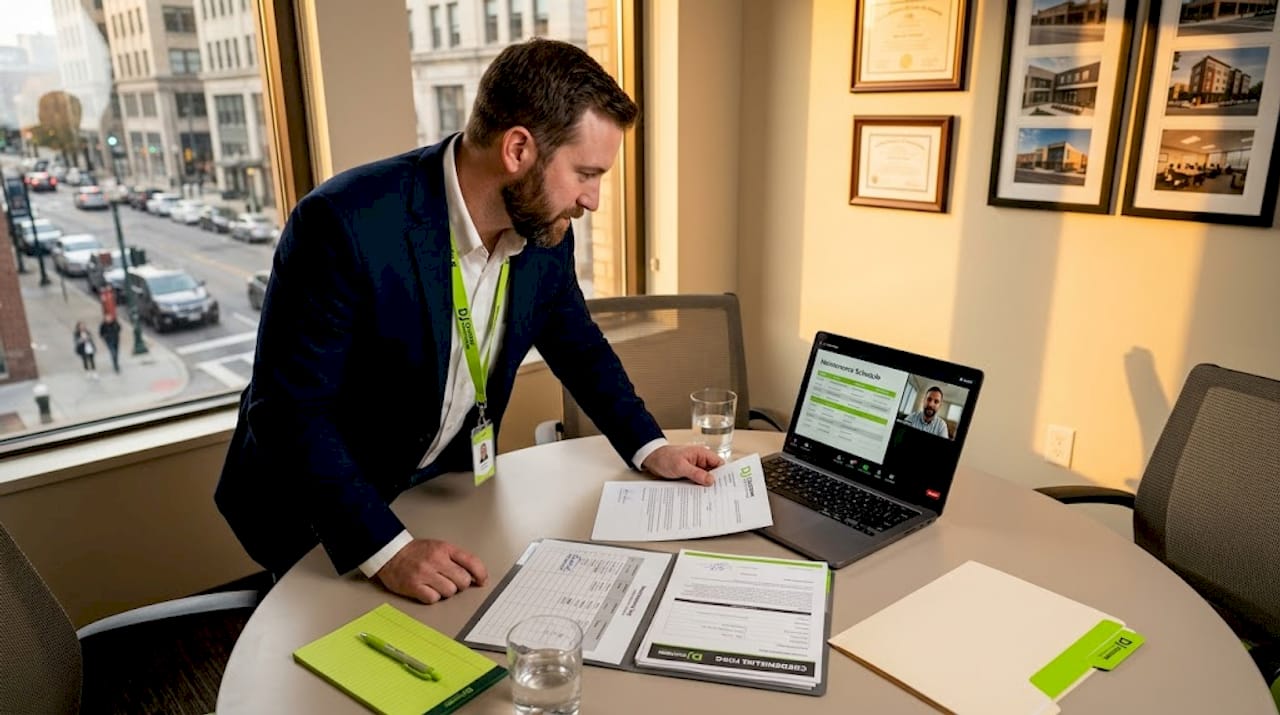
You can review a detailed breakdown of what a structured property maintenance workflow looks like in practice, including compliance considerations that affect commercial properties.
Common workflow challenges and how to fix them
Even well-intentioned teams fall into patterns that erode the entire property maintenance workflow. The problems below are the ones that show up most consistently.
Multiple intake channels. When tenants call, text, email, and walk in with requests, tickets disappear. Requests get duplicated or fall through completely. There is no traceability, and admin time spikes. One mandatory digital intake channel solves this completely.
No standardized priority matrix. Without clear severity definitions, individual technicians make judgment calls on urgency. That inconsistency leads to low-priority requests jumping the queue and genuinely urgent issues waiting too long.
The reactive maintenance spiral. This is the most expensive trap in commercial building upkeep. A Planned Maintenance Percentage below 60% means your team is in firefighting mode. Emergency repairs arrive faster than the team can clear them, and each one costs three times what a scheduled repair would have cost. The result is a workforce that never catches up.
Reactive maintenance is not a manpower problem. It is a planning problem. When your PMP drops below 60%, the answer is not more technicians. The answer is more scheduled work before things break.
No data visibility. If your supervisors cannot see open work orders, overdue tasks, and cost trends in real time, they are managing from memory. That always leads to missed deadlines and budget surprises.
Emergency response without documented SOPs results in 47% longer incident resolution times. The disruption to tenants and the regulatory exposure that follows are entirely preventable with the right preparation.
Measuring success and improving over time
A commercial maintenance workflow guide is incomplete without a clear measurement framework. You cannot improve what you do not track.
KPI | What it measures | Target benchmark |
Response time | Time from request to technician dispatch | Per priority level per your SOP |
Work order completion time | Time from dispatch to formal closure | Tracked by asset type |
First-fix rate | Percentage resolved on first visit | Above 85% |
Maintenance cost per sq ft | Total maintenance spend divided by building area | Compare to $2.80 reactive baseline |
Emergency work percentage | Emergency orders as a share of total orders | Below 40% to stay above 60% PMP |
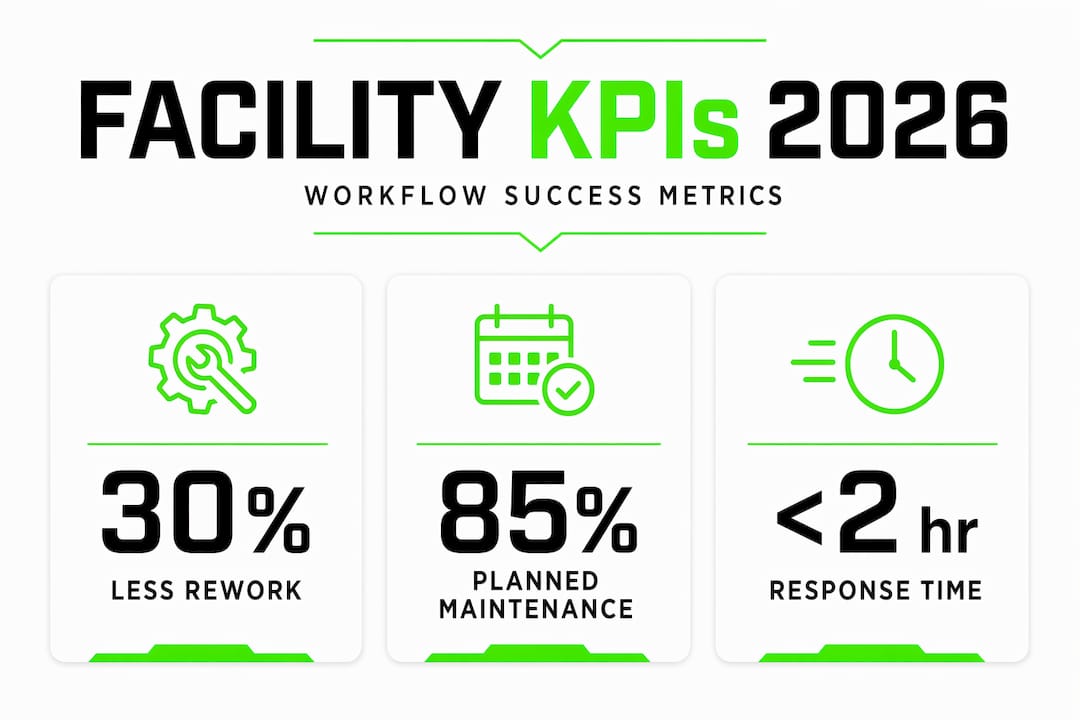
Your CMMS analytics module is where these numbers come from. Schedule a monthly report review and a quarterly SOP review. Preventive maintenance reduces overall costs by 12% to 18% and extends equipment lifespan by 20% to 40%. Those numbers compound over time when your workflow is disciplined.
Use your maintenance data during vendor negotiations. If a vendor’s first-fix rate is 60% while your target is 85%, that data gives you leverage to renegotiate scope or find a better partner. Capital planning benefits from the same data. When you can show ownership that a chiller has had four corrective work orders in 18 months, the case for replacement becomes straightforward.
Pro Tip: Link your maintenance cost reporting to energy consumption data. Integrating routine maintenance with capital renewal projects lets you defer major expenses strategically instead of reactively.
My take on reactive versus proactive maintenance
I have worked on commercial and residential properties across a wide range of conditions, and I want to share something that most articles leave out. The biggest hidden cost in a disorganized workflow is not the emergency repair bill. It is the task ambiguity that burns through your team’s time before anyone even picks up a wrench. Without documented SOPs, facilities lose 23% of technician capacity to rework and confusion. That is nearly a quarter of your workforce producing nothing because no one wrote down the right way to do the job.
When teams move to digital SOPs and a real CMMS, something shifts beyond the numbers. Technicians stop guessing. Supervisors stop repeating themselves. Owners stop getting surprise invoices. That culture shift is where the real value lives.
The metric I care most about is Planned Maintenance Percentage. When a property owner tells me their team is always busy and always behind, my first question is: what is your PMP? If the answer is below 60%, the problem is not headcount. The problem is that the calendar is empty and the emergency queue is full.
On vendor management: the data in your CMMS is your best negotiating tool and your best protection against underperformance. Document everything. Review vendor performance quarterly. Never renew a contract based on a handshake and a good relationship alone.
Technology handles the tracking. People handle the judgment calls. The best maintenance teams I have seen use both well.
— DJ
How Djcustomcontracting supports your facility goals
Running a tight commercial facility maintenance workflow requires more than good software. At some point, the building itself needs physical attention, whether that is a failing exterior envelope, an interior that no longer meets code, or systems that have aged past their service life.
Djcustomcontracting has delivered commercial maintenance, interior renovation, and exterior renovation services since 2018. From DOB and DOT violation removal to full-scale interior renovation work and exterior building upgrades, the team handles projects of every size in compliance with local codes, licensing requirements, and insurance regulations. When your workflow data points to a capital repair or a code-driven alteration, Djcustomcontracting is the contractor that turns that work order into a completed project. Explore the full range of building maintenance services available for commercial properties and get the conversation started today.
FAQ
What is a commercial facility maintenance workflow?
A commercial facility maintenance workflow is a structured process for receiving, prioritizing, assigning, executing, and documenting all maintenance tasks within a commercial property. It typically includes intake channels, work order management, SOP-linked procedures, and CMMS-based tracking.
How does a CMMS improve maintenance workflow efficiency?
A CMMS centralizes work orders, automates recurring PM tasks, and gives supervisors real-time visibility into team performance. Research shows CMMS adoption can improve technician productivity by up to 74%.
What is Planned Maintenance Percentage and why does it matter?
Planned Maintenance Percentage (PMP) measures what share of your total work orders are scheduled versus reactive. A PMP below 60% indicates a reactive maintenance spiral where emergency repair costs consistently outpace planned budgets.
How many SOPs does a commercial building need?
Most commercial buildings require between 40 and 60 SOPs to cover work order management, emergency response, preventive maintenance, inspections, vendor onboarding, and safety compliance. A structured SOP library reduces onboarding time by up to 40%.
What KPIs should facility managers track in 2026?
The most useful KPIs for a commercial maintenance workflow include response time by priority level, work order completion time, first-fix rate (target above 85%), maintenance cost per square foot, and the percentage of emergency work orders relative to total orders.
Recommended


Comments