


How to Plan Office Renovations in 2026


Successful office renovation planning is defined by aligning design, budget, and regulatory compliance before a single wall comes down. Business owners and facility managers who learn how to plan office renovations 2026 with all three factors integrated from day one consistently avoid the costly delays that derail projects started without that foundation. The industry term for this integrated approach is “pre-construction planning,” and it covers everything from stakeholder engagement to permit sequencing. Start planning at least six months before your target completion date. That window gives design, permitting, and procurement the time each phase requires.
What are the key office design trends for 2026?
Hybrid workspaces and acoustic privacy are the two dominant forces shaping office design this year. These trends reflect a workforce that splits time between home and office, and that expects the office to offer something a home setup cannot: structured collaboration and genuine quiet.
Translating these trends into your renovation means making deliberate layout decisions early. The following priorities are driving the most effective office redesigns in 2026:
Activity-based zones: Divide the floor plan into collaboration areas, focus rooms, and social spaces rather than rows of identical desks.
Acoustic design: Install sound-masking systems, acoustic panels, and full-height partitions in areas designated for deep work or confidential calls.
Biophilic elements: Introduce natural light, indoor plants, and natural materials like wood and stone to support occupant wellbeing.
Smart building integration: Plan for occupancy sensors, automated lighting controls, and app-based room booking systems during the design phase, not after construction ends.
Modular furniture systems: Choose reconfigurable furniture from manufacturers like Steelcase or Herman Miller so the layout can adapt as headcount changes.
Color and brand alignment: Use color psychology to reinforce brand identity. Cooler tones support focus; warmer tones encourage collaboration.
Inclusive design: Wider corridors, adjustable-height workstations, and accessible restrooms serve every employee and reduce compliance risk simultaneously.
Pro Tip: Engage occupants and key stakeholders during the design phase, not after it. Early input from the people who will use the space reduces scope changes mid-construction, which are among the most expensive problems a project can face.
Every design decision you make now will affect your budget, your permit requirements, and your construction timeline. Treat design as a planning tool, not a finishing touch.

How to budget for office upgrades accurately in 2026
Office renovation costs in 2026 range from $65 to $150 per square foot, with full build-outs and technology-heavy spaces pushing toward the upper end. That range is wide because scope varies dramatically. A cosmetic refresh with new paint and carpet sits at one end; a full gut renovation with new MEP systems and AV infrastructure sits at the other.
The most common budgeting mistake is treating construction costs as the whole number. Soft costs including permits and professional fees must be tracked separately from hard construction costs and budgeted from the start. Soft costs typically include:
Architectural and engineering fees
Permit application fees and expediting costs
Furniture, fixtures, and equipment (FF&E)
IT infrastructure and AV systems
Moving and temporary relocation costs
Post-occupancy testing and commissioning
Budget a contingency of 10–15% on top of your total project cost. This reserve covers unforeseen conditions discovered during demolition, such as outdated wiring, hidden structural issues, or asbestos-containing materials in older buildings. Without it, a single discovery can stall the entire project while you seek additional funding approval.
Cost Category | Typical Range | Notes |
Construction (per sq ft) | $65–$150 | Varies by scope and finishes |
Soft costs | 15–25% of hard costs | Permits, fees, FF&E, IT |
Contingency reserve | 10–15% of total budget | For unforeseen conditions |
Technology integration | $10–$30 per sq ft | AV, data, smart systems |
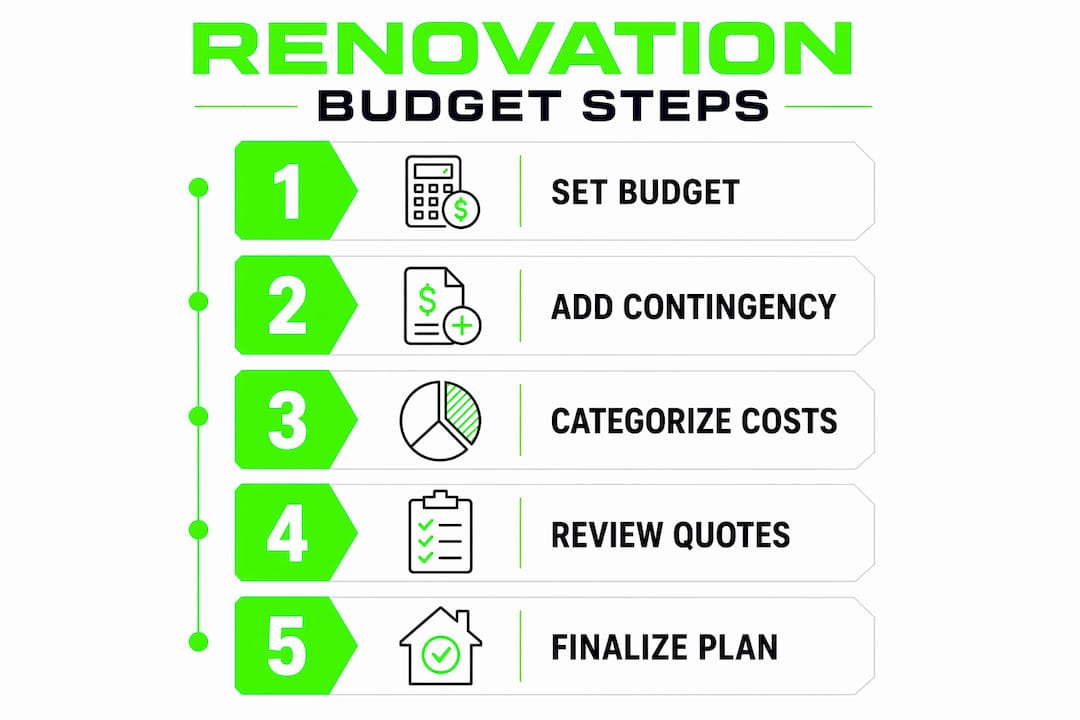
Pro Tip: Use a renovation budget planning guide to build your cost model before you engage contractors. A detailed budget document gives contractors the scope clarity they need to provide accurate bids, which protects you from low-ball estimates that balloon later.
What compliance and permitting steps can’t be skipped?
Compliance failures are the single most common cause of office renovation delays. The permitting process for commercial spaces involves multiple agencies, and each approval sits on the critical path of your schedule.
Landlord approval is the first gate. In leased spaces, a Licence to Alter or equivalent written landlord permission is required before structural changes can begin. Treat this as a critical path item, not back-office paperwork. Delays in securing landlord sign-off have pushed project start dates back by weeks on projects that were otherwise fully designed and permitted.
ADA compliance adds another layer that surprises many facility managers. Accessibility improvements often extend beyond the renovated space to the entire accessible route, including building entrances, corridors, and restrooms. Altering one area can trigger required upgrades along the full path of travel to that area. Budget for this possibility from the start.
Small dimensional issues cause a disproportionate share of ADA failures. Door clearances and protruding objects are the most frequently cited problems during inspections. Validate accessible routes physically after installation, not just on the drawings. A quarter-inch shortfall in door clearance can require a full reinstall.
Key compliance checklist for 2026 office renovations: Secure landlord approval in writing before design is finalized. Submit permit applications as soon as construction documents are complete. Confirm ADA path-of-travel requirements with your architect before demolition begins. Schedule inspections proactively rather than waiting for contractor requests.
For a detailed walkthrough of managing permitting in leased buildings, the commercial renovation permitting guide from Djcustomcontracting covers the most common approval sequences and how to avoid the delays that come from submitting incomplete applications.
How do you renovate an occupied office without losing productivity?
Phased construction is the standard method for renovating occupied offices. Phased renovations extend project timelines by 20–30% compared to a full-floor shutdown, but they allow the business to keep operating throughout construction. For most organizations, that tradeoff is non-negotiable.
Executing a phased renovation well requires planning that goes beyond the construction schedule. Follow these steps to protect productivity during the project:
Map your phases against business cycles. Avoid scheduling high-disruption work during your peak operational periods. A financial firm should not be relocating its trading floor during quarter-end close.
Designate and equip swing spaces before construction starts. Swing spaces are temporary work areas that displaced teams use during their phase of construction. Swing spaces with booked power and Wi-Fi significantly improve occupant satisfaction and reduce productivity loss. Set up a booking system so teams can reserve workstations in advance.
Communicate the schedule to all staff. Publish a construction calendar with phase dates, noise-intensive work windows, and relocation timelines. Surprises create friction; transparency builds cooperation.
Assign a single point of contact for construction-related questions. Employees need one person to call when construction affects their work. Without that contact, complaints go unresolved and morale drops.
Inspect each completed phase before moving teams in. Do not wait for the full project to finish to conduct quality checks. Catching issues phase by phase prevents a backlog of punch-list items at closeout.
Pro Tip: Schedule noisy demolition and core drilling during off-hours or weekends whenever possible. The added labor cost is almost always less than the productivity loss from a floor of employees unable to take calls or concentrate during business hours.
How to integrate technology and manage move-in effectively
Technology coordination is where well-planned office renovations most often go wrong at the execution stage. Power, data, and AV cabling must be planned and installed before walls are closed. Retrofitting cabling after drywall is installed costs significantly more and introduces schedule delays that compress the move-in timeline.
The sequence matters as much as the timing. Coordinate cabling tests and approvals with partition framing before drywall goes up. A cable that fails a test after the wall is closed requires demolition and repair. Catching it before closure is a 30-minute fix.
Move-in sequencing follows a logical order that many teams get wrong by rushing:
Certificate of occupancy: Confirm this is issued before any furniture or equipment enters the space. Moving in without it creates liability.
Furniture delivery and installation: Bring in systems furniture and workstations before IT equipment arrives. Installers need clear floor space.
IT infrastructure setup: Network switches, patch panels, and server equipment go in after furniture is positioned and cable runs are confirmed.
Staff onboarding to the new space: Walk department leads through the new layout before their teams arrive. Identify any issues before day one.
Commissioning and warranty collection: A thorough final inspection and commissioning confirms that HVAC, lighting controls, and fire suppression systems operate correctly. Collect all warranties and operations manuals at this stage.
For a complete project closeout checklist, the commercial project checklist from Djcustomcontracting covers every step from punch-list to certificate of occupancy.
Move-In Step | Key Action | Common Mistake |
Certificate of occupancy | Confirm issuance before entry | Moving in before approval |
Furniture installation | Complete before IT setup | Blocking cable access |
IT infrastructure | Test all runs before activation | Skipping pre-activation testing |
Commissioning | Test all building systems | Deferring to post-occupancy |
Key takeaways
Successful office renovation planning in 2026 requires integrating design decisions, accurate budgeting with contingencies, and compliance sequencing before construction begins.
Point | Details |
Start planning early | Begin pre-construction planning at least six months before your target completion date. |
Budget all cost categories | Include soft costs, technology, and a 10–15% contingency alongside hard construction costs. |
Treat compliance as critical path | Secure landlord approval and permit submissions before design is finalized to prevent delays. |
Phase construction carefully | Equip swing spaces with power and Wi-Fi and align construction phases with business cycles. |
Sequence technology correctly | Plan and install all cabling before walls close to avoid costly retrofits at project closeout. |
What i’ve learned after years of office renovation projects
The number that surprises most clients is not the construction cost. It is the soft cost total. Permit fees, architectural revisions, expediting costs, and FF&E procurement consistently add up to more than facility managers expect when they first build their budget. Tracking soft costs in a separate line item from day one is the single habit that prevents the most mid-project budget crises I have seen.
The second lesson is about compliance timing. Teams that treat landlord approval and ADA path-of-travel analysis as early design inputs finish on schedule. Teams that treat them as final-stage checkboxes spend weeks in reactive mode, redesigning work that was already built. The compliance conversation belongs in the first design meeting, not the last.
Technology coordination is the third area where I see avoidable rework. When the IT team is not in the room during schematic design, cabling gets planned around furniture layouts that change. Then walls close, and the retrofit begins. Bringing the IT lead into design coordination meetings costs nothing and saves real money.
The projects that go smoothly share one trait: the owner or facility manager was engaged throughout, not just at kickoff and closeout. Your presence during construction is not micromanagement. It is the fastest way to catch small issues before they become expensive ones.
— DJ
Plan your 2026 office renovation with Djcustomcontracting
Office renovations involve more moving parts than most facility managers anticipate before their first project. Djcustomcontracting has been delivering full-service commercial renovations since 2018, with direct experience in budgeting, permitting, ADA compliance, and phased construction for occupied spaces.

Whether you are planning a cosmetic refresh or a complete interior build-out, Djcustomcontracting manages every stage of the process. The team works in accordance with local building codes, DOB requirements, and insurance regulations, so your project stays compliant from permit application to final inspection. Reach out to Djcustomcontracting’s commercial renovation specialists to discuss your 2026 project scope, timeline, and budget. For interior-specific work, explore the interior renovation services available for commercial spaces.
FAQ
How far in advance should i start planning an office renovation?
Start at least six months before your desired completion date. That window accommodates design development, permit submissions, contractor procurement, and lead times for materials and furniture.
What is a realistic per-square-foot cost for an office renovation in 2026?
Office renovation costs range from $65 to $150 per square foot depending on scope, finishes, and technology requirements. Full build-outs with smart systems and high-end finishes sit at the upper end of that range.
Does an ADA renovation only affect the rooms being altered?
No. ADA compliance can require upgrades along the entire accessible path of travel to the altered area, including entrances, corridors, and restrooms, not just the renovated room itself.
What is a swing space and why does it matter?
A swing space is a temporary work area used by displaced teams during phased construction. Equipping it with dedicated power and Wi-Fi before construction starts maintains productivity and reduces occupant disruption throughout the project.
When should cabling be installed during an office renovation?
All data, electrical, and AV cabling must be installed and tested before walls are closed with drywall. Post-closure retrofits require demolition, add cost, and delay the project closeout timeline.
Recommended



Comments